

What are the 34 symptoms of perimenopause?
I remember sitting on the exam table, donning only my socks and a gown, listing off every seemingly unrelated (and honestly, weird) symptom I had experienced in the last few months.
While I felt incredibly awkward trying to find the right words — like how to describe my periods that were shorter now but not always and maybe sometimes heavier but also not always or the copious amounts of sweat I woke up swimming in — the menopause specialist nodded along with a slight grin.
What is perimenopause and how do I know if I’m in it?
Perimenopause is the transitional phase leading up to menopause, marked by a decline in estrogen and progesterone. Lucky for women, each of us will experience our own unique combination of symptoms and severity.
So what are common perimenopause symptoms and how do you know when you’re just starting perimenopause or already in it? If you were to search the internet — and who hasn’t fallen down a Google dark hole at 3 am after waking up in a full body sweat? — you’ll likely find several articles listing the 34 symptoms of perimenopause.
One thing you might notice is that not all of the lists are exactly same. As of 2025, there is no single, definitive list of perimenopausal symptoms. While there is a large group of symptoms the lists share in common, there are a handful of discrepancies (symptoms on one list but not the other).
We’d like to save you from another late-night web search, so we’ve curated the most common symptoms from accredited menopause specialist sources into this list. At the end, we’ll share the “extra perimenopause symptoms” that aren’t consistent across sources.
The 34 symptoms of perimenopause
1. Hot flashes
Hot flashes are experienced as sudden waves of heat, usually felt in the chest, neck, and face. This can lead to sweating, redness, and even chills. “Hot flashes can really disrupt a woman’s life — not only sleep, but mood, productivity, relationships, the workplace,” says Dr. Jen Ashton.
Hot flashes and night sweats, clinically known as vasomotor symptoms, are the most commonly reported symptoms of the menopause transition, says The Menopause Society. A U.S. study found that up to 80% of women experience hot flashes and night sweats at some point during the menopause transition.
More on The Midst: What are the best ways to stop hot flashes fast
2. Night sweats
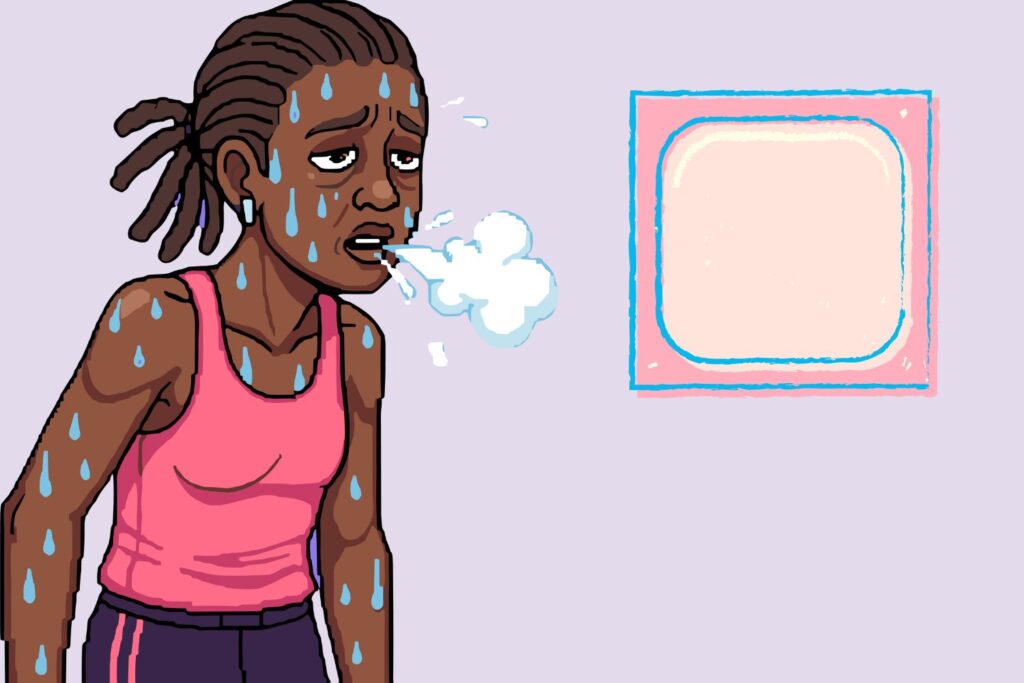
Dr. Pooja Shah describes night sweats as “hot flashes that occur when you’re sleeping” and says they can wake you up drenched in sweat and can keep you from getting the restful sleep you need. Many women end up having to change bedsheets and pajamas multiple times a night.
Read more on The Midst Substack: Claire Zulkey swears by the ugliest machine alive to fix night sweats
3. Irregular periods
Irregular periods can include changes in frequency, flow, cramping or pain, and spotting. “During perimenopause, your body is changing and your hormones are fluctuating. You may have irregular or missed periods or different bleeding patterns,” notes Dr. Tangela Anderson-Tull for WBALTV in Baltimore.
Once irregular periods become disruptive to your life — such as for heavy bleeding — she recommends that you seek medical attention.
In this video, Heather Hirsch MD, MS, NCMP, talks about how irregular periods in perimenopause can be one of the first signs of the menopause transition. In this video, she breaks down how you can best work with your doctor to treat your perimenopausal symptoms. She also discusses lab tests and imaging tests that can help to tame the irregular and unwanted periods in perimenopause.
4. Changes in mood
Mood changes can be described as mood swings or irritability and “are often caused by fluctuating hormones during perimenopause,” explains Dr. Lauren Streicher MD, saying that it happens because the “shifts can affect brain chemistry and lead to changes in emotional well-being.”
5. Sleep disturbances
Many of the other perimenopause symptoms, like night sweats and anxiety, can lead to sleep disturbances and cause you to wake up multiple times a night. Hormonal changes can also affect your circadian rhythm, according to Dr. Amir Khan, who has a great video breaking down five ways perimenopause can affect your sleep.
6. Fatigue
Fatigue can be described as consistent tiredness that isn’t always alleviated by rest and an overall lack of energy. Hormonal changes and sleep disturbances are two big culprits in the struggle with perimenopause fatigue.
7. Brain fog
Over 60% of women experience brain fog during perimenopause, which can be described as trouble concentrating, forgetfulness, and a general lack of mental clarity. As hormones fluctuate during perimenopause, they affect production of neurotransmitters that are responsible for things like cognition.
Read more on The Midst: Perimenopausal brain fog: A nutritionist’s guide to thinking clearly
8. Anxiety
Anxiety, or a feeling of uneasiness and nervousness, is common as serotonin levels drop while other hormones like estrogen and progesterone are also falling. Increased cortisol at the same time can make matters worse, leading to panic attacks or panic disorders.
Read more on The Midst: Managing Midlife Anxiety
9. Depression
Depression can be characterized by feelings of sadness, loss of interest in things you’re usually interested in, and low mood. According to Dr. Thara Vayali of HeyFreya.com, “The decline in estrogen during perimenopause can lead to a 2–4 times increased risk of depression.”
A 2024 study from the Journal of Affective Disorders revealed that “data from 9,141 women showed that perimenopause is the stage associated with the most elevated risks of depression.” The women, who were from the U.S., China, Australia, the Netherlands and Switzerland shared information on their moods and their level of interest for activities.
10. Decreased libido
Testosterone plays a big role in sex drive and when levels drop in perimenopause, it naturally leads to a decreased sex drive. Compounding the issue is a drop of estrogen, which can lead to things like vaginal dryness and pain during sex, lowering libido even more.
More on The Midst:
16 ways to reclaim your libido during peri/menopause
My libido went from sex drive to sex neutral to sex park—and back to drive with Testosterone
11. Vaginal dryness
As mentioned above, decreasing estrogen levels can cause vaginal dryness. “Your vagina is full of hormone receptors and they’re under-stimulated when you go through (peri)menopause,” Dr. Lauren Streicher MD says in Prevention. Lower estrogen leads to the vaginal tissue being dry and can cause burning, irritation, and pain during sex.
Read Slip Sliding Away: Turning Back the Clock on Your Vagina: A gynecologist’s guide to eliminating post-menopause dryness and pain by Dr. Lauren Streicher MD.
12. Osteoporosis
Estrogen is an important part of bone health, and when levels of the hormone begin to drop, it puts women at greater risk of osteoporosis. The Study of Women’s Health Across the Nation of bone loss in perimenopause shows that “bone loss accelerated dramatically during late perimenopause”.
13. Breast tenderness
Some people get increased breast tenderness and fullness during perimenopause. Fluctuating hormones can cause the breast tissue to become more sensitive, which can feel like pain, soreness, or ache.
14. Headaches
The Mayo Clinic writes that headaches can become more frequent or severe during perimenopause due to those pesky fluctuating hormones, especially estrogen. They can present as tension headaches or even migraines.
In this video, Dr. Louise Newsom, a U.K.-based general practitioner and hormone specialist who suffers from migraines shares a 30-minute brain dump about how hormones affect headaches.
15. Weight gain
Lowering levels of estrogen can cause a slowing down of your metabolism, leading to weight gain, oftentimes settling in the abdominal area, writes OB-GYN Associates of Marietta in Georgia. Perimenopause hormonal shifts can impact overall body composition — losing muscle mass and gaining fat.
16. Bloating
Bloating — that annoying feeling of fullness, swelling, or tightness in the abdomen — is yet another common symptom of perimenopause. Fluctuations in the estrogen and progesterone can cause digestion issues and fluid retention, which causes you to experience menopause bloating.
17. Digestive issues
As noted above, the rising and falling of estrogen and progesterone can lead to a variety of digestive problems. Dr. Renita White, an obstetrician and gynecologist in Atlanta, says in Vogue that “Acid reflux, constipation, diarrhea, bloating, and gassiness can all be very common” in perimenopause.
18. Joint pain
Your joints contain estrogen receptors, and estrogen plays a role in reducing inflammation. When estrogen levels begin to decrease, it can cause joint pain. In fact, more than 70% of women experience musculoskeletal pain during perimenopause, according to this Taylor & Francis report.
19. Muscle tension
If you’ve noticed more stiffness and tight muscles, you’re not imagining things. Progesterone helps our bodies relax and keeps our muscles loose. When progesterone levels begin to drop during perimenopause, it can lead to muscle tension, achy muscles, and pain.
20. Dizziness
Dizziness or dizzy spells are common in perimenopause when estrogen levels are fluctuating. Dizziness can also be a result of other perimenopause symptoms, like sleep disturbances and insomnia.
In Prevention, Dr. Lauren Streicher, MD, warns that dizziness can be a sign of many health issues, so it’s important not to dismiss this as “just” being due to perimenopause, but “it can also be a symptom of the life phase thanks to changes in estrogen levels and insomnia.”
21. Changes in taste
Changes in taste buds can be due to things like decreased saliva and dry mouth, which is a result of fluctuating hormones. Some people experience a metallic taste or bitterness, while some might experience more saltiness — some even report an absence of taste altogether.
22. Hair loss or hair thinning
The hormones estrogen and progesterone help hair grow and when those hormone levels drop, hair grows more slowly and can become thinner. The decrease in those hormones also triggers an increase in androgens, which shrink hair follicles, leading to hair loss.
Read more on The Midst: Telogen effluvium: How to manage hair loss and its emotional fallout
23. Burning Mouth Syndrome
Burning Mouth Syndrome (BMS) can be characterized by an unexplained burning, tingling, or hot sensation. It can happen to your lips, tongue and gums. It is primarily caused by fluctuations in hormones and can be exacerbated by other perimenopause symptoms like anxiety and stress.
24. Heart palpitations
Heart palpitations can feel like a pounding heartbeat, fluttering or skipping heartbeats, or even a flip-flopping sensation in the chest. This experience is common during perimenopause and is linked to the changes in both estrogen and progesterone, says Dr. Chrisandra Shufelt, MD, on Let’s Talk Menopause!
25. Body odor changes
There are estrogen receptors in the skin and sweat glands, so when estrogen levels drop, there can be a change in your natural scent, says Dr. Lauren Streicher, in Prevention. Of course, there is also an increase in sweat production due to other perimenopause symptoms like hot flashes and night sweats, which can also play a role in body odor.
26. Brittle nails
Keratin and collagen – proteins that build nail strength – can be affected by dropping estrogen levels, which can lead to dry, brittle nails. Thyroid issues can also present during perimenopause, and can impact nail strength.
27. Dry, itchy skin
The production of collagen and natural oils is affected by estrogen levels. As estrogen levels drop, so does collagen (an important building block of skin) and oil production (a vital part of keeping skin moisturized). This can result in dry and sometimes itchy skin.
28. Tinnitus
Tinnitus is a ringing in the ears that only you can hear. For some, it comes and goes and is relatively harmless, if not simply annoying. For others, it can be more constant and become debilitating. While there is not an exact reason for Tinnitus in perimenopause, it is believed to be linked to a lowering of estrogen levels.
Watch this video of Dr. Naomi Potter talking about tinnitus.
29. Dental issues
There are many oral health issues that can arise from fluctuating estrogen levels during perimenopause. A few of the more common symptoms are painful or bleeding gums, sensitive teeth, and increased risk of tooth decay.
30. Tingling in extremities
The experience of tingling in the extremities is known as paresthesia. It is due to a drop in estrogen and can be described as numbness, tingling, or a “pins and needles” feeling. Dr. Streicher explains that estrogen supports healthy nerve function, so as that hormone level decreases, you can become more vulnerable to nerve issues.
31. Electric shock sensation
Feelings of electric shock or zap can be experienced during perimenopause because of fluctuating levels of estrogen. Estrogen affects nerve function and how your nervous system communicates signals to the brain.
32. Stress incontinence
As Dr. Kelly Casperson explains in her this video, many women experience urinary symptoms during perimenopause. This can include urinary stress incontinence, overactive bladder, and urinary urgency.
33. Recurring UTI
Similar to urinary issues listed above, recurring UTIs are also common during perimenopause. Decreasing levels of estrogen can lead to changes in the lining of the bladder and in the urogenital microbiome, which reduces the natural defense mechanisms against UTIs.
34. Allergies
Rising and falling estrogen levels can confuse your nervous system, causing allergy-like symptoms such as congestion, sneezing, red and watery eyes, and itchiness. Simultaneously, progesterone — which acts as a natural antihistamine — begins to drop, allowing the symptoms to persist unchecked.
5 more symptoms that may be related to perimenopause
Sleep apnea
Hormones like estrogen and progesterone help keep the muscles of the airways strong and prevent collapsing. When those hormones drop during perimenopause, it’s common to begin having trouble with breathing during sleep, leading to a diagnosis of sleep apnea.
More on The Midst: I stopped breathing 16 times a night. Here’s what I did about my sleep apnea.
ADHD
Perimenopause may trigger ADHD that was most likely pre-existent; the symptoms of perimenopause — brain fog, lack of executive function, trouble focusing — can unmask the underlying condition. Fluctuating hormones during the perimenopause and menopause phase of life can make ADHD symptoms worse.
Read more on The Midst: I was diagnosed with ADHD at 38—finally
Immune system changes
Studies have shown that a reduction in sex hormones like estrogen can affect the way the immune system functions. Fluctuations in hormone levels can also cause an increase of inflammation in the body, forcing our immune system to work in overdrive.
Bacterial vaginosis
The PH balance of bacteria in the vagina can be affected when estrogen levels drop. The good bacteria thrives in an estrogen based environment. Bacterial Vaginosis is more likely to occur at this point, when more bad bacteria is present than good bacteria.
Acne
While it might make you feel like a teenager again, acne is a common issue in perimenopause, too. This is due primarily to the hormonal imbalances experienced during the perimenopause and menopause phases of life.
When to seek help for perimenopause symptoms
This article is intended to help you become more informed of what perimenopause can look like and give you helpful information to discuss with your doctor. While these are the most common symptoms of perimenopause, some of these can also be symptoms of other issues. Always be sure to consult a physician or menopause specialist if you are concerned or are experiencing anything new or unusual for you.
Even though I initially felt uncomfortable discussing my symptoms with a menopause specialist, it was incredibly helpful to receive solutions tailored to my experience and medical history. It was also relieving to know that what I thought were weird, mysterious issues, were actually really common and totally treatable.
No matter where you are on your perimenopause journey, it’s worth reaching out to a professional and other people in your stage of life. Feeling supported and connected can go a long way in boosting your confidence as you navigate a new phase.

This article is part of The Midst’s Welcome to Perimenopause Guide: 90+ stories about the modern perimenopause experience by women in perimenopause