

I’m 49 and still going to shows — but not to stay relevant
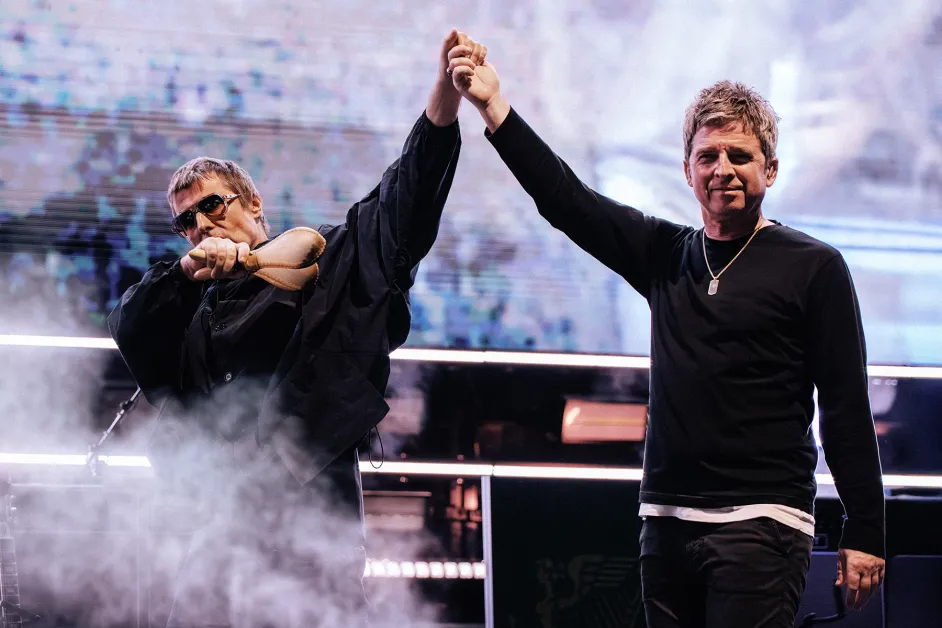
I’ve written about music for decades. It makes me feel old to even write that. But as the year comes to an end and I’m trying to figure out my best-of-the-year lists, there’s one thing I did that not only made me feel younger and less out of it, but actually made me realize that my age and experience are darned important. It wasn’t going to the Gen X fiesta that was Oasis’s Live 25 tour. It wasn’t seeing some of my old favorites like Drop Nineteens (a high school fave) or Grandaddy (a grad school love). It wasn’t enjoying upstarts like Yves Jarvis (check him out!) or newish acts like Wet Leg (I hope you’ve heard them because they are great). Instead, going to a music festival with my 15-year-old niece is my number one music moment of the year.
The festival was Osheaga in Montreal – I’d been before, but it was the first time for Cora. This iteration – its 18th – was headlined by Tyler the Creator, the Killers and Olivia Rodrigo, but there was so much more on offer. It was also the first time that Cora traveled on her own to visit and our first auntie-niece solo outing – so there were firsts for both of us. Now I’m 49, so I figured there would be a fair amount of distance between the two of us in terms of musical taste. Apparently this was her major concern as well. “I think mostly I was just worried that our music taste wouldn’t be the same,” she told me, “and we couldn’t agree on what to watch.”
But here’s the thing: the festival programmers appeared to have read our minds. The acts provided something for as broad a range of tastes as possible, and that meant age groups as well. We walked into the festival while The Struts (a glam rock outfit from the U.K.) were playing. We agreed that they were pretty good, and Cora recognized them – unsurprising since their 2013 anthemic “Could Have Been Me” is no stranger to social media posts. And that’s the thing – not only do apps like TikTok and Instagram expand audiences for new music through trending audio and viral videos, but this also is possible for older tracks. Thus, through absentminded scrolling, older folks like me end up recognizing recent acts, and the opposite is true for the young’uns like Cora.
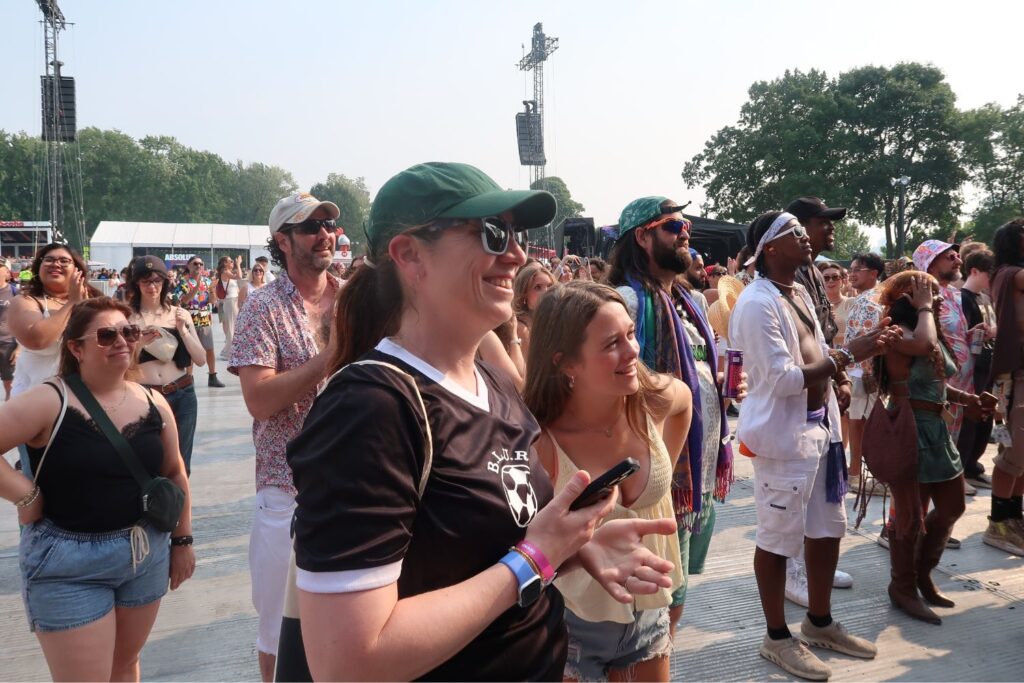
I also think that this universal access to music across all genres and time periods creates opportunities for artists and listeners to draw on sounds that have been heard before all the while adding bits of new. Case in point: Cora had been introduced to the music of Ekkstacy from hearing “I Walk This Earth All By Myself” on social media. To me, it sounded like early ’80s dark synth pop, and I’m happy to listen to more of that!
Explaining why I enjoyed certain things seemed of interest to Cora because another bonus from being of wildly different generations is that I can share some of my, ahem, knowledge. When I asked her about some of what she enjoyed about hanging out with me at the fest, she admitted as much: “I think coming together helps people of different ages to connect through music and younger people learn about music from different generations.” Case in point: Cora was rather enthusiastic about Joey Valence and Brae, two white dudes from Pennsylvania who gained viral fame with their song “Punk Tactics”, which is essentially Beastie Boys cosplay. I was able to explain to Cora that this rap duo didn’t really have a unique selling point as much as a willingness to draw on the past (Rob Base and DJ E-Z Rock are the clear basis for the song “The Baddest”).
As a combination of a younger Gen X–er and younger Gen Z, neither of us really understood the appeal of Millennial darlings the Killers, but we both appreciated the fact that the band kicked off their set with “Mr. Brightside” – the only song by the band that we knew by heart. That meant that we could run to the other side of the grounds to see Doechii, who held equal appeal for me and her.
I knew, however, her favorite was Gracie Abrams, who I enjoy, but didn’t really understand the passion for her music and less-than-ideal lyrics (“I miss fighting in your old apartment; breaking dishes when you’re disappointed” is not what I would call the type of relationship description I’d like my dear niece to emulate). The band I was looking most forward to seeing was TV on the Radio – and they were programmed to perform right before Gracie on the other side of the festival grounds. I knew, however, that we’d need to stake out a spot if we were going to get anywhere close to the artist that Cora was so excited about – she had an outfit picked out for the occasion (apparently yellow is Gracie’s preferred tone).
As someone who has always been impressed and moved by the energy of live music, I have to admit that the crowd for Abrams was pretty darned great. All of the songs are pleasant, if not memorable, and the enthusiasm of the mostly-teenaged crowd was infectious. I wouldn’t say I’m a Gracelander quite yet (I read that was the name for her fandom – and it better be, because that’s spectacular), but I would definitely go and see her again. And I like listening to the odd song now and then to re-up some of that energy.
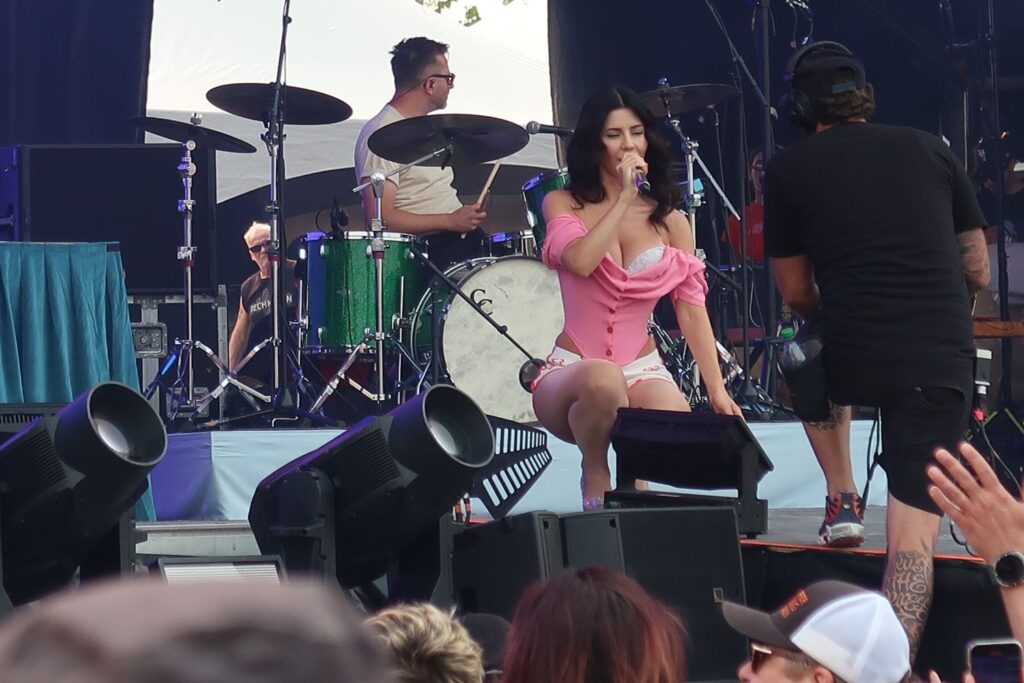
I feel that this ability to connect to music that younger people like not only helps to increase the amount of music that I can listen to and enjoy, but it also demonstrates that there is a significant difference between when I was younger and, almost universally, older folks just didn’t understand the stuff I liked. My mother famously made the mistake of buying me punk rock jokers the Dead Milkmen for Christmas one year when I wanted the synth pop of Depeche Mode (they both were filed under “D”, you see). Looking back, it led to a significant shift in my musical interests that I’m grateful for, but it certainly wasn’t by design. Most of the stuff I liked was considered noise by the adults in my life, but that isn’t the same now. As Cora succinctly put it, “For the most part, I think people that are older just know of different music rather than having different music taste.” Again, that ease of exposure and access to music means that both of our horizons can easily be broadened.
And we are not alone in thinking this – my friend Julie, who is 47, brought her daughter Olivia, who is 12, to see Olivia Rodrigo (yes, they have the same name). “She’s my favorite singer!” Olivia exclaimed when I asked her what drew her to the festival. Young Olivia also thought she could learn from her mom: “She knows a lot about the environment and has been to a lot of concerts.” The two talked about how they enjoyed listening to music together in the car, and Rodrigo being well loved. Like me, Julie noticed a change from that generational disconnect we experienced when we were younger: “When I was a teenager, none of the music I liked was liked by my parents.” But now? “There isn’t a big line between ‘these are the things you like’ and ‘these are the things I like.’”
This reality means that festivals like Osheaga tend to cater to many more types of people – through the programming, but also food offerings and overall set up. I don’t remember being able to eat much more than pizza, burgers and beer at festivals I went to back in the 1990s, but Osheaga offers up a range of local food trucks and a significant number of non-alcoholic options from mocktails to low- and no-alc beer. There are also places to sit and relax while taking in the music – the mosh pit is not a must.
Finding things in common with younger generations isn’t about some desperate desire to stay relevant, it’s really about enriching your life through art and experience. Festivals like Osheaga, Austin City Limits, Bonnaroo, and Lollapalooza aren’t just for young people. New music isn’t just for young people. And it’s not just young people who know about new music! Cora told me, “The best thing about the experience was probably connecting more and being able to learn about new music and meeting people.” I could say the same thing. I’m so glad she and I were able to learn from each other, and I hope we can repeat the whole process in 2026.