
How end-of-life planning rewrote my definition of success
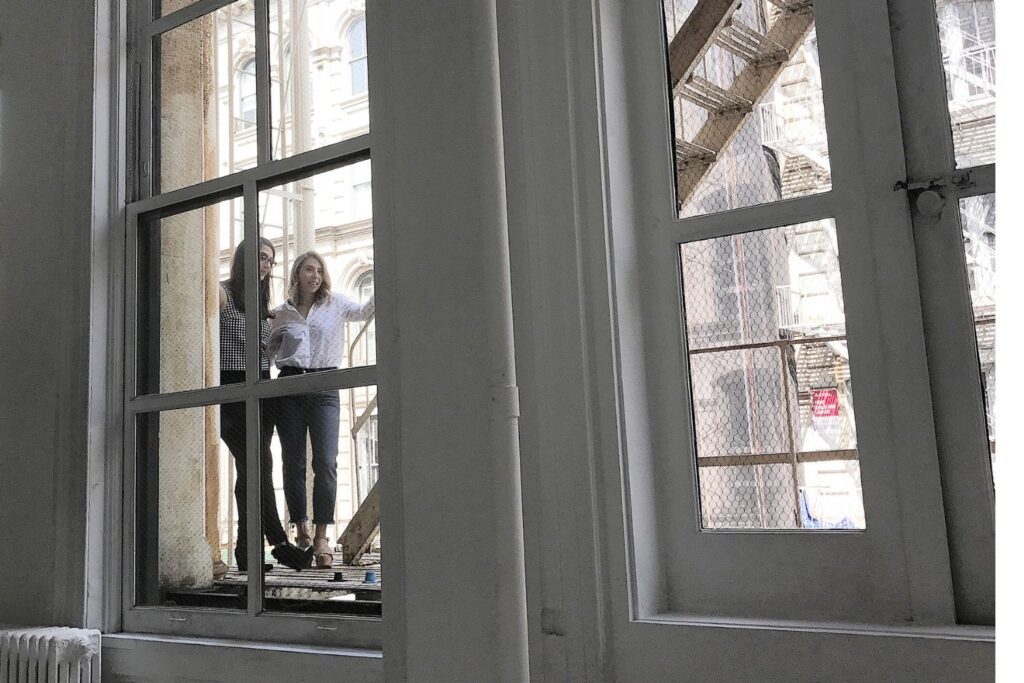
I was standing in my studio in SoHo, surrounded by a room full of women entrepreneurs having a curated dinner, when my phone rang. It was 2018, and Blank Studio NYC was thriving. My sister and I had built this beautiful rental photo studio and creative space, and I was hosting exactly the kind of event that made me feel like we’d made it.

Then my stomach dropped.
My mom had been in a serious accident. In the span of maybe three seconds, I went from present and engaged to a thousand steps ahead: How do I get to the Berkshires from Brooklyn without a car? Who’s going to manage the studio? What if she dies? Why did my parents have to get divorced so this now all falls on me? I’m the eldest daughter — of course it’s on me.
I don’t remember what I said to the room. I just remember the immediate, crushing weight of logistics mixed with dread, and the realization that I had absolutely no idea what I was walking into. All I knew was that some of her key paperwork was on my desk, I was supposed to have notarized something…and I hadn’t. I’m smart, I’m a lawyer, I know the importance of this type of paperwork…and I’d let it collect dust. Talk about an emotional block.
My sister, also my business partner, was incredible. Over the next few months, we took turns managing the studio and helping our mom. But there were still so many parts of the business that only I knew how to do. So I’d sit in a hospital room, then rehabilitation center, or at my mom’s house, laptop open, trying to keep everything from falling apart while also trying to figure out how to transport two animals back to Brooklyn, how to pay bills I couldn’t access, how to navigate insurance I knew nothing about.
My mom had recently moved — to a new home, in a new state, with no real friends or community to show up for her. I didn’t even have keys to her house at that point. She’d gotten a kitten a week before the accident and had a deeply attached dog named Harriet with the longest lashes that always made us laugh. I had zero understanding of how to navigate the system I was suddenly thrown into and felt completely overwhelmed.
The rehab facility is what still gets me. That smell — I can still smell it though I’d rather not describe. I stood there, completely ashamed and horrified that my mother was in this place, and I couldn’t figure out the bureaucracy fast enough to move her somewhere better. I tried. I made calls, I visited other facilities in New York closer to my sister and me. I asked questions, I pushed. I couldn’t make it happen — and I felt like I’d failed her.
And she looked at me and said she could handle anything for six to eight weeks.
And she did.
My mom is fully recovered now, walking, self-sufficient, and living her life. But in that moment, standing in that facility, I realized how completely unprepared I was, not just for the logistics of caregiving, but for the emotional weight of it. I wanted to curl up under my gravity blanket, but everyone needed something from me.
What scared me most wasn’t just the immediate crisis. It was the realization that I couldn’t get out of my business, even when I was sitting bedside at a hospital. I was tethered to it — knowing if something happened to me, or if I needed to step away to care for someone I loved, what would happen? I had no continuity plan. No documentation or SOPs. No way for someone to step in and keep things running. My sister and I had very different roles in the business, and I carried a lot of my knowledge in my brain, not accessible to anyone.
I found my calling as an end-of-life planner
The experience with my mom’s health changed the trajectory of my entire career. I wanted to feel more prepared for caregiving, death, and grief, and I saw what everyone in my age bracket was going through: health challenges ourselves, our parents aging or dying, the messy sandwich generation reality of what they’re carrying emotionally, financially, logistically, physically.
When the pandemic shut down our studio for several months, I finally took time to pursue training as an end-of-life doula and pore over as much education and resources I could around caregiving and loss. It felt like everything fell into place — I wanted to create a business that helped people face these realities with more support.
I found my calling by taking something that started in a fearful state and turning it into something meaningful. I built a business that gives me flexibility and freedom so I can care for others while still living my life on my terms. That’s the real shift. Not just preparing for a crisis, but building a life that has room for the messy, unpredictable reality of loving people who age, who get sick, who need you. And having room to take time I need when I need it for myself, not having to ask someone else’s permission to take time off or risk getting fired. I’m creating the support I wished I’d had for myself.
A few years later, my father started going through his own health challenges. And it confirmed what I already knew: this wasn’t a one-time crisis, this was the new normal. My parents were aging — and I needed to be ready, not just logistically, but emotionally. I needed to build a life that had room for this reality.
End-of-life planning checklist
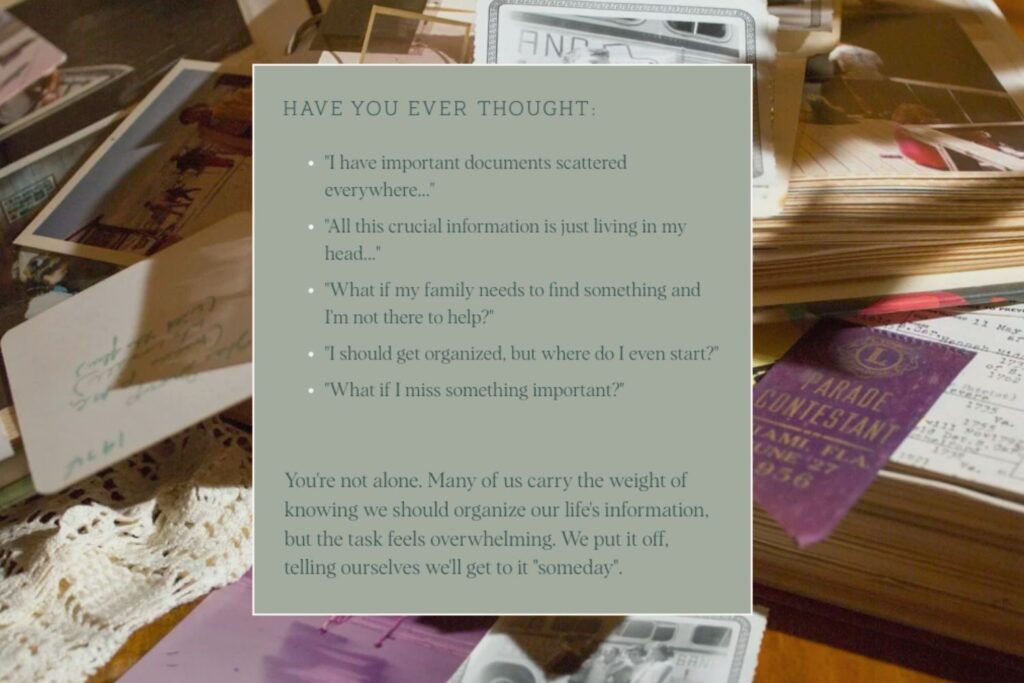
That crisis with my mom and later my dad is why I originally created the Plan Well Organizer. I had felt completely blindsided by what I didn’t know, what I thought I should have known. Both my parents have now filled it out, so I have the information I need as they continue to age and need us for more support. But it also showed me that as a small business owner, I needed to create a proper plan so that if I need to step away and care for myself or someone else again, I’m not leaving my business to flounder. Creating a simple business continuity plan isn’t sexy, but it’s essential.
I used to measure success by how fast the business was growing, our P&L, how many bookings we had, how impressive our client list looked (and it was impressive). And those things mattered, don’t get me wrong. But caregiving forced me to ask different questions. If I only have 10 good summers left with my parents, how do I want to spend them? If I have 40 good summers left myself, how do I want to spend them? What do I want to prioritize? What am I willing to let go of?
The shift of how much a parent or other loved one needs you begins to creep in and all of a sudden, it’s hard to balance the life you’ve been creating for yourself, and a feeling of responsibility to others. Not everyone has the resources to outsource help, which means that you need to get really discerning with how you spend your time and energy.
The last four winters, I spent a month in upstate New York being a backup caregiver for my nana, who passed this past spring at 102. I prioritized that time over networking or pushing my business forward. It was hard and lonely and exhausting and I also loved most minutes, learning more about her, connecting on a new level. It was the best of times, and sometimes the worst of times…and I wouldn’t change a thing. This winter, I decided to continue the tradition, spend a month upstate to work remotely and be in the place that my grandmother loved, and it feels just right, and something I will incorporate into every winter from now on.
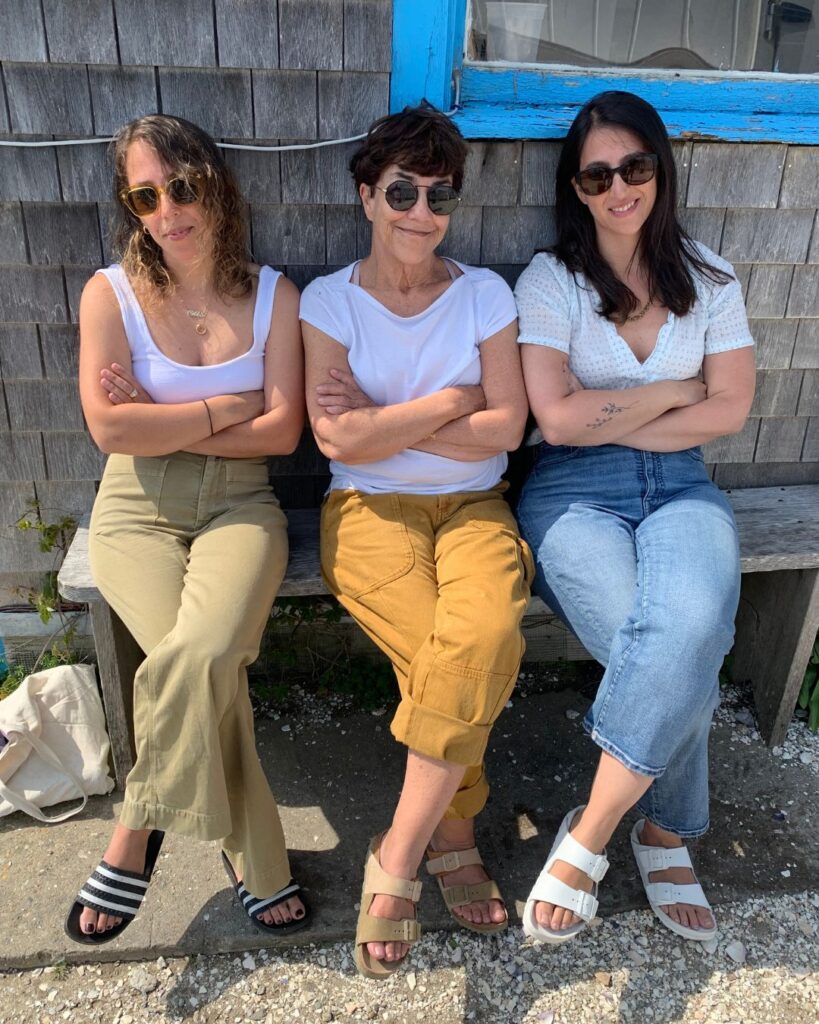
Health scares put everything into perspective — it’s no longer a hypothetical. Even though I’m fully immersed in the end-of-life space for work, it’s still unfathomable to me that my parents or those I love will no longer be here. I don’t think it’ll ever quite sink in. So I do little things to honor the time I do have, to not waste it. I started calling my parents more during covid. I still do, even if it’s five minutes on the way to the subway or when I’m walking my dog, Penny. I prioritize experiences with the people I love over things, over certain types of ambition. I choose quality time. I show up differently in my friendships because I know I’m not guaranteed anything. I’ve let myself redefine what success looks like, because on my deathbed, I truly believe it won’t be how many hours I worked in my business, it will be the connections I created within my community and those I love.
Life is long or short — we don’t know how long we’ll get. What I do know is that my phone will ring again; it did last week, in fact, and off to the ER I went at 4 am. And whenever it does, I want to be ready. Not just with the right paperwork and the right systems, but to be ready emotionally as best as I can, knowing that no one can ever be fully ready. I crave a life that has space for caregiving without losing myself completely. And prioritizing the things that actually matter, so when I look back, I don’t have regrets about how I spent my time.
My work in end-of-life care, this pivot, this whole third chapter of my career exists because I stood in that rehab facility and realized I had no idea what I was doing. Because I sat in hospital waiting rooms trying to manage a business remotely and felt completely alone. Because my mom looked at me and said she could handle anything for six to eight weeks, and I wanted to be able to say the same.
And when the next call comes, because it will, I’ll be as ready as anyone can be.