

‘Nobody else has issues with food after they get sober, right?’
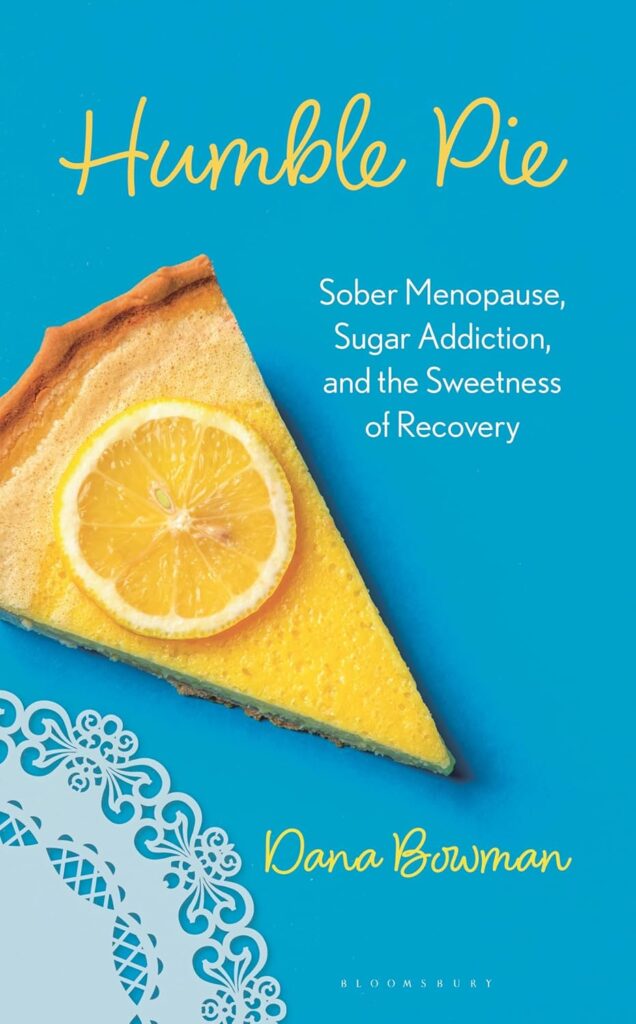
Enjoy this exclusive excerpt of Humble Pie: Sober Menopause, Sugar Addiction, and the Sweetness of Recovery.
. . .
And then, for a long time, sobriety got a lot easier. But after a while, sugar started to get harder. It’s complicated.
Here is an example: It’s been a stressful day. I’d started having issues with sleeping. My husband leaves for a work trip, so at around 5 p.m. I decided to call him to check that he didn’t die in a fiery plane crash. If he’s on a work trip and I have not heard from him in a few hours, my brain does this: “It must be a fiery plane crash. That’s why he hasn’t called. The boys and I are going to end up in a van down by the river.” Also, even if he hasn’t died in a fiery plane crash, I know that Brian doesn’t love me as much as I love him because he hasn’t called first. So, either way, I’m screwed. I finally trudge through all my neuroses and give him a call, and he picks up after two rings. I am not a widow. But now I’m resentful. It’s confusing.
Brian says, “Hey, babe! How’s my sweetie?” His words are buoyant, and I narrow my eyes. From across the miles, I can hear it. Brian has a beer voice. Now I’m more resentful. First of all, I was almost a widow. Second, I love him more than he loves me. And now, he has the audacity to drink when I cannot.
Food. Food was my second thought after the plane crash. “Well,” my brain says, slapping my knees, “Who’s hungry?” And right there, that’s when the thinking stops. Anxiety and addiction are dysfunctional siblings. Anxiety stands at the starting line of my mind, waiting for a feeling to fire the starting gun. That night, it was this conversation with my husband that pulled the trigger. My friend, Mindy, who is thirty-seven years sober, always tells me, “First thought wrong.” I do have to congratulate myself that after hearing Brian’s beer voice, my first thought was not, “Let’s drink at this. You are uncomfortable and stressed. Bring on thirteen glasses of wine.” That thought did not happen.
Instead, my first thought was “Well, let’s go for food. Nobody else has issues with food after they get sober, right?”
My binge starts in my brain. It has nothing to do with my stomach. There is no hunger, only feelings. The brain starts to feel stress and shifts in its seat, muttering, “Uh, I’m getting uncomfortable. Could we have some dopamine over here? I don’t do stress.” Ben and Jerry, camped out in the freezer, laconically raise their hands and say, “Dude. We’re here for you.” And my brain, always willing to go for the quickest option because it hates waiting, says, “Ah yes! That has always worked in the past! I have been grooving to this for ages. It is super effective.” Somewhere, buried deep in my prefrontal cortex, a bit of tired mumbling says, “Um, actually not so much really,” but after the first hit of sugar, my brain turns off. Like an old TV, it just clicks and the screen shudders to a pinprick of light, then black. Sugar pulls the plug. When the Snickers bar or the ice cream or the bagel hits my system, I don’t even get a groan of pleasure. There’s . . . nothing.
This, incidentally, is an enormous relief.
And this is why a binge is so very difficult to ward off. I would like to think my brain is super attentive to me and all my needs, but in this case, my brain zones out like when I drive for twenty minutes and then realize I have no recollection of how I got to my destination.
Oh, and willpower? It’s useless.
Sugar. It fires up my brain very much like a glass of wine does. The alcohol took all feelings of inadequacy, shame, and dread, and switched them off.
Sugar does the same. My brain likes a repetitive groove.
Let’s say you take a rat, name him Ralph, and feed him a lot of sugar. This rat lives in a small square cage with fluorescent lighting. Ralph’s dwelling has no ambiance. It’s pretty unpleasant, even if you are a rat. The most fun for Ralph is his wheel. If Ralph wants to work out, he can whirl himself around on it a couple of times, which is a bit of a thrill, but it’s short-lived. If he’s super bored, he can chew up a toilet paper roll. Ralph also only gets crunchy brown pebbles for lunch and dinner. Since Ralph is vastly more intelligent than anyone ever gives him credit for, Ralph knows his circumstances are less than ideal. So, when presented with a Ring Ding, Ralph takes a bite and immediately stops caring about the harsh lighting, his lack of a nice couch or cozy throw pillows, or that the water in his dispenser is never chilled. He is hit with a dopamine surge that makes his little paws scrabble for more Ring Ding. He wants only the Ring Ding now. If presented with the option to move out of his cage to a nice three-bedroom with a fireplace, he only wants the Ring Ding. He can’t remember what it feels like not to want a Ring Ding.
By the way, we did this exact experiment when I was in third grade, minus the three-bedroom cage. We had two rats, and all the kids brought junk food from home to give to the lucky rat. Our teacher fed the healthy rat a lot of lettuce. We treated our soon-to-be very obese rat to Cookie Crisp cereal, and we cheered when one day, a kid offered his lunchtime Twinkie. We named the junk food rat Templeton, and I am still haunted by whatever happened to him.
It was 1977, and I guess eight-year-old kids could mess up rats back then in the name of science. It was a different time.
So, am I the rat in this scenario? My cage has a lot more accent lighting because that’s important, but other than that, I think I’m the rat. I want the Ring Dings. When presented with the Ring Dings, I will forget about the last time I ate the Ring Dings, and I felt so gross and shaky afterward. I’m just a rat, looking at a Ring Ding, asking it to love her.
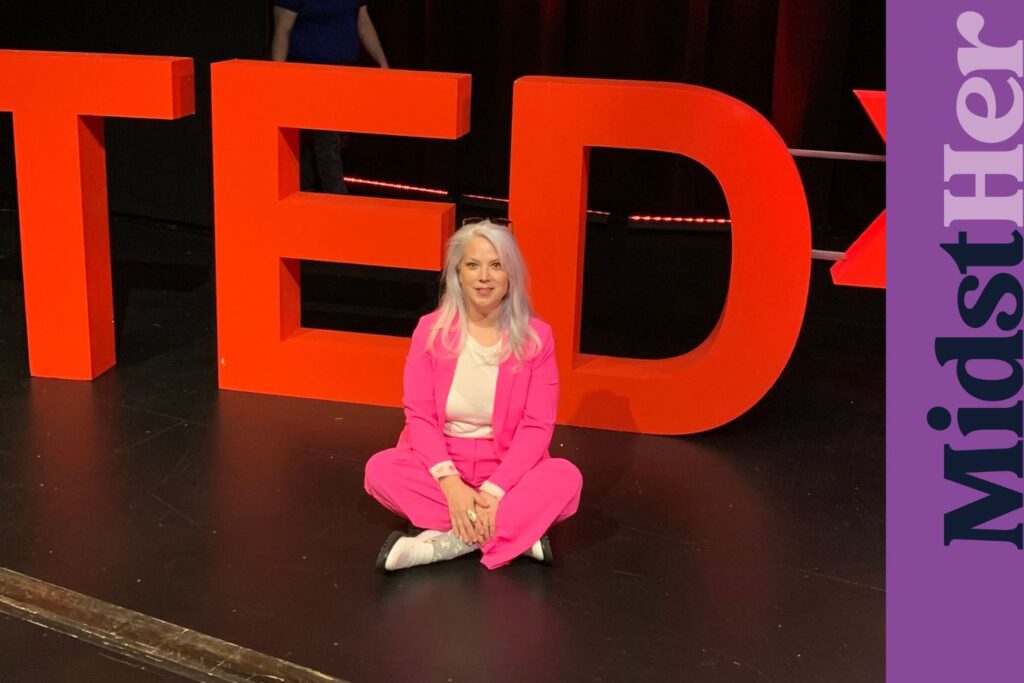
Dana Bowman takes on sober menopause and sugar addiction in ‘Humble Pie’
Age: 56 • Lives in an “adorable small town of Lindsborg, Kansas, right in the MIDDLE of the U.S.”
The Midst: You’ve written two books — Bottled: A Mom’s Guide to Early Recovery, winner of the 2016 Kansas Notable Book Award, and How to Be Perfect Like Me. In our book, you’re not just a writer, you’re an entrepreneur. How do you think about being a writer-preneur, and what’s your advice for aspiring authors?
Dana Bowman: The first thing I always say about writing is that it can be an isolating business. That’s why it’s so important to find community (kind of how I found you, Amy!) to help us when we feel like we are in a bubble of our own creation.