

Aging out of f#cks: The neuroscience of why you can’t pretend anymore
You’re in a meeting. Someone says something objectively wrong. And instead of doing your usual dance — the soft correction, the diplomatic phrasing, the careful preservation of everyone’s feelings — you just… say it.
“That’s not accurate.”
No cushioning. No apology. No emotional labor to make your truth more palatable.
And everyone looks at you like you’ve grown a second head.
Welcome to what I call the Great Unfuckening — that point in midlife when your capacity to pretend, perform, and please others starts shorting out like an electrical system that’s finally had enough.
You might think you’re becoming difficult. Impatient. One of those “bitter older women” you were warned about.
But here’s what’s actually happening: your brain is restructuring itself. And thank god for that.
The biology of not being able to fake it anymore
Let’s start with the science, because this isn’t about you becoming a worse person. It’s about your brain finally doing some overdue maintenance.
For decades, your prefrontal cortex — the part of your brain responsible for executive function, social behavior, and impulse control — has been working overtime. It’s been monitoring social cues, calculating risks, suppressing authentic responses, and managing everyone else’s emotional experience.
This is exhausting work. And it turns out, it’s unsustainable.
Research in neuroscience shows that as we age, the brain undergoes a process called synaptic pruning. Neural pathways that aren’t essential get trimmed away. Your brain is essentially Marie Kondo-ing itself, keeping what serves you and discarding what doesn’t.
And all those neural pathways dedicated to hypervigilant people-pleasing? They’re often first on the chopping block.
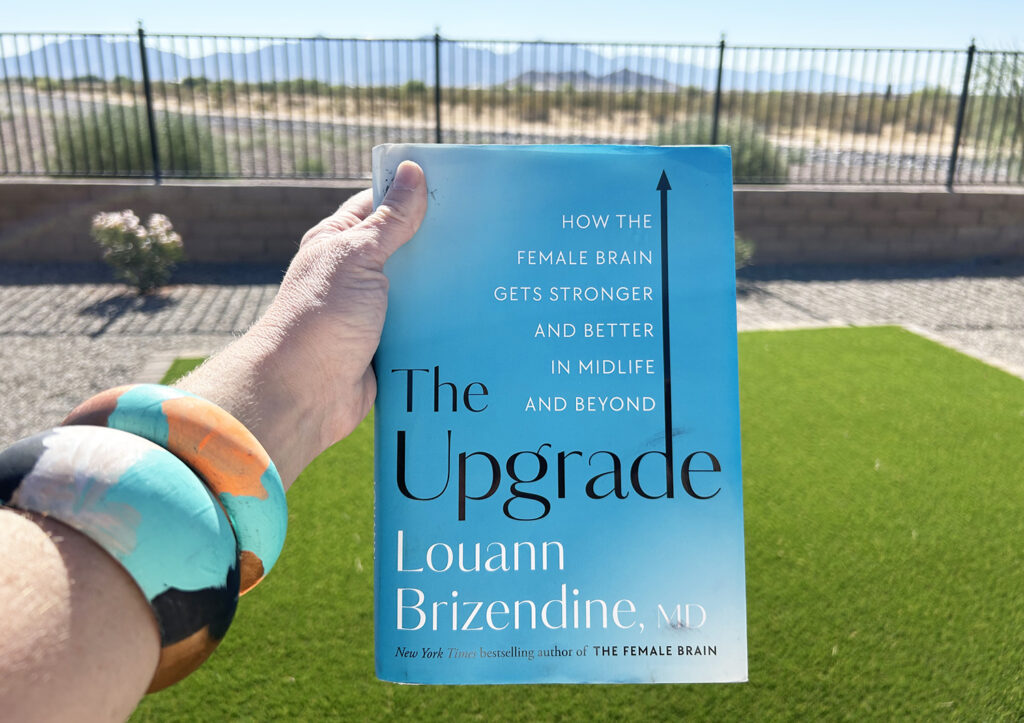
Dr. Louann Brizendine, neuropsychiatrist and author of The Female Brain, explains that women’s brains are particularly wired for social harmony and caregiving in the first half of life — driven partly by estrogen and oxytocin. But as estrogen levels shift in perimenopause and beyond, this intense drive to please and nurture others begins to diminish.
What replaces it isn’t bitterness. It’s clarity.
The accumulated cost of a lifetime of performance
Think about what you’ve been doing since you were old enough to understand social dynamics:
Reading the room. Adjusting your tone. Softening your language. Making yourself smaller to make others comfortable. Laughing at jokes that weren’t funny. Agreeing with opinions you didn’t share. Explaining things carefully so no one feels threatened by your knowledge.
You’ve been running complex social calculations every single day for decades.
There’s a concept in psychology called “decision fatigue”. The deteriorating quality of decisions made after a long session of decision-making. But what we don’t talk about enough is emotional labor fatigue.
After thousands of interactions where you’ve monitored and managed your authentic responses to maintain social harmony, something in your system starts breaking down. Not because you’re broken, but because the system was never meant to run this way indefinitely.
Your brain isn’t malfunctioning. It’s finally refusing to malfunction anymore.
Why women experience brain changes more intensely
Men experience aging changes too, obviously. But women tend to report this shift more dramatically, and there’s a reason for that.
From childhood, girls are socialized for social harmony in ways boys simply aren’t. Research shows that girls as young as 4 already demonstrate more awareness of others’ emotions and adjust their behavior accordingly more than boys do.
By the time you reach midlife, you’ve had 40+ years of this conditioning. That’s four decades of:
- “Don’t be bossy” (translation: don’t lead)
- “Don’t be pushy” (translation: don’t assert boundaries)
- “Don’t be difficult” (translation: don’t have needs)
- “Don’t be emotional” (translation: don’t be human)
You’ve been performing an elaborate social choreography so long it became automatic. You stopped noticing you were doing it.
Until suddenly, you can’t anymore. Or more accurately — you won’t.
What’s actually happening in your brain in midlife
Several neurological and hormonal shifts converge in midlife that contribute to this phenomenon:
Hormonal recalibration
As estrogen declines, so does its moderating effect on emotional responses and social bonding behaviors. You’re not becoming “hormonal” in the dismissive sense. You’re becoming less chemically compelled to prioritize others’ comfort over your own truth.
Prefrontal cortex changes
The same executive function region that helped you suppress inappropriate responses for decades starts operating differently. Some research suggests it becomes less reactive to social judgment and approval. You’re literally less neurologically invested in what others think.
Accumulated stress response
Decades of chronic low-level stress from constant social monitoring takes a biological toll. Your stress response system — the HPA axis — can become dysregulated. What looks like “not having a filter” might actually be a stress response system that’s finally saying “enough.”
Cognitive prioritization shifts
Your brain starts prioritizing differently. Energy becomes more precious. Time becomes more finite. The cost-benefit analysis of pretending shifts dramatically.
The social backlash is real (and expected)
Here’s the part that makes this transition so uncomfortable: other people don’t like it.
When you stop performing emotional labor, systems that relied on that labor start breaking down. And instead of examining why the system needed your performance to function, people blame you for withdrawing it.
You’re suddenly:
- “Not a team player”
- “Going through something”
- “Difficult to work with”
- “Changed” (said with concern that really means disapproval)
The same directness that would be called “no-nonsense” in a man gets called “abrasive” in a woman over 40.
This backlash is proof of concept. It confirms that your people-pleasing wasn’t optional. It was required labor that kept everything running smoothly. And when you stop providing it for free, people notice.
The discomfort you’re causing? That’s not your problem to fix. That’s information about a system that was always exploiting you.
The fear that comes with liberation from people-pleasing
But here’s what complicates this: the liberation feels dangerous.
You’ve been rewarded your entire life for being accommodating. Easy. Pleasant. Not too much. The positive feedback loop of being liked is powerful, and you’re now breaking that loop.
You might find yourself afraid that:
- You’re becoming “that woman” — the bitter, difficult one everyone avoids
- You’ll lose relationships (and you might — more on this in a moment)
- You’re being selfish or narcissistic
- You’re overreacting or being “too sensitive” (ironic, since you’re actually being less sensitive to others’ reactions)
These fears are valid. But they’re also old programming.
The woman you’re afraid of becoming? She’s not real. She’s a cautionary tale designed to keep you compliant.
What you’re gaining
Let’s be explicit about what’s actually happening when you “lose your filter”:
Authenticity
The real you — the one who’s been submerged under layers of performance — is finally surfacing. This might feel harsh because authentic humans have edges. They have opinions. They have boundaries. These aren’t character flaws.
Time
All the energy you spent managing everyone else’s experience? That’s now available for literally anything else. The return on investment is staggering.
Clarity
When you stop cushioning every truth, reality becomes clearer. Problems that were obscured by diplomatic language become visible and therefore solvable.
Real relationships
Some relationships will end when you stop people-pleasing. These were transactional relationships sustained by your performance. What remains are connections based on who you actually are.
The relationships that don’t survive
This is hard to talk about but necessary: some relationships won’t survive your refusal to keep pretending.
Friendships built on shared complaining but not actual intimacy. Work relationships that relied on you doing emotional labor others weren’t doing. Family dynamics where you played mediator, peacemaker, or emotional manager.
When you stop playing these roles, one of two things happens: The relationship evolves into something more authentic, or it dissolves because it was never based on authentic connection in the first place.
Both outcomes are information.
Losing relationships because you stopped performing isn’t actually loss. It’s clarity about what was never really there.
How to navigate this transition
If you’re in the thick of this shift, here’s what helps:
- Name what’s happening. “I’m not becoming difficult — I’m becoming authentic. My brain is reorganizing around honesty instead of performance.” Language matters. The story you tell yourself about this change shapes your experience of it.
- Expect resistance. When you stop over-functioning in relationships and systems, others will push back. This isn’t evidence you’re doing something wrong. It’s evidence you were doing too much before.
- Practice the pause. You don’t have to swing from people-pleasing to brutal honesty overnight. Notice when you’re about to soften/cushion/apologize unnecessarily. Pause. Choose consciously whether to add the cushioning or not.
- Find your people. Other women going through this same shift. They exist. They’re tired of pretending too. These relationships will feel different — less performative, more substantial.
- Grieve if you need to. There’s loss here too. Loss of approval, loss of being liked by everyone, loss of your identity as “the nice one.” This grief is legitimate even as the change is ultimately positive.
The unexpected gift of aging out of fucks
Here’s what no one tells you about aging out of fucks: it’s practice for being fully alive.”
Every small death of ego, every shedding of others’ opinions, every moment you choose truth over approval, you’re rehearsing the ultimate letting go.
You’re learning to exist as yourself regardless of external validation. This is spiritual work masquerading as social rudeness.
The woman who can say “that’s not accurate” without apologizing is the same woman who can eventually face her own mortality without flinching. She’s practiced not needing everyone’s approval. She’s learned that her worth isn’t contingent on being pleasant.
You’re not becoming difficult — you’re becoming free
The “you” that’s emerging isn’t a worse version. It’s the version that was always there but buried under decades of social conditioning to maintain harmony at any cost.
Your brain is finally doing triage. Deciding what actually matters. Cutting away the pretense that never served you.
The filter you’re losing wasn’t protecting you. It was protecting everyone else from your truth.
And your truth? It’s not the problem.
The system that required you to hide it was always the problem.
So when someone says you’ve changed, when they say you’re not the person you used to be, when they imply something’s wrong with you now?
They’re right. You have changed.
You’ve changed into someone who’s no longer available for performance.
And that’s not difficult.
That’s development.
This story was originally published here on Ellen Scherr’s Substack.

Are you going to The AI Advantage Summit?
Tony Robbins, Dean Graziosi, and AI experts spent hundreds of hours learning the best of the best about AI. Now they’re sharing the top takeaways for free.
How to stop being a people pleaser: Real advice from therapists and women who’ve been there, done that
By Alexis Mera Damen
I used to think being nice and liked by everyone was my superpower. I’d try to smooth over tension before it surfaced and anticipate other people’s needs before they voiced them. It made me a reliable employee, a “low-maintenance” friend, and sometimes even the family mediator. But I felt exhausted, resentful, and weirdly disconnected from myself.

How to overcome self-abandonment
You’ve been everything to everyone.
You hustle, overdeliver, say yes when you mean no, and carry the emotional weight of everyone around you. You’ve spent your whole life perfecting your expected roles—daughter, wife, friend, employee, mother—all while silencing your own desires and losing yourself in what other people want. You tell yourself you’re fine. You’re strong. You’ll rest later. But the truth is, you’re exhausted.
The Midst is a community-driven platform leaning into the messy middle of life pivots, career and relationship upgrades, perimenopause, building businesses, and so much more. We help women play by their own rules to become the women they are meant to be. Subscribe to our free Substack newsletter for exclusive content that you can’t get here on the-midst.com.