

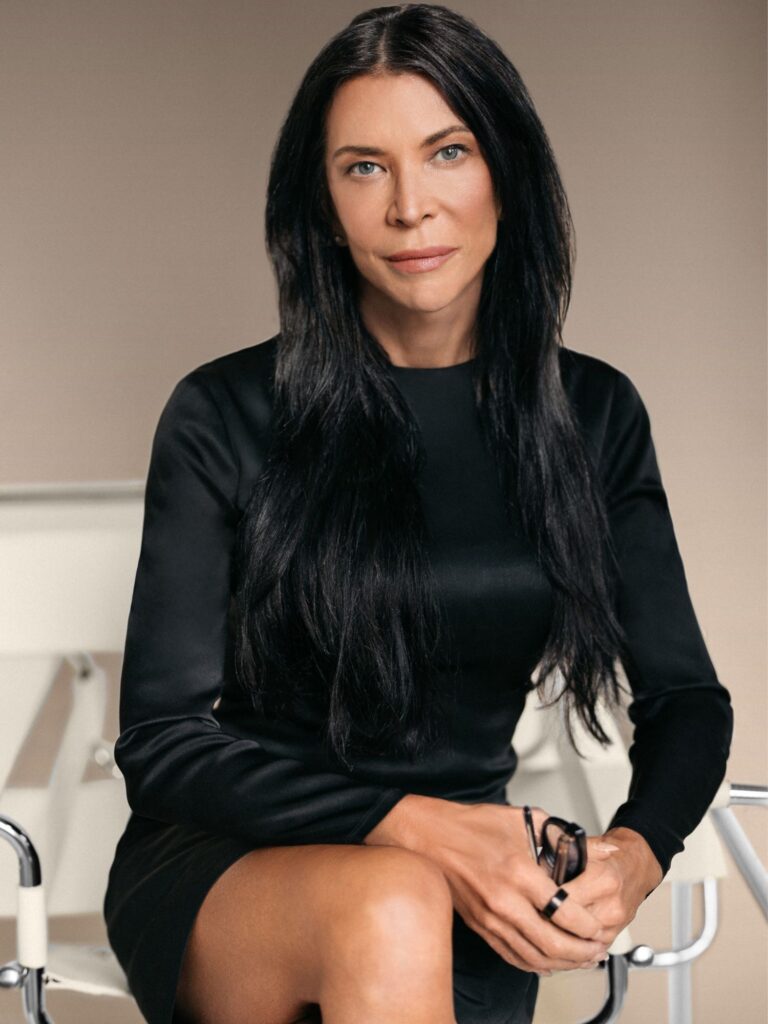
Is Dr. Elizabeth Poynor the next big thing in women’s health and longevity?
Sorry, can’t talk. We’re listening to Dr. Elizabeth Poynor’s new podcast, Decoding Women’s Health, on Malcolm Gladwell’s audio network, Pushkin Industries.
Launched October 7, Decoding Women’s Health digs into expert, science-backed, and accessible insights to handle the many transitions and complexities of midlife, from understanding hormones to aging well.
And Dr. Poynor should know. At 63, the New Yorker is thriving in midlife — she plans to live to 115. As a gynecologic oncologist and advanced pelvic surgeon, Poynor has a deep understanding of women’s health. Her expertise is in the management of complex women’s health issues as well as aging strategies, hormonal, and endocrinological health concerns.
Through her extensive surgical and medical background, she takes a holistic approach to women’s care — and that’s what makes her interesting.
The Midst: What are you in the midst of?
Dr. Poynor: I’m in the midst of three exciting projects. In addition to Decoding Women’s Health, I am finishing my book about midlife women’s health, and I’m building something I’m really proud of: the Women’s Health Program at the Atria Health Institute.
Atria is a truly unique ecosystem that brings together physicians, researchers, thought leaders, tech innovators, content developers, and entrepreneurs. Our shared mission is to transform health care — shifting from a reactive model that waits for disease to appear to a proactive model that prioritizes prevention, healthspan, and longevity.
In this environment, I have the privilege of leading our women’s health initiatives, where we look at the entire body through a hormonal lens — integrating brain health, cardiovascular and metabolic health, bone health, and overall wellness into one cohesive program. It’s not about treating problems after they arise, but about anticipating, preventing, and supporting women in midlife and beyond with cutting-edge science and care.
What makes Atria unique is not just the depth of expertise, but the daily collaboration across disciplines. We’re sitting at the same table — clinicians, researchers, technologists, and entrepreneurs — asking how to redesign health care for women, and then actually building the solutions.
Alongside this, we’re committed to getting the science out into the world — through technology and through platforms like our new podcast. For me, being “in the midst” means standing right at this intersection of science, care, and communication — developing new models of proactive women’s health while making sure the knowledge reaches the women its meant to serve.
How much of the longevity conversation should be connected to menopause and how?
Women’s longevity is absolutely tied to menopause, but the conversation shouldn’t start at menopause — it needs to start well before. The physiologic shifts that influence long-term health — lipid changes, disrupted metabolism, cardiovascular risks, and even changes in brain health — actually begin in the late reproductive years, when ovarian reserve declines and hormone levels start to fluctuate.
We should not wait until menopause to be proactive rather than reactive. To truly support longevity, we need to focus earlier — on the late reproductive years and even earlier, throughout the reproductive span — so women have the opportunity to protect brain, heart, metabolic, musculoskeletal, and mental health before the major transitions occur.
As for my own longevity, I don’t just want to live long — I want to live well. My personal goal is 115. That number may sound arbitrary, but for me it represents a vision of healthy longevity: being active, engaged, and able to fully experience life.
Part of my motivation comes from witnessing, firsthand, just how much medicine has evolved in my lifetime. When I was in medical school, we were taught that the brain had no plasticity — that once neurons were lost, that was the end of the story. Now we know the opposite is true: the brain is adaptable and responsive, and we can actively shape it through both healthy living and mental practices.
I’ve also seen cancer care evolve from radical surgeries and blunt chemotherapy to highly targeted treatments and immunotherapies. If all of that can change in just a few decades, imagine what we’ll see in the next 50 years! That’s what excites me — and that’s why I want to be here, living with vitality, and continuing to contribute and serve.
What topics will you dig into on Decoding Women’s Health?
Decoding Women’s Health was born out of a simple but powerful need: to put all of the essential information about midlife women’s health in one place, through a lens that truly reflects women’s lived experience. Too often, women’s health has been reduced to what I call “bikini medicine” — a narrow focus on reproductive organs — while overlooking how hormones influence every system in the body. On the other hand, internists and specialists may understand brain, heart, or bone health, but rarely connect those systems back to hormonal changes. That gap leaves women without the whole picture.
This podcast is designed to change that. We take women’s health out of the silos of and reframe it as a fully integrated, interconnected system. I sit down with leading experts and thought leaders across disciplines — cardiology, neurology, endocrinology, psychiatry, oncology, integrative medicine, and more — to bring evidence-based insights directly to women in midlife. Our goal is to translate science into actionable knowledge, so listeners walk away not just with information, but with tools they can use.
The conversations span a wide spectrum: brain health, cardiovascular and metabolic health, musculoskeletal strength, mood and sleep, cancer prevention, and emerging therapies. We also lean into cutting-edge and sometimes under-discussed areas — from the role of medical cannabis and psychedelics in midlife women’s health, to the future of longevity medicine.
Ultimately, Decoding Women’s Health is about creating a trusted, centralized hub of knowledge — for women themselves, and even for clinicians who want to broaden their understanding of midlife women’s health. It’s about moving beyond fragmented care and into a model where women can finally see how all the pieces fit together.

Perimenopause and menopause awareness has made significant progress in the last couple of years, but we’re still in a bit of the wild west in terms of building awareness about treatment options. How do you think the topic of perimenopause and menopause will evolve in the next five years?
The very word “menopause” dates back to 1821, when French physician Charles-Pierre-Louis de Gardanne coined it in an attempt to unify medical language. While it was useful at the time, the term reflects a 19th century understanding of women’s biology — one that oversimplified a complex process into the singular “cessation of menstruation.” Two hundred years later, our science has advanced, but our terminology and diagnostic tools haven’t kept pace.
In the next five years, I believe we’ll see a paradigm shift. We need to move beyond these antiquated definitions and toward more precise measures of ovarian aging and ovarian reserve. Instead of labeling women only once they’ve crossed the threshold of menopause, we should be able to identify where they truly are along the trajectory of ovarian aging — and intervene before adverse physiologic changes fully set in. That means supporting declining estrogen and progesterone earlier, when interventions can be most impactful.
This isn’t just about reproductive health. It’s about midlife women’s health as a whole — from cardiovascular and brain health to bone and metabolic integrity. Ovarian function and hormones are deeply intertwined with healthy longevity. In the future, we’ll talk less about “menopause” as an isolated event and more about ovarian longevity as a critical determinant of overall healthspan. The science and technology already exist—we just need to apply them to redefine how we care for women in midlife.
Can you tell us about your forthcoming book about midlife women’s health?
My upcoming book — which I don’t have a release date for just yet — is a proactive guide for women in midlife, beginning around age 40, to truly understand what’s happening in their bodies and, more importantly, what they can do about it. Midlife is a time of profound physiologic change — hormonal shifts, metabolic transitions, changes in brain, bone, and cardiovascular health — yet many women enter this stage without a clear roadmap.
The book is designed to change that. It’s structured to walk women through what to expect as their bodies evolve, while also offering practical, science-based, and accessible solutions. My goal is not just to explain the changes, but to empower women with the tools to optimize their health, energy, and resilience.
At its core, this book is about reframing midlife as a reset point rather than a decline — an opportunity to build strength, protect brain and heart health, support metabolism, and lay the foundation for healthy longevity. It’s written to be both a reference and a companion, helping women navigate midlife with clarity, confidence, and actionable strategies.
You are a medical expert and an entrepreneur. How have you approached mixing the two skill sets, and what advice do you have for fellow entrepreneurs and those who aspire to start a business?
At their core, medicine and entrepreneurship actually draw on many of the same skills. To be a true innovator in health care, you have to be willing to step outside the safe, well-worn path — just as entrepreneurs do. Both require creativity, the courage to embrace change, and above all, resilience. Whether you’re treating patients or building something from scratch, challenges and setbacks are inevitable. The ability to truly understand, practice, and live resilience is what allows you to keep moving forward when things get hard.
For fellow entrepreneurs — or those considering taking the leap — my advice is simple but powerful: follow your passion and anchor yourself in your core values. A mentor once told me to define my values clearly and never stray from them. That has been the compass guiding every decision, especially when the road has been uncertain. Passion provides the drive; values provide the direction.
And perhaps most importantly — don’t fear failure. Not every idea or endeavor will succeed, but each misstep is a lesson. Failure can point you toward a better solution, a clearer path, or even a more meaningful opportunity. If you meet those moments with resilience — rather than defeat — they can become the very foundation of future success.
What is one of the biggest life or professional challenges you’ve overcome, and what did you learn from it?
As physicians, we are often very good at giving advice — but not always at living it ourselves. That truth became very real for me when I underwent major surgery and suffered a serious complication that left me malnourished and on bedrest. When I left the hospital, I couldn’t even walk across a room. I had to crawl up the stairs of my own home. I was terrified I might never return to the level of function I had before the surgery.
In that moment, I made a decision: I would commit — fully — to my own health. I began strength training. I prioritized nutrition. I shifted my mindset and invested in personal development. Step by step, I rebuilt myself. Today, I don’t just recommend strategies for health and longevity; I live them. Outside of a pesky Diet Coke habit I’m still trying to break, every piece of advice I give is grounded in science and also my lived experience. I truly walk the walk that I talk.
This experience transformed me — not only physically, but professionally. It has made me a more focused, productive, and empathetic physician. I now see resilience not as an abstract idea, but as something I’ve had to embody. And I carry that into every patient encounter, every project, and every part of my work in women’s health and longevity.
Connect with Dr. Elizabeth Poynor
Decoding Women’s Health with Dr. Elizabeth Poynor podcast
Dr. Poynor websites and social media
Atria Health and Research Institute
Dr. Elizabeth Poynor‘s Linkedin
Instagram @poynorhealth
Instagram @pushkinpods
Instagram @atria.health
Dr. Elizabeth Poynor is part of the Founding MidstHer community for solopreneurs, founders, experts, self-starters, and community builders. Learn more about the Founding MidstHer program here.
Related: Read 6 longevity experts share top ‘doable’ tips for aging well