

It took 25 years to diagnose my endometriosis. Here’s what I wish I’d known
It’s 3 a.m., and I’m on the bathroom floor, cold from sweat. I focus on the weight of my body pressed against the cool tile, the only thing distracting me from the waves of nausea and ripping pain inside my belly. My little dog rests his head in the arch of my foot. If a tree falls in the forest, does it make a sound? He’s the only witness.
I’m a licensed psychotherapist. It’s my job to help people with the mind-body connection and decode somatic messaging from within their bodies. Yet I spent 25 years not knowing what my own body was trying to tell me.

What is endometriosis?
Endometriosis is a condition in which tissue from the uterine lining implants itself on organs outside the uterus, according to the American College of Obstetricians and Gynecologists (ACOG). Most commonly, endometriosis affects the ovaries, fallopian tubes, bowel, and bladder — but has been found in nearly every organ in the body, including the diaphragm, lungs, and, in rare cases, the brain. The growth of endometriosis is related to levels of estrogen in the body and can cause inflammation and adhesions (bands of scar tissue that can fuse organs).
ACOG estimates that endometriosis affects approximately 1 in 10 women of reproductive age. According to a 2025 systematic review published in BJOG: An International Journal of Obstetrics and Gynecology, the average time in the United States to diagnose endometriosis ranges from 5 to 8 years, with some women waiting much longer. The researchers note that diagnostic delay is often due to physicians not being educated about endometriosis and they call for increased awareness and targeted interventions.
For me, getting an endometriosis diagnosis took a quarter century.
The medical gaslighting started early
When I was a teenager, I’d miss school because the pain was so intense that I couldn’t get out of bed. One morning, at 17, I took a bath hoping for relief, but I fainted as I got out of the tub to put on a robe. My dad found me on the bathroom floor. I lived with my single father, and we never talked about my period. It was understood that it happened, the way the weather happens. That morning, I had to say the shameful thing out loud so I could stay home. We never spoke about it again.
At school, I reached out to my gym teacher, thinking surely, she would know how to help with this. “You just need more exercise,” she said. “The pain will go away.” I believed her and thought that somehow the pain was my fault for being too lazy. I became obsessed with working out, convinced it would cure me. To this day, I still box, do yoga, dance… I became someone who could power through anything. Exercise did not cure the pain. In fact, the pain became worse over time, and, eventually, my capacity to power through failed.
What are some of the symptoms of endometriosis?
Looking back, the signs were clear. Here’s what I wish someone had told me to watch for:
- Pain that interrupts your daily life
Not just discomfort, but pain that keeps you home from work, school, or an inability to participate in routine activities. - Pain beyond your period
Endometriosis can cause pain during ovulation, sex, bowel movements, or just… all the time. If your pelvic pain isn’t confined to your period, pay attention. - GI symptoms that sync with your cycle
Bloating, constipation, diarrhea, or nausea that gets worse around your period. - Heavy or irregular bleeding
Soaking through a pad or tampon every hour, or bleeding between periods. - Chronic fatigue
If you’re tired all the time and can’t figure out why, this could be a part of the picture. - Infertility
Many women don’t discover they have endometriosis until they struggle to conceive.
What doctors often miss about endometriosis and what to do about it
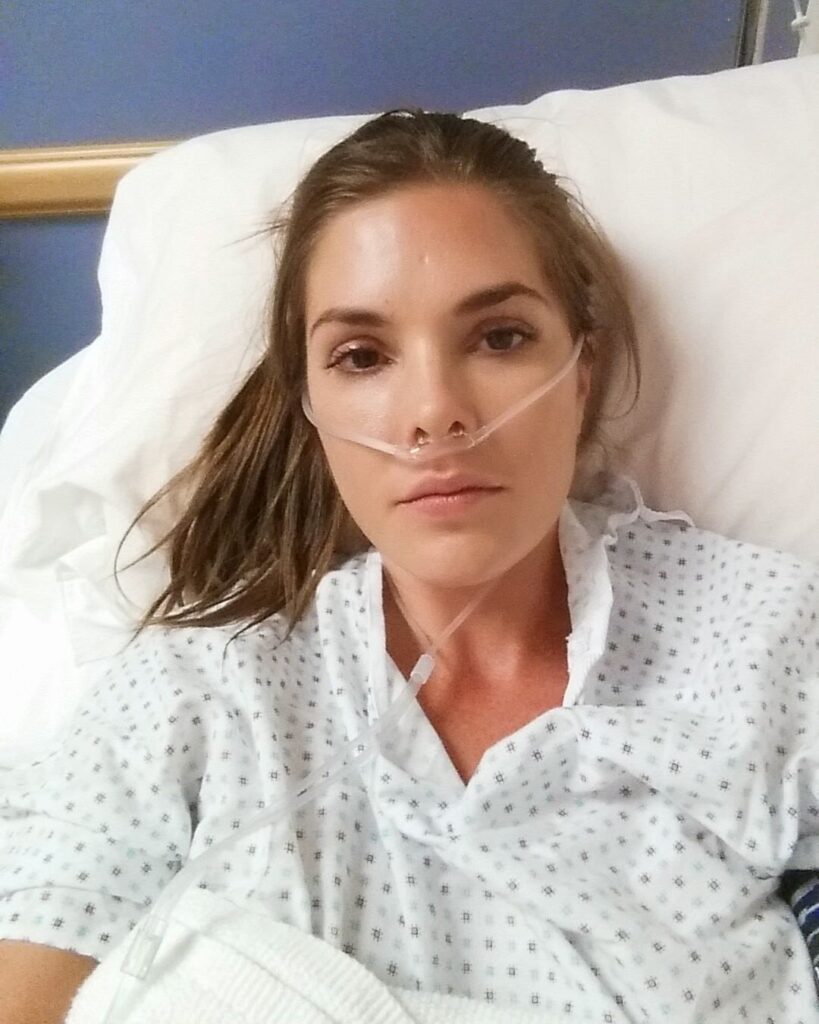
I had the same gynecologist for 15 years. I complained to her countless times. I rushed to her office in crisis on multiple occasions, doubled over, unable to function. She gave me shots of narcotics to manage the pain. She never once said the word “endometriosis.” When I asked her what was wrong with me, she said, “You have painful periods. Have a baby. That will help resolve the issue.”
I’ve learned that many doctors, even OB-GYNs, are not adequately trained to recognize or understand endometriosis. The symptoms overlap with other conditions (IBS, ovarian cysts, pelvic inflammatory disease, SIBO), and there’s a long history of dismissing women’s pain as psychological.

What finally worked for me
I went to my internist in tears and told him, “I think I have cancer.” I truly believed this to be the case since there was seemingly no other explanation for my pain. He listened. He examined me and immediately referred me to an endometriosis specialist. “I think this is reproductive-related,” he said. After one meeting with the specialist, he suspected what 15years of visits to the same gynecologist missed.
If you suspect you have endometriosis, here’s what I recommend:
- Find a specialist: Not just any OB-GYN, but a doctor who specializes in endometriosis.
- Document everything: Track your pain, your cycle, your symptoms, and bring the data to the appointment with the specialist.
- Don’t accept, “it’s just bad cramps.” If your pain is severe enough to disrupt your life, that’s not normal.
- Ask about imaging: While a definitive diagnosis requires confirmation from pathology after surgery, a skilled specialist can sometimes detect endometriosis via transvaginal ultrasound or MRI.
- Trust yourself: You know your body. If something is wrong, keep advocating until someone listens.
What chronic pain does to the nervous system
When I finally got diagnosed, I was put on medication to manage chronic pain leading up to surgery. My doctor explained that my nervous system had been in a prolonged activated state, running on survival mode for decades due to the unaddressed pain. It validated the years of difficulty managing stress, the heightened anxiety, and the way I had learned to function in a constant state of hypervigilance because I had been told the pain could not possibly be that bad.
As a therapist, I see this pattern in my clients, too. When your pain is repeatedly invalidated by doctors, by family, by a culture that tells women to just deal with it, you start to question yourself. You stop trusting your own body, your own feelings.
Getting the positive report back from pathology, confirming the diagnosis of endometriosis, validated 25 years of wondering if I was being dramatic.
Endometriosis can be a dangerous disease
In 2014, seven years before my endometriosis diagnosis, I was hiking when I developed sudden, severe abdominal pain. I ended up in the ER needing emergency surgery for a twisted bowel caused by an adhesion. The surgeon saved my life, but because no one had ever suspected endometriosis, he wasn’t looking for it. He fixed the obstruction and sent me home. It wasn’t until years later that I connected the dots: That adhesion was almost certainly caused by the same disease that had been growing inside me since I was a teenager. The cramps I was told to exercise away had migrated to my intestines and put me in a life-threatening situation.
This disease is not a minor inconvenience. It can affect your fertility, your organs, and your quality of life. And the longer it goes undiagnosed, the more damage it can do.
You’re not making it up
If you’re reading this on your own bathroom floor, or powering through another day of pain that no one seems to take seriously, I want you to listen to your body. You deserve answers, and you deserve to stop wondering if the pain is that bad. It’s real. I spent too much of my life learning the hard way.
References
American College of Obstetricians and Gynecologists. (2021). Endometriosis.
American College of Obstetricians and Gynecologists. (2021). Heavy menstrual bleeding.
De Corte, P., Tambuyzer, T., Engelen, L., Van den Broeck, U., & D’Hooghe, T. M. (2025). Delay in diagnosis of endometriosis: A systematic review and meta-analysis to evaluate the worldwide median time and mean time from symptom onset to diagnosis. BJOG: An International Journal of Obstetrics and Gynaecology, 132(1), 118–130.
National Institute of Child Health and Human Development. (2024). What are the symptoms of endometriosis? U.S. Department of Health and Human Services, National Institutes of Health.
The Midst is a community-driven platform leaning into the messy middle of life pivots, career and relationship upgrades, perimenopause, building businesses, and so much more. We help women play by their own rules to become the women they are meant to be. Thinking about starting a business or going out on your own? Learn about The Midst community of founders.