
ASAP = the best time to build your personal brand in the AI Age
According to serial entrepreneur Daniel Priestley, the next couple of years are critical for building a personal brand — (no) thanks to a surge in AI-generated content that’ll make it difficult to establish authority later.
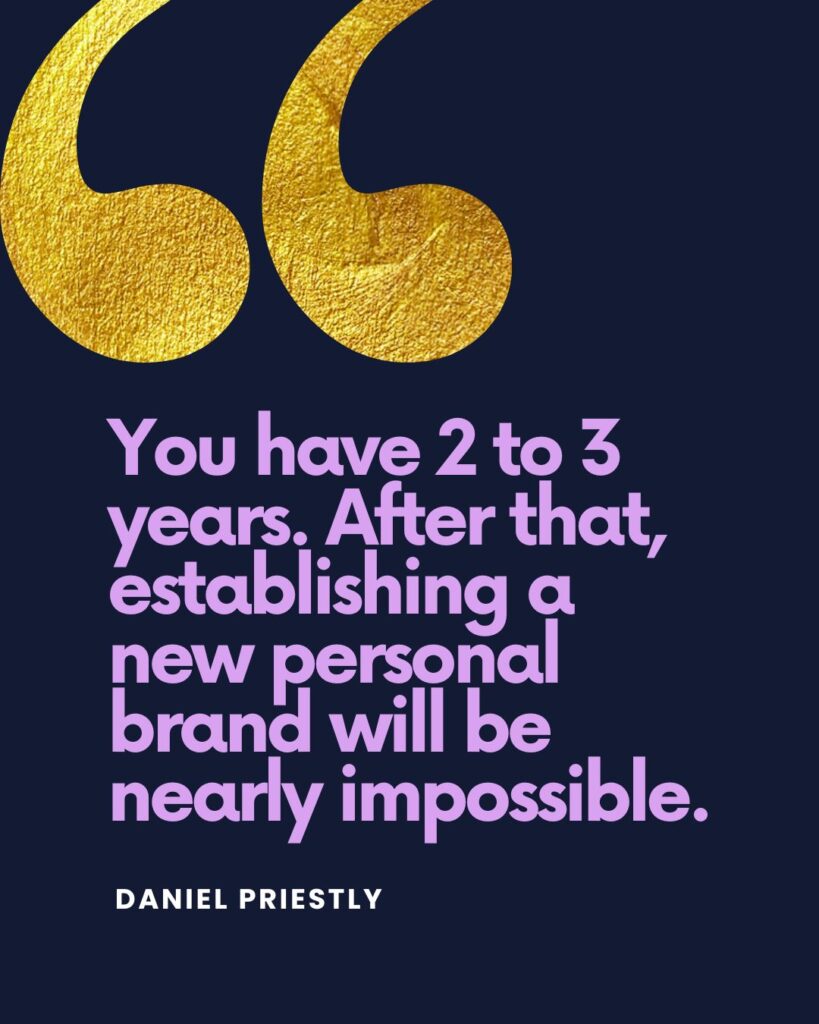
He argues that a strong personal brand is the ultimate leverage in the Age of AI, allowing you and me to stop chasing opportunities and instead attract them to us. This is especially crucial now, with the existential question of which jobs will still be around in five years.
No pressure, right?
The urgency to build a personal brand is a complicated mix of good and bad news, depending on your industry, your expertise and core skills, and how entrepreneurial you are. Here’s a likely future scenario that we’re already seeing evidence of:
- The AI flood of artificial content will drown out an oversaturated market of information, making authenticity a rare commodity.
- In a world where you’re not quite sure what information is accurate and reliable, people will increasingly rely on human beings they trust and who legitimately know what they’re talking about.
- Personal brands that have been around the block will make it harder for late-to-the-party brands to compete.
Marketing guru Gary Vaynerchuk argues that we’re moving toward a barbell strategy in marketing: “extremely digital on one side and extremely analog on the other. The middle is dying.”
He says that with the rise of GEO (Generative Engine Optimization) and AEO (Answer Engine Optimization) and live shopping, the digital transformation will impact brands and retailers more than ever. Meanwhile, as a counter to this explosion of technology, Vaynerchuk says, “you have this effect of real-life, physical, tangible analog executions like cafés and pop-up sampling events, pop-up shops, activations at concerts and sporting events.”
Amen to unique human experiences. Here are two of Vaynerchuk’s points about the dichotomy between digital and analog:
- “People are yearning for experiential because we live in a digital world: brain rot, scrolling in bed. As a result, we’re going to more concerts, more sporting events.”
- “Soon, you’ll see brands investing heavily in two extremes: AI, social, and digital content at massive scale on one side, and real-world experiences and analog interactions on the other.”
A related aside: This morning I talked with my friend MacKenzie Wilson (project manager by day, proprietor of Goldhawk Paper Co. by night) about how it feels awkward sometimes to share our “brand stories” on social media. Maybe it’s because we’re Gen X or we attended journalism school, where we learned that good storytelling is not about what you think, but about reporting on the facts of what other people think.
In the meantime, many of us Gen Xers and elder Millennials have spent our entire careers trying to fit into a box. We were trained to shapeshift ourselves into widgets that keep The Employment Machine running. Now that The Box is degrading, it’s time to think outside of it, identify modern problems, and brainstorm potential solutions. Aka entrepreneurship.
I believe wholeheartedly that every problem is an opportunity, disguised or not. I believe now more than ever that we must face the murky future-of-jobs problem by exploring our collective and individual entrepreneurial tendencies. It’s time to scratch your creative itch. Start the project, the business, or community now. Maybe you already have.
Micro is the new macro
Small is the new big. This was one of my taglines for a company I started called DIY Business Association in New York a bit after the economic downturn, in ~2010. I was a little early to the solopreneur empowerment movement, but am right at home reviving the concepts now.
The DIY Business Association ended up leading me to a full-time job at Etsy, creating educational content for Etsy sellers. … Which led me to designing scalable content strategies for other companies for a decade after that.
My back-and-forth between entrepreneurship, working as an employee for larger companies, and now again as a solopreneur has helped me and hurt me at the same time. Some companies appreciated my entrepreneurial spirit and ability to wear multiple caps. But very large companies tended to say, “Don’t worry about doing X. That’s what X department is for.”
Now I’m fairly certain I’ll be an entrepreneur in some shape or form for the rest of my career. I cannot afford to rely on someone or something else to pay my bills.
In “The End Of Multi-Billion Dollar Tech Companies”, tech entrepreneur Joe Procopio (one of my favorite writers) argues that the entire structural future of the tech industry is changing dramatically and permanently. He also talks about “the end of working harder, not smarter” and how rigid corporate processes may fall by the wayside in favor of nimble ones. “AI, used properly, is on the verge of making business needs, customer demand, customer response, and customer engagement nearly guess-free in almost real time,” he writes.
Which naturally leads to the hot topic of vibe-coding and running a solo empire that, not too long ago, required a team of specialists to operate. But even if we’re armed with a fleet of AI tools, being a solopreneur or small business requires creativity and new ways of thinking outside the box.
“In today’s world, your creativity is the most scarce resource,” says writer-preneur Dan Koe, and I hope he’s right. “Anyone can build anything,” Koe writes on Substack. “Anyone can think anything. Anyone can write anything. The people who will win in business, writing, art, and general quality of life, as always, will be those who can take the most creative path. The path that nobody else considered to take.”
I concur. But it isn’t easy for me to say that, as a recovering former full-time employee who enjoyed a Silicon Valley healthcare, 401K, salary + bonus, and equity. Part of the recovery process involves getting back to my entrepreneurial roots and letting my creativity flow.
After several years of side-hustling The Midst, I’m now full-time employed by me, myself, and I. Every day I’m blending a mix of scalable, repeatable systems and high-touch only-a-human-can-do-it work.
All of this talk about the evolution of work is not about making you feel bad that you don’t have a strong personal brand. It’s about recognizing that, like me, it might take a minute to reinvent yourself after following all the traditional rules of work. You may need support as you’re testing new ideas and striving for product-market fit. If I’ve learned anything as a serial entrepreneur, following all the rules is where creativity goes to die.
You need space to let your ideas flow. Sometimes the space feels safe and comfortable. Sometimes not so much. Sometimes you need people to challenge you, to ask the hard questions, to provide honest feedback.
At the end of the day, I believe in starting where you are. I also believe in leaning into the problems that irk you. When you follow interesting problems, “you’ll probably find that other smart and ambitious people have turned up there too,” writes Paul Graham in “The Brand Age”. “Later they’ll look back on what you did together and call it a golden age.”
Let’s solve interesting problems together
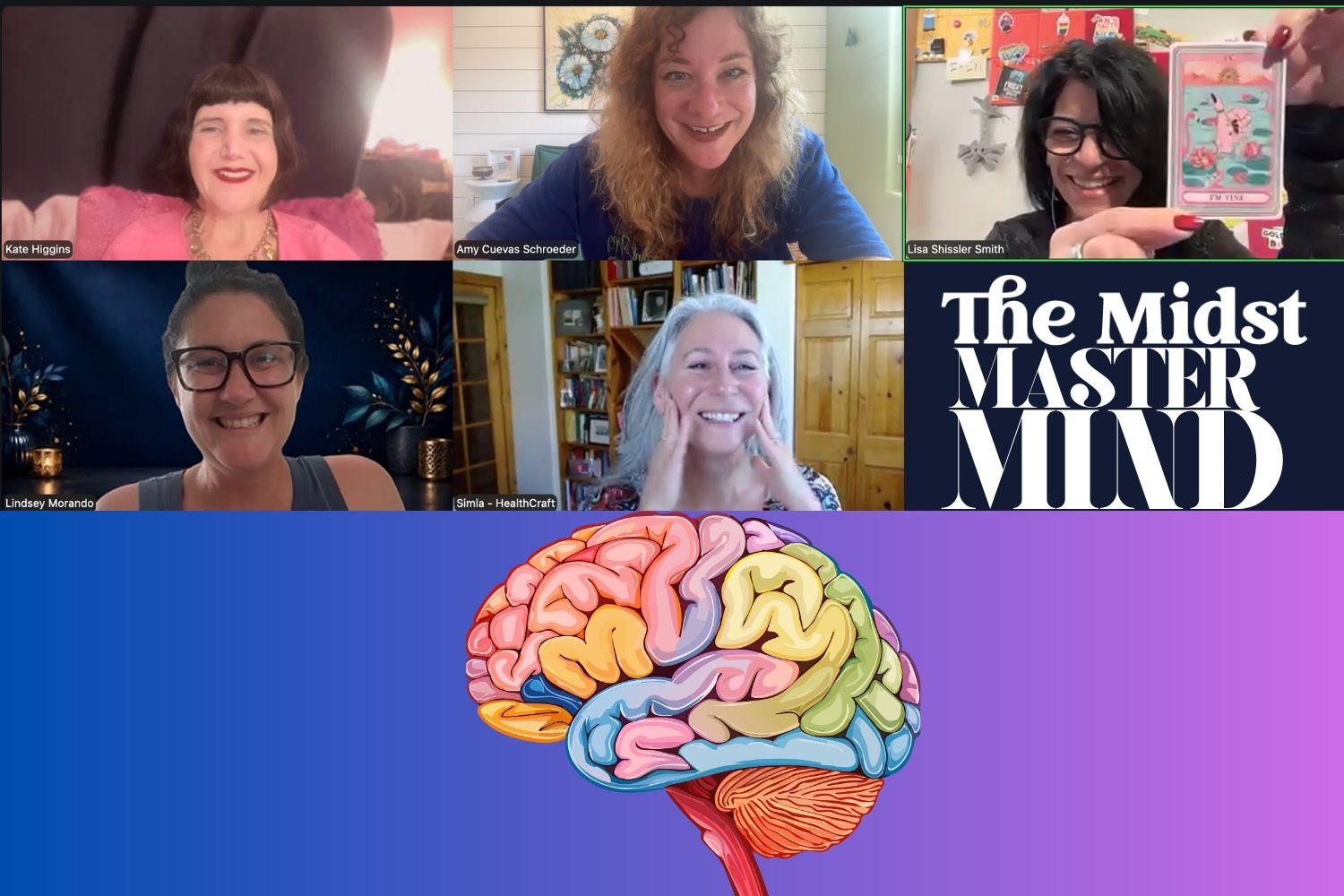
Speaking of personal brands, the evolution of work, and solving problems, this is exactly what we’ll do in The Midst Mastermind, starting in April 2026. We’ve got just two slots left! If you need help taking your ideas to the next level, we’d love to hear from you. Learn more here.
The deadline to apply for The Midst Mastermind is March 31, 2026.
This story was originally published here on The Midst Substack.
The Midst is a community-driven platform leaning into the messy middle of life pivots, career and relationship upgrades, perimenopause, building businesses, and so much more. We help women play by their own rules to become the women they are meant to be. Subscribe to The Midst Substack to get free exclusive content that you can’t find here on the-midst.com.