
Get help with the hard parts of aging-family care
I met Bonnie Lerner at just the right time. I’ve been putting off discussing my parents’ end-of-life plans (because intimidating), but my mom is kindly encouraging my sister and me to get with the program asap.
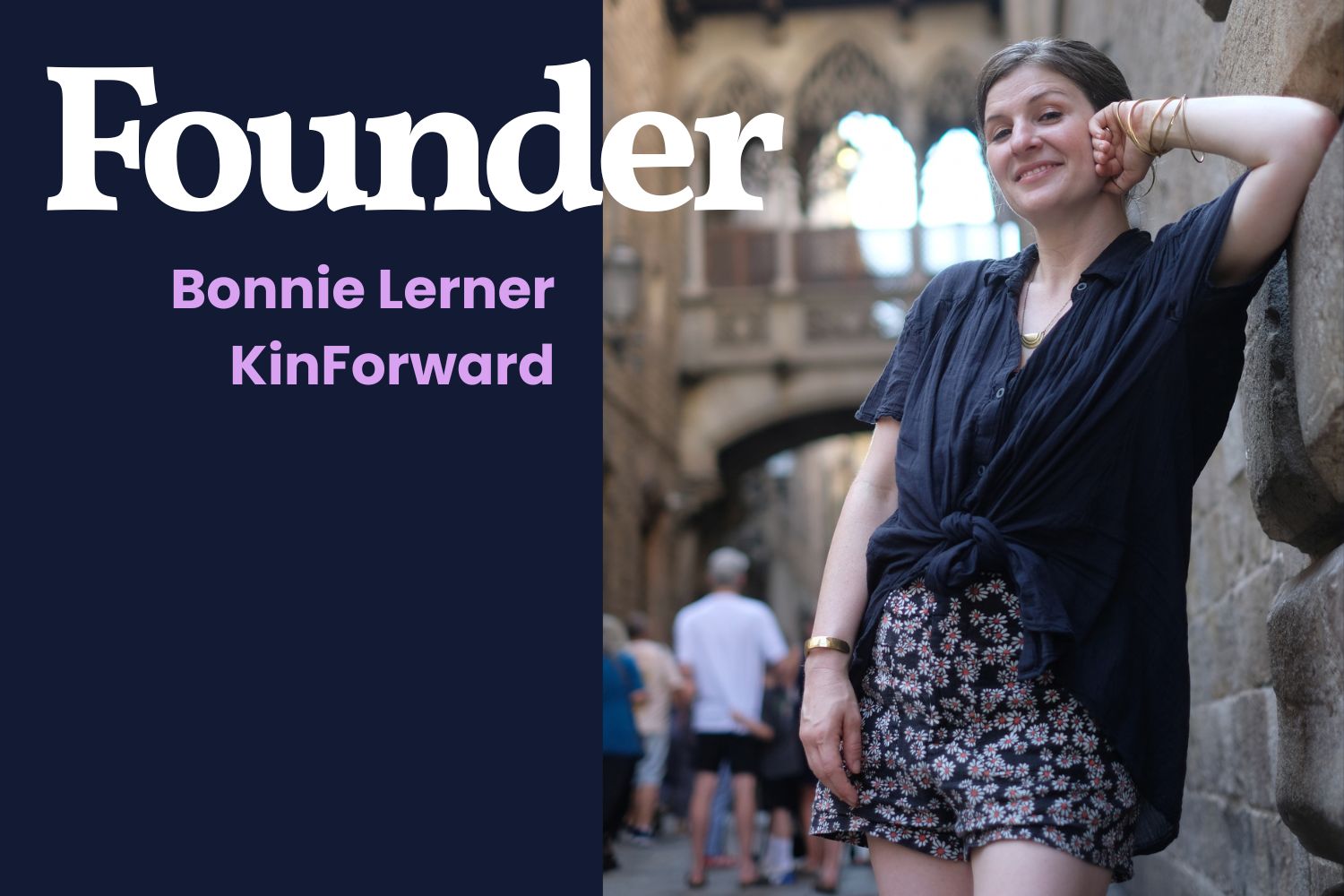
Enter KinForward, a new company designed for Gen X and Elder Millennials in the sandwich generation who face critical decisions about their aging parents’ care. Founded by Bonnie Lerner, KinForward is a family navigation service that provides expert guidance and hands-on support to navigate levels of care, health concerns, and care systems.
“Unlike Googling answers alone or waiting for the next crisis, KinForward connects you with aging experts who give you straight answers, a clear roadmap, and ongoing support, all without corporate healthcare interests getting in the way,” Bonnie says.
Let’s learn more from Bonnie about how KinForward can help us with our family’s care coordination.
The Midst: How do you define “end of life”, and what is the current landscape for adults planning care for aging parents?
Bonnie Lerner: The current landscape for elderly Americans is not pretty. There’s no real continuity of care between primary care, hospital, rehab, skilled nursing facilities, etc. People also don’t know much about what Medicare actually covers (spoiler: no long-term care facilities), or the difference between living options for their parents as they need more support.
The fragmented healthcare system coupled with our cultural aversion to talking about illness and death, and our general disdain for aging, creates this cesspit that American families need to slog through without a light and without a map. This creates so much emotional and logistical tension.
We’re also not educated on our options for end-of-life care and how nourishing they can be for both families and the person in this phase of life. And honestly, “end of life” itself means something different than most people think — it’s not just the final days or weeks. It’s the broader season when someone is living with a serious, progressive illness and we know that time is becoming more precious, whether that’s months or even a couple of years.
Palliative care and hospice are great wrap-around options that don’t need to be only in the final days; they can offer comfort and support for much longer periods of time than we think. And when I learned about end-of-life doulas — I had no idea they existed when my dad was dying — it blew my mind. They can help families navigate this whole season, from having hard conversations and creating meaningful moments to providing vigil support when death is near. That is why we have two death doulas on our team at KinForward.
There are many good people working within the healthcare system, but they’re not paid to navigate and support your family outside of the healthcare walls in this area. Many families end up with long resource lists of who they can call to assess if they’re eligible or have capacity to meet their family’s needs. Most sandwich generation folks I know (myself included) cannot handle another long list of things to do on top of raising kids, their careers, and now taking more care of their aging loved ones. That’s where KinForward can step in and give an honest evaluation of your options, work within your family dynamics, and give advice and recommendations that only serve your best interest — not that of the health system or a specific living facility.
When did you start KinForward?
I started KinForward in October 2025 after intentional reflection on where I wanted to take my career next after I left the non-profit I co-founded in 2021. I lost my father in 2019 — when I was pregnant with my first child. My dad had literally begged for help from health systems that he didn’t know how to navigate. He was a quiet individual and wouldn’t tell me much about what was going on. He actually ended up dying in a hospital that was part of a health system where I worked at the time. The providers — well, most of them — were wonderful. However, the system is stacked against families, and it was certainly a slog for me.
I vowed to do things differently for my mom. We live intergenerationally, where I can not only keep an eye on her but she can spend quality time with her grandkids.
I had spent about 15 years in healthcare settings, much of which was dedicated to helping families navigate social needs that keep them healthy outside of the clinic walls. I’ve witnessed the power of what peers and guides can do. I asked myself, can we apply this to the aging landscape, which is just a total shit show? I found that helpers do exist — aging consultants, end-of-life doulas, caregiver advocates — but it’s so hard for families to find them! KinForward is here to change that. We want independent providers to be connected to families to help them through these tough moments, with care, compassion, expertise, and persistence.
Your mom is 82 and lives in a casita behind your home. How long has she lived near you and how do you help each other?
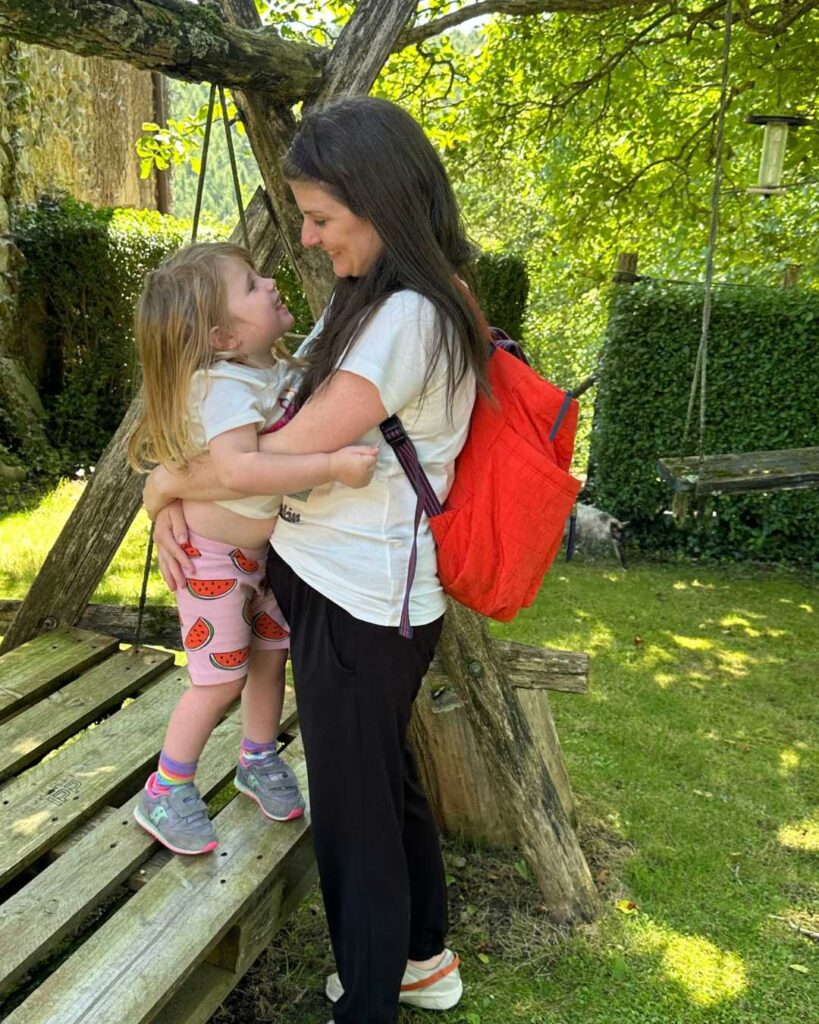
This is a little unique, but I’ve lived near my mom my entire life. I grew up in southern California, and we migrated up to Oregon together when I was 19. I have remained in Oregon since and so has she. In 2020, we moved her from a suburb about 40 minutes away to a small house about 8 minutes away from us. But after a few years, and some reflection, we thought it may be even more beneficial and financially prudent to move her into a converted garage in our backyard. She was totally up for it — I think she has a lot of recognition that she is getting older and she also loves to be with her grandkids, and vice versa. We eat dinner together every day, she helps watch the kids and has a very special bond with my kindergartener. And there have been a few times I’ve needed to take her to urgent appointments when I see she is struggling. I’m grateful I can keep an eye on her, she can keep an eye on the kids when needed, and that we have a harmonious relationship.
Is GenX the first sandwich generation? Will future generations be “sandwiches” too?
No, Gen X is not the first sandwich generation. I’ve talked to some Boomer friends who absolutely felt the pressure of raising kids and tending to their older parents, and I think they were the first to experience similar pressures to where we are today.
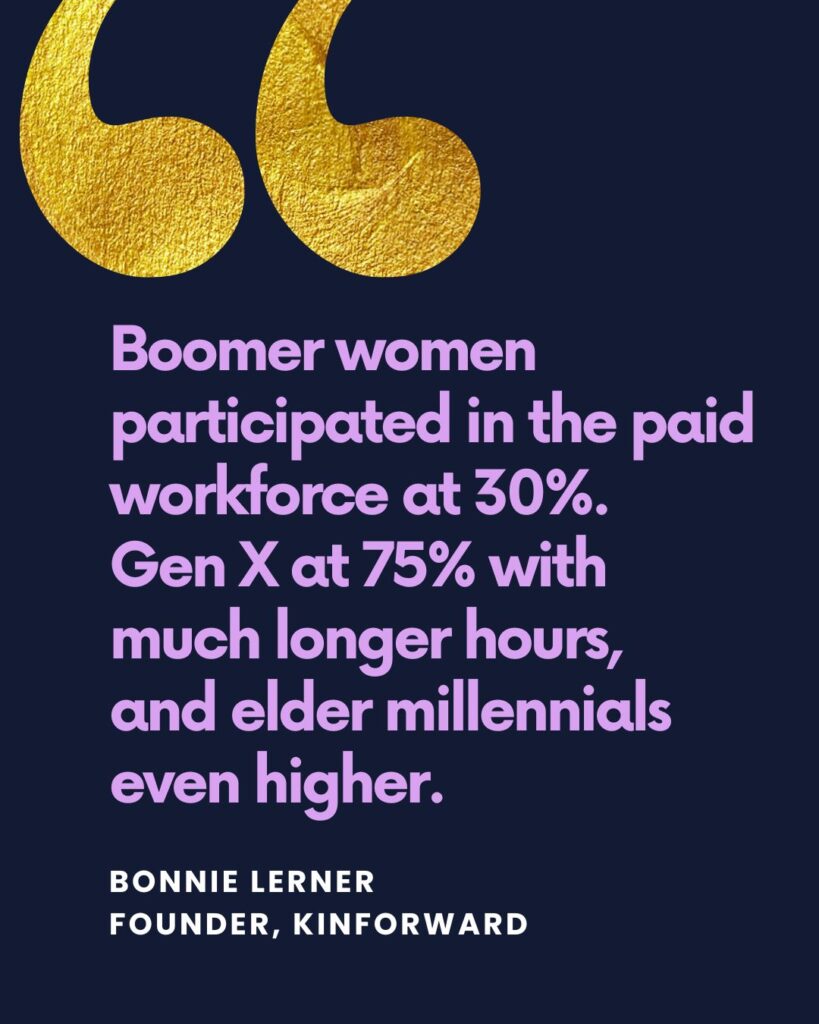
What’s unique that started with Gen X is the sheer volume of women in the professional workforce full-time. I read a statistic that Boomer women participated in the paid workforce at 30% and Gen X women at 75% with much longer hours, and elder millennials even higher. Think about this: not only are we participating in the workforce at a rate never before seen in history, but our workload at home and with kids has by and large not shifted. And statistically, 70% of women are the ones on point for their older parents as they age (though I’ve had more men than women reach out to me for services at KinForward—perhaps because women feel it’s more of an expectation to do it all?).
Future generations will be sandwiches as well — especially as Americans live longer than we ever have before. However, what I’m hopeful for is that there’s a reckoning with the sheer amount of pressure we put on ourselves — especially in corporate environments. I’ve noticed a large trend (and it could be who I surround myself with) of mothers of children who are also caretaking their older loved ones shifting away from traditional work environments to solopreneurship or starting businesses that can align with the lifestyle they desire. Of course, not all of us can (or want) do this, so there will continue to be a strain on those who will constantly be balancing all the plates.
What’s the most surprising or exciting thing you’ve learned about yourself lately?
I’ve spent a long time worrying what others may think of me in my career. I was worried about saying the wrong thing or not knowing enough, not having things perfect. This has held me back mentally for a long time. It’s not that I didn’t do all the things, but I always did them scared, and I hated having any public-facing role.
These past six months have been a journey for me to try and be more centered with my voice. In a startup, everything is an experiment for a bit of time. You can’t wait for things to be perfect, and you can’t stay in one stage for too long — you have to keep moving and trying, and a lot of that may feel a little foolish. I would have historically been really harsh on myself for any misstep. I’ve gotten off a few meetings or phone calls and thought “ugh, painful,” but I don’t stay there too long.
So I think what I’ve learned is that I have the ability to feel nervous and let it go. I don’t stay stuck there. I’ve learned most people aren’t thinking about me, don’t care about me, so why not just do what I feel is right and put myself out there?
What’s one of the most challenging things you’ve ever done?
I’m proud to say I’ve been in recovery for almost 15 years. I had significant emotional issues related to trauma and picked up drinking at 14. It was pretty clear from the beginning I was alcoholic. Quitting drinking and using drugs was incredibly challenging — especially at an age like 26! It’s beyond difficult to admit to yourself you’re different from other people, that you’re a danger to yourself, and that something as ubiquitous as alcohol is poisonous to you. I had to change my entire life. And it was worth it. I absolutely love my life today. Recovery has given me all of it.
How can The Midst community support your business?
First, please tell your friends and circle about KinForward. If you know anyone struggling with knowing what’s next with their older loved one, and feel like they’ve been lost in a maze of institutions or have had a lack of continuity of care or a weakened support system as they move into this phase — send them to me. I love meeting people and I always offer a free consultation.
Secondly, I love authentically connecting with other women who are in the sandwich generation, managing it all, and building their own self-directed careers. I don’t want to talk about metrics and all that jazz. I want to hold space for one another and problem-solve not only work stuff but life stuff together.
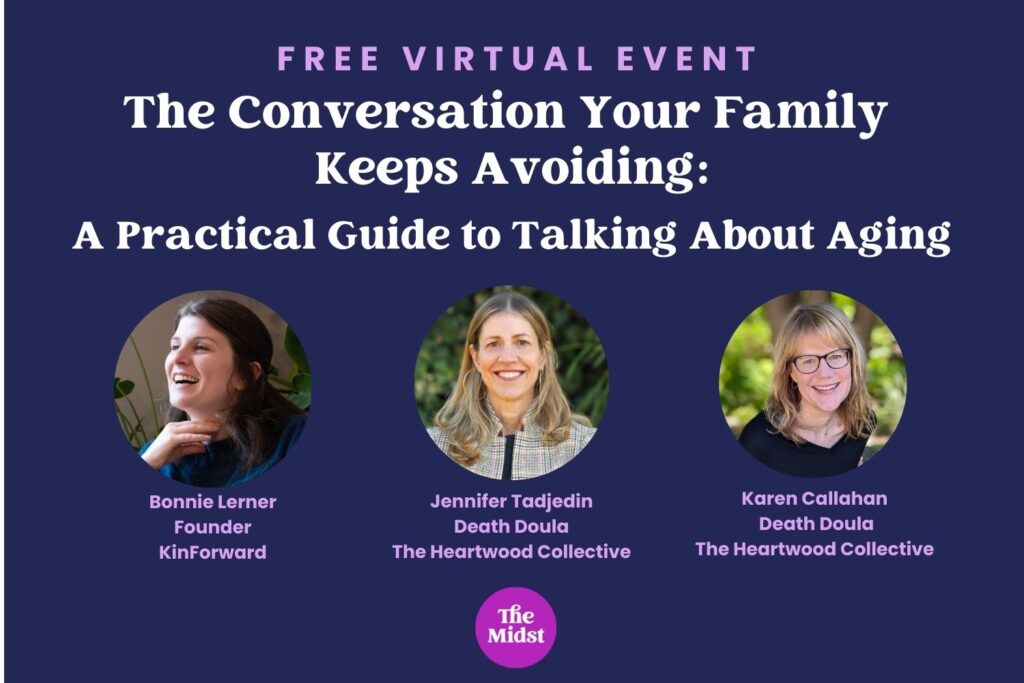
We’re looking forward to your March 11 workshop for people at this “wondering” stage about how to navigate conversations about aging loved ones. What will we learn?
You’ll learn that you’re not alone in feeling nervous or encountering resistance from your parents when you try to open the door to talk about the future. We’ll give you a framework to have collaborative conversations and also indicate when you may need additional help. Most families avoid talking about aging and end-of-life until a conversation is forced. We don’t want to see it, we’re in denial, we don’t know what to say, we have enough going on. So our aim is to give you a 101 on how to have these conversations early, and if you’re forced into it through a crisis, you’ll be more prepared.
Connect with Bonnier Lerner and KinForward
Instagram: @we_are_kinforward
TikTok @kinforward
Bonnie Lerner is a member of The Midst Founder network of entrepreneurial women. Learn more about how to join here. Thinking about starting a business or seeking a community of supportive women to grow? You might like The Midst Mastermind.