
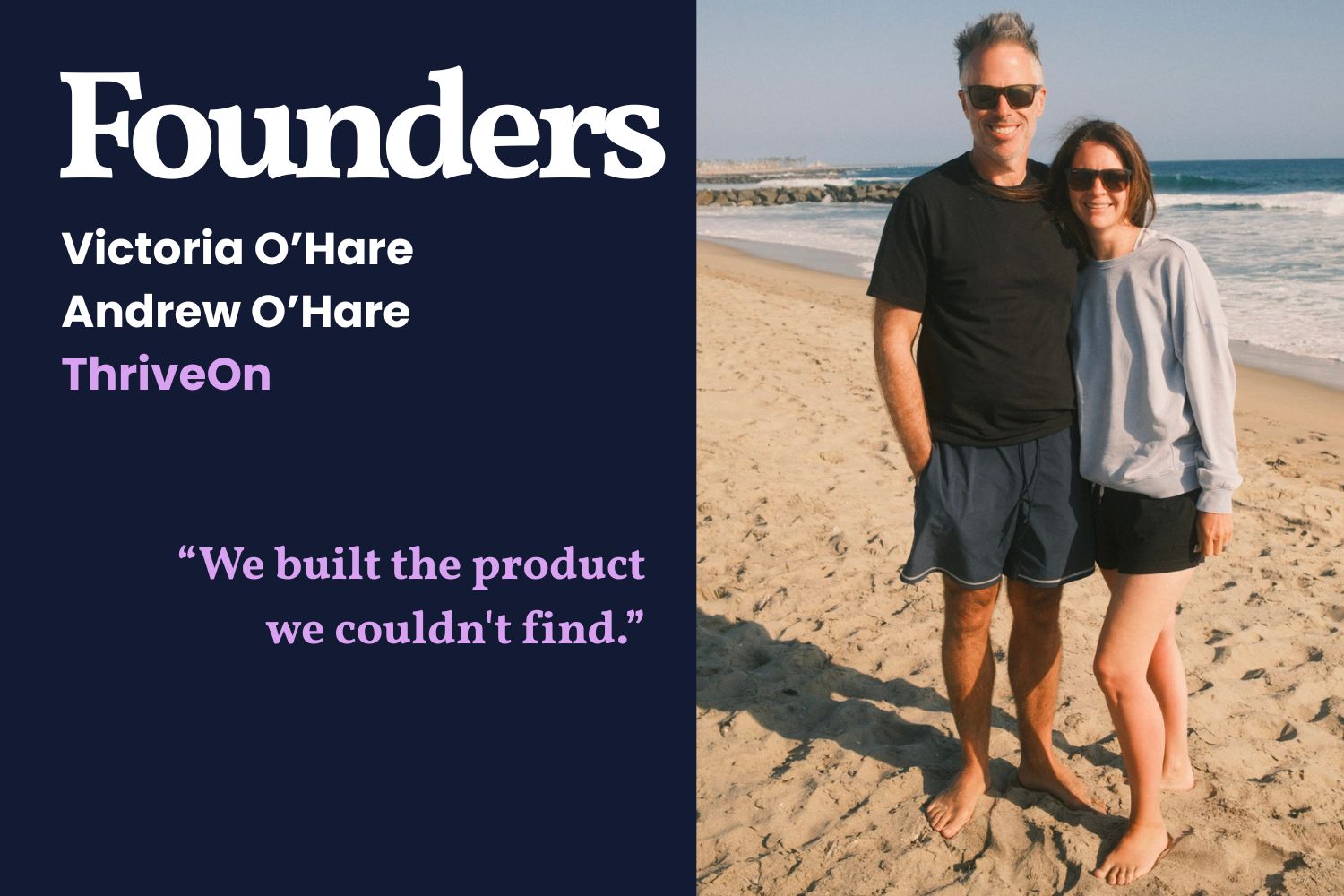
For ThriveOn cofounders, marriage is stronger than ever
I’ve heard part of this story before because it happened to me and many other women in my age group. You hit midlife and everything seemingly goes to sh## — insomnia, pains that seemingly come out of nowhere, lack of energy.
But the story I haven’t heard is about a married couple cofounding a wellness company to help women in perimenopause. That is, until I met Victoria and Andrew O’Hare.
The duo, originally from the U.K. and now living in Utah, has been together since Victoria was 19 and Andrew was 23. Now 49 and 53 respectively, they’ve raised five children and built thriving careers as executives for other companies. When they left their steady jobs to bootstrap ThriveOn, they entered the most challenging season of their lives.
In this interview, the O’Hares open up about Victoria’s perimenopause experience, wearing all the hats as entrepreneurs, and developing their signature supplement for women in perimenopause, Stronger. (Which I add to my smoothie every morning.)
What is ThriveOn?
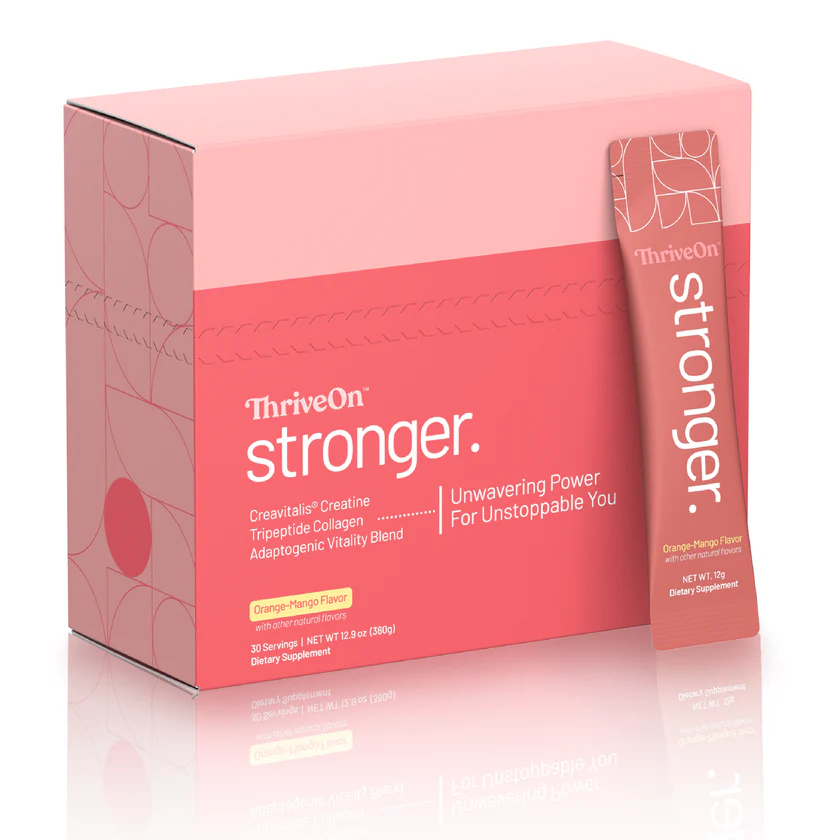
Victoria O’Hare: ThriveOn is a women’s wellness brand built specifically for what happens to a woman’s body after 35. We make perimenopause supplements that respect the science. Premium ingredients, at doses that have been studied and researched, formulated with a woman in peri/menopause in mind. No proprietary blends, no guessing. Just foundational ingredients that give support when everything else feels like quicksand.
ThriveOn is also about conversation. So many women still aren’t aware of all the changes that are happening to them in midlife, and even when they are, so much of what they’re experiencing gets dismissed or minimized. We want to change that.
You created ThriveOn when Victoria started experiencing the common shifts of midlife, including fatigue, brain fog, and changes in strength. I love a good startup story — tell me more.
Victoria: It started with me not feeling like myself and not having a great answer for why.
I was in my early 40s and tired in a way that sleep wasn’t fixing. I started waking up with hip pain that eventually went away after a few hours but came back morning after morning. Then the sleep disruption — 3 am wide awake. I thought I’d left that behind with my newborn babies. I had random ailments but nothing showing on tests and no answers from doctors. I figured it was just being busy, stress, the realities of life, and getting older. But it kept compounding.
When I finally had an aha conversation with my sisters and we put the puzzle pieces together and realized this was perimenopause, I started researching what was actually happening and what the science said about supporting a woman’s body through that transition.
Two things became clear. One, there is some research. It’s confusing and contradictory and it isn’t really clear who we’re supposed to believe anymore. And two, most products don’t really deliver. Tiny amounts of ingredients that are unlikely to do much at those doses. Quality that’s hard to verify. And almost none of them were built around what a woman actually needs during this transition. The foundational support for muscle, bone, brain, energy, sleep, stress resilience, and gut health that becomes so critical in perimenopause. Women were patching things together on their own and hoping for the best. That felt like it deserved a better answer.
Andrew had spent years on the sourcing and supply chain and product development side of the wellness industry. He knew what practitioner-grade formulation actually looked like and what it took to do it properly. I knew what women in my life were experiencing and what they were being sold. We looked at each other and said, this gap shouldn’t exist.
So we built the product we couldn’t find.
And honestly, the timing couldn’t be more right. The peri/menopause conversation is slowly happening. Right now there are 75 million women in the U.S. in perimenopause, menopause, or postmenopause. And they are more informed, more vocal, and more demanding of real answers than any generation before them.
The science is catching up too. Research on women’s health in midlife is expanding fast. Creatine for women. Collagen bioavailability. The role of nutrition in hormonal transitions. We want to be the brand that takes that science seriously and translates it into something women can actually use every day. Something that was built for them from the very beginning.
What’s unique about Stronger and what ingredients are you proud of?
Victoria: What makes Stronger different is that every ingredient has a reason to be there, and they were chosen to work together as a system. Vitamin C has to be present for your body to actually use collagen. D3 and K2 work as a pair for bone health. Taurine supports cellular hydration alongside creatine. Nothing is in there just to make the label look impressive.
The two ingredients we’re most proud of are our Creavitalis® Creatine and our Marine Tripeptide Collagen. The creatine is German-made by AlzChem, research-grade purity at over 99.9%, and we further micronize it ourselves so it dissolves cleanly. The collagen is marine-sourced, formulated as tripeptides small enough to survive digestion and absorb intact, and verified via MS/MS mass spectrometry to contain eight collagen types. That’s not standard. Most collagen breaks down before it ever gets to work. Ours doesn’t.
Let’s talk more about creatine. You’ve written about how creatine isn’t new, but the research of creatine for women is. “For decades, creatine was marketed to men, studied on men, and sold in giant black tubs with aggressive fonts. Meanwhile, we were quietly dealing with brain fog, energy crashes, and muscle loss and nobody connected the dots.” What do women over 40 need to know about creatine?
Victoria: The first thing is: creatine is not a bodybuilding supplement. That’s the image. Big black tub, aggressive font, meant for gym bros. And that framing kept women away from one of the most well-researched supplements in existence for decades.
Here’s what the research actually shows: Creatine supports ATP production, which is your cellular energy. It supports muscle strength and lean mass. And increasingly, the research points to meaningful cognitive benefits too. Memory, focus, mental stamina. All things women are quietly losing in perimenopause and menopause.
After 40, we naturally lose muscle mass at an accelerating rate. Creatine is one of the few things with real, replicated research behind it for slowing that process. And the dose matters. Five grams daily is what the studies are built on. Less than that and you’re likely not seeing the full benefit.
There’s also emerging research suggesting higher doses, in the range of 10–20 grams daily, may offer additional cognitive support, particularly around brain energy and focus. We think that’s worth knowing about. That said, we’d only suggest higher doses for short periods and always in conversation with your doctor. For daily, ongoing use, 5 grams is the dose with the strongest safety and efficacy record behind it. That’s what we built Stronger around.
The irony is that women may actually benefit from creatine more than men in some areas, particularly cognitive function. We just weren’t included in most of the research that built creatine’s reputation. That’s starting to change, and we want to be part of that shift.
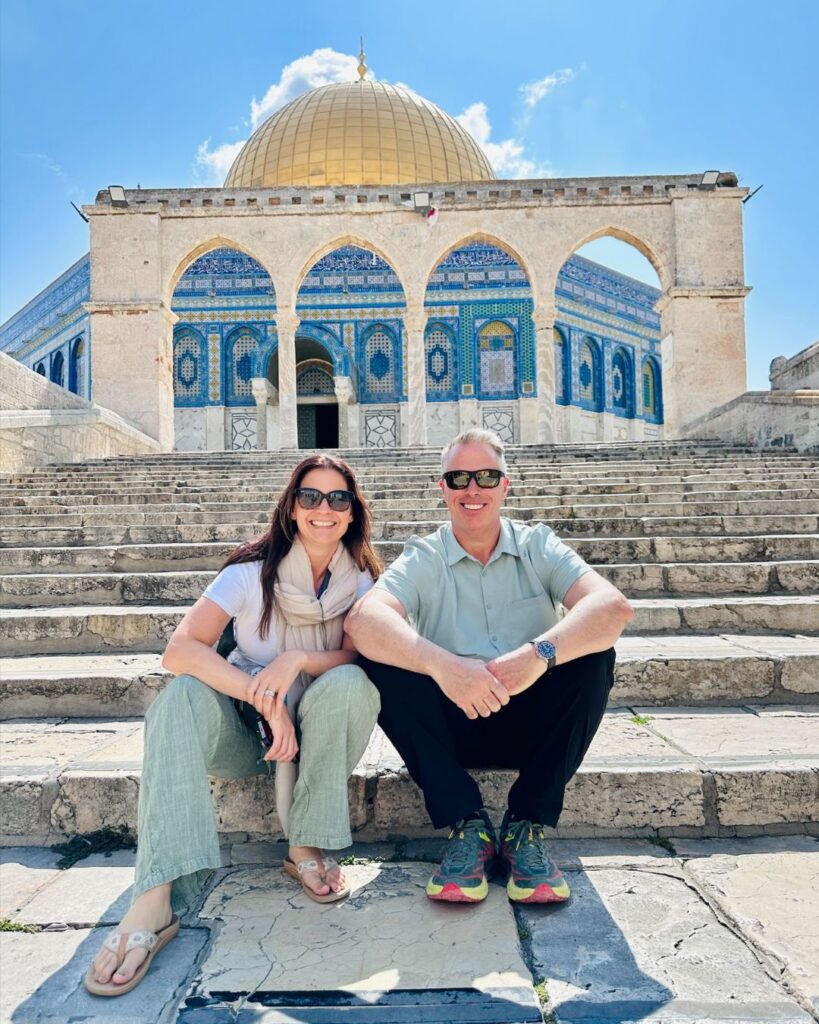
You both have incredible career backgrounds. Victoria, you spent more than a decade running your own recruiting firm. Andrew, you spent nearly a decade as CMO in the global wellness industry. Victoria, you’re a two-time founder — what’s it like for you as an entrepreneur this time around? And Andrew, what’s it like for you to shift from leading a large team to bootstrapping ThriveOn?
Victoria: In recruiting, I was always the connector. The in-between. I had something people were already looking for and my job was to match them to it. I’d wade through hundreds of resumes, speak to so many qualified candidates, and ultimately only one person could get the role. It was fulfilling helping that one person. And also, genuinely hard when you had to look someone else in the eye and tell them it wasn’t their time.
Building ThriveOn has been something else entirely.
Nobody was waiting for us. Nobody came looking. We had to create something from the ground up, believe it was worth finding, and then go out and find the women who hadn’t heard of us yet. Convincing someone to try a product from a brand they’ve never seen before, when there’s no shortage of options on the market, is a completely different challenge than anything recruiting prepared me for.
And stepping in to being the face of it rather than the person behind the scenes has probably been the hardest part personally. I spent my whole career being the one who put other people forward. This is new territory.
But here’s where it comes back around. I’m still connecting people to something that can change their lives. Just in a different form. And this time I never have to deliver bad news. Everyone is welcome. Everyone can try it. Nobody gets turned away. I definitely love that part!
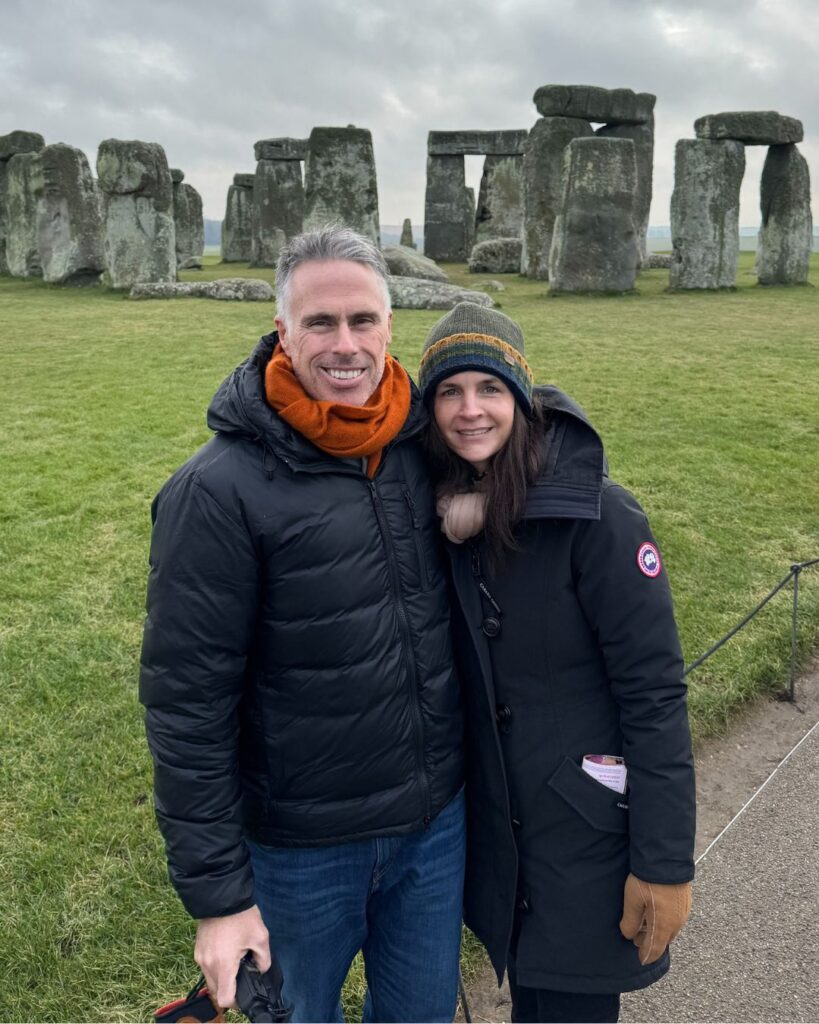
Andrew: At my previous company I led marketing, product innovation, R&D, and a full in-house creative studio across a team of over 200 people. We scaled from about a billion dollars in revenue to over two billion. Big budgets, big teams, global reach. And I loved that work.
With ThriveOn, we have a small team, but the reality is most of it still lands on the two of us. You wear every hat, sometimes three at once. I miss the luxury of a bigger team, honestly. Having talented people around you who can take an idea and run with it. That creative energy of a room full of people solving problems together.
But the closeness changes everything. I’m reading every customer message. There’s no layer between us and the women we’re serving, and that changes how you build. In 2025, I travelled to Munich for a global creatine conference to immerse myself in the latest research alongside the world’s leading scientists in this space. That’s not something I’d have done personally at my previous company. But when it’s your brand and your formulation, you want to be in the room.
What I’m proud of is that we haven’t compromised. Not once. Not on ingredient quality, not on dosing, not on sourcing. We’ve held the bar exactly where it should be, and we’ve done it without outside money telling us where to cut corners.
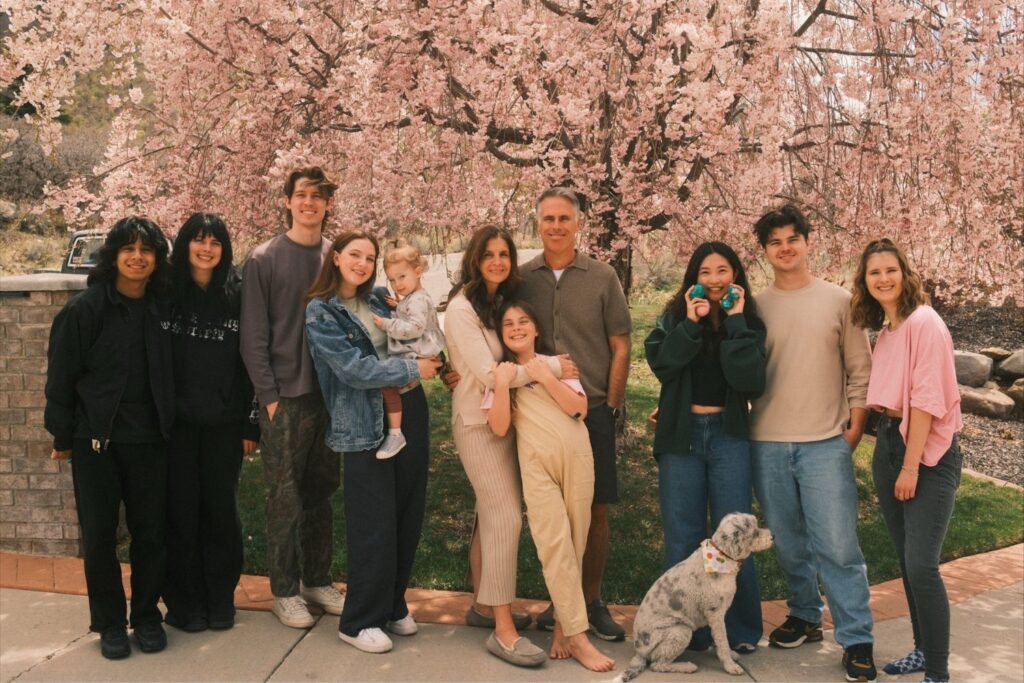
In addition to being entrepreneurs, you’ve raised a sizable family. How old are your kids and how do you do it all?
Victoria: We have five kids ranging from 10 to 29, and two grandkids. We celebrate our 30th wedding anniversary in April, so we’ve been at this parenting thing together for a while.
Four of our kids are adults now, which means day to day it’s really just our youngest, our caboose, keeping us on our toes. Although, let me tell you, adult kids have their own way of keeping you busy too!
Honestly, we definitely don’t do it all. Some days it works out, just about, and other days we’re late for school, she’s missing homework, the laundry didn’t get done, we’re ordering DoorDash again, and we’re climbing into an unmade bed. It’s a juggling act.
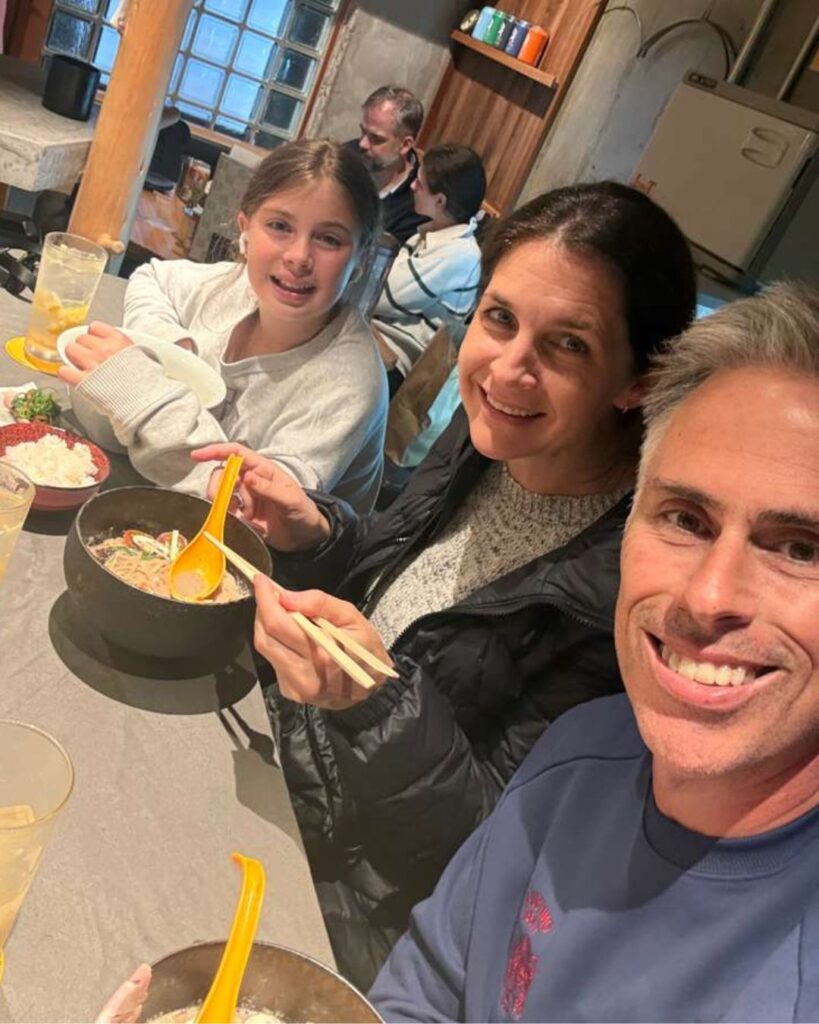
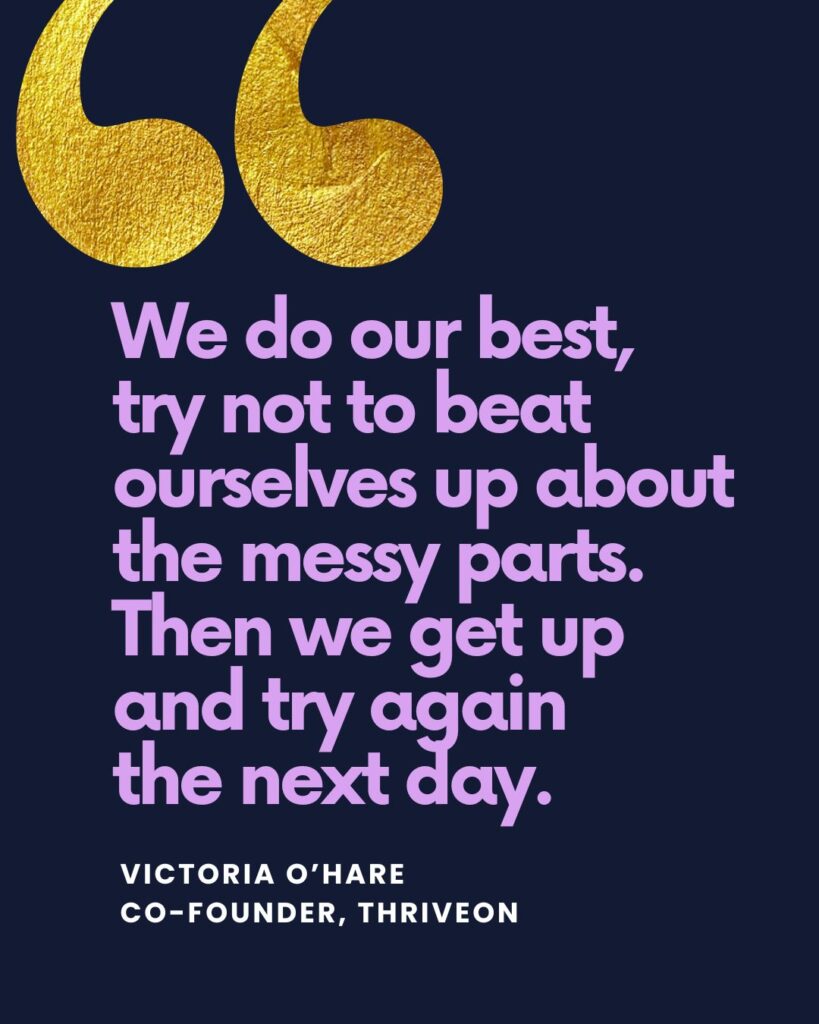
But here’s the thing: life is always a juggle. I never had it all together even when I was a full-time stay-at-home mom. I think the idea that there’s a version of this where everything runs perfectly is a myth we need to let go of. We do our best, try not to beat ourselves up about the messy parts and then we get up and try again the next day. That’s it. That’s the best plan I know.
Andrew: Victoria covered the chaos pretty accurately. I’d just say that when you work together from home, the lines blur pretty quickly. One minute we’re deep in ad creative, the next I’m on the sidelines at cheer practice. Whether it’s ThriveOn, the dishes, or sitting with our 10-year-old while she does homework, I try to give 110% to whatever’s in front of me.
We’ve been through a lot of seasons together and honestly, I’m really enjoying this one. Building something alongside her, being present for our youngest, and focusing on my own wellness journey too. It’s full. It can be stressful. But somewhere along the way I stopped listing all the reasons things might go wrong and started asking what if it all works out? That’s a better place to build from.
What’s the most surprising or exciting thing you’ve learned about yourself lately?
Victoria: That I’m more comfortable with uncertainty than I used to be. I spent many years needing to feel security and stability. Running a startup cures you of that pretty quickly. You learn to make peace with not having all the answers and move forward anyway.
My favorite thing is how fulfilling it is to connect and talk with other women. The conversations. The messages. Hearing their stories and their struggles. The symptoms look different for everyone but the experience of feeling like your body has changed the rules on you, that’s universal. We’re all just trying to understand what’s happening and find our footing again. There’s something really bonding about that. About seeing and being seen and understanding and being understood. Getting to support and root for women in whatever they choose to do. I love it. It means a lot. I didn’t expect building a supplement brand to feel this connective. But it does.
Andrew: I’ve always considered myself a big-picture creative type. But out of necessity I’ve discovered I can do things I genuinely didn’t think were possible. Building out code for our website, learning the intricacies of an Amazon listing, diving into email automation, figuring out video editing. Skills I would have handed to a specialist without a second thought in my previous life. Turns out when there’s nobody else to do it, you surprise yourself with what you can figure out.
What’s one of the most challenging things you’ve ever done?
Victoria: Starting ThriveOn. This is a risk for us and our family. We are self-funded, so everything is on us. In 2025, right as we were trying to get things off the ground, I faced some hard health challenges that made an already full plate feel completely overwhelming some days. Thankfully I’m in a good place with my health now.
And then there’s the learning curve of actually building a brand from scratch. I am learning new skills constantly. Copywriting, content creation, figuring out SEO, product development, supply chain, using AI tools, video editing, social media, building a website. The list keeps growing.
Some things still feel hard. Getting behind a camera, being vulnerable in that way, that does not come naturally to me. I’ve always been a better cheerleader than a focal point. Putting myself forward as the face of something is a regular exercise in getting comfortable with the uncomfortable.
Navigating all of this while going through perimenopause myself. The ups and downs that come with that are real. And of course doing it all while spending essentially 24 hours a day seven days a week with my husband. There was definitely a learning curve for both of us there. We’ve both had very independent careers and it took a minute to figure out our cadence working together. We’ve lived to tell the tale, and I think we’re a lot stronger for it — no pun intended!.
Andrew: Starting ThriveOn. Going from zero to one is no joke. The sleepless nights are real. The worry about whether it’s all going to work out. It’s a different kind of hard to anything I’ve faced professionally because this one is ours. There’s no safety net. Just belief and effort and hoping those are enough.
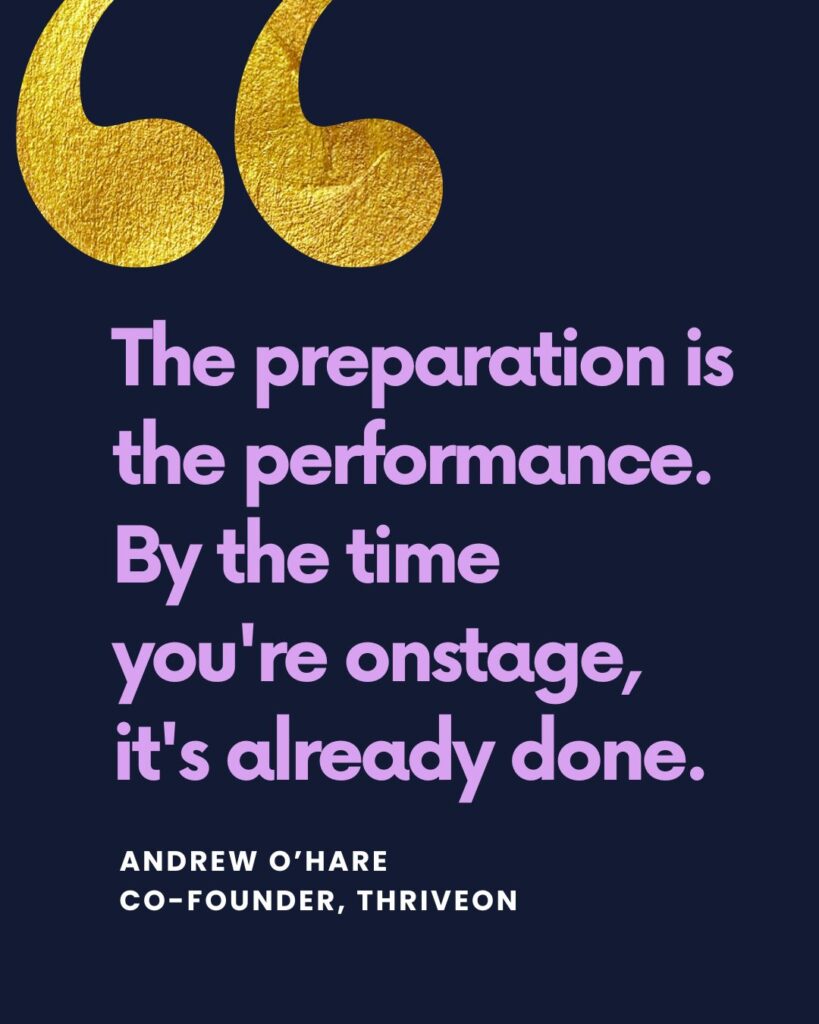
Which is saying something, because professionally I’ve been through some intense chapters. Leading a team of a few hundred people through Covid while demand surged by a few hundred million in revenue. Presenting to audiences of more than 20,000 people. Someone gave me advice early on that stuck with me: the preparation is the performance. By the time you’re onstage, it’s already done.
But none of that keeps you up at night the way building something from nothing does. When it’s your name, your savings, and your family’s future, the stakes feel completely different.
Connect with Andrew and Victoria O’Hare of ThriveOn
trythriveon.com: Save 20% at checkout when you use this special link: https://trythriveon.com/discount/TheMidst
Instagram @trythriveon
LinkedIn:
Andrew O’Hare and Victoria O’Hare are members of The Midst Founder network of entrepreneurs over 40. Learn more about how to join here. Thinking about starting a business or seeking a community of supportive women to grow? You might like The Midst Mastermind.