
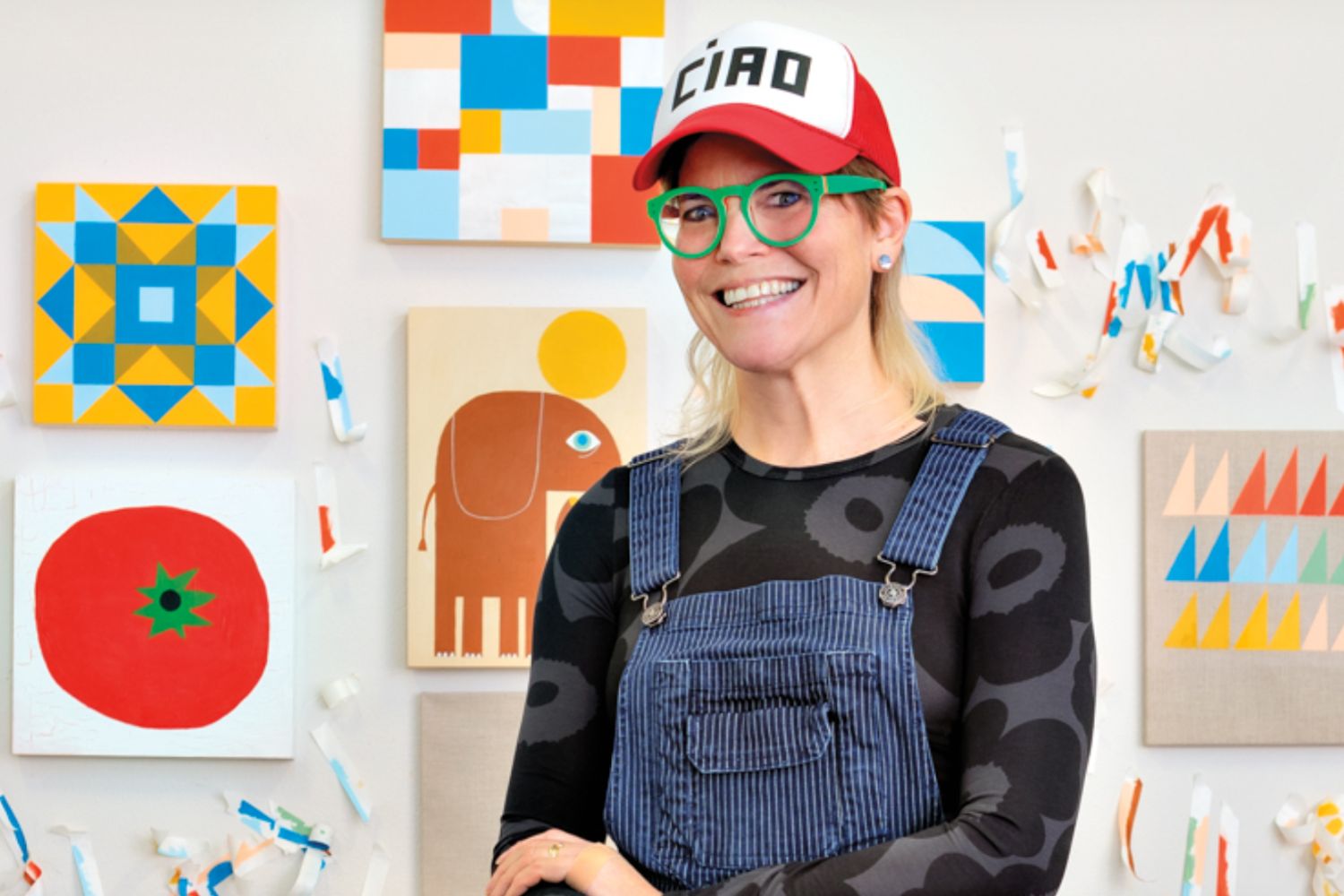
Lisa Congdon trusts the evolution of her creative career
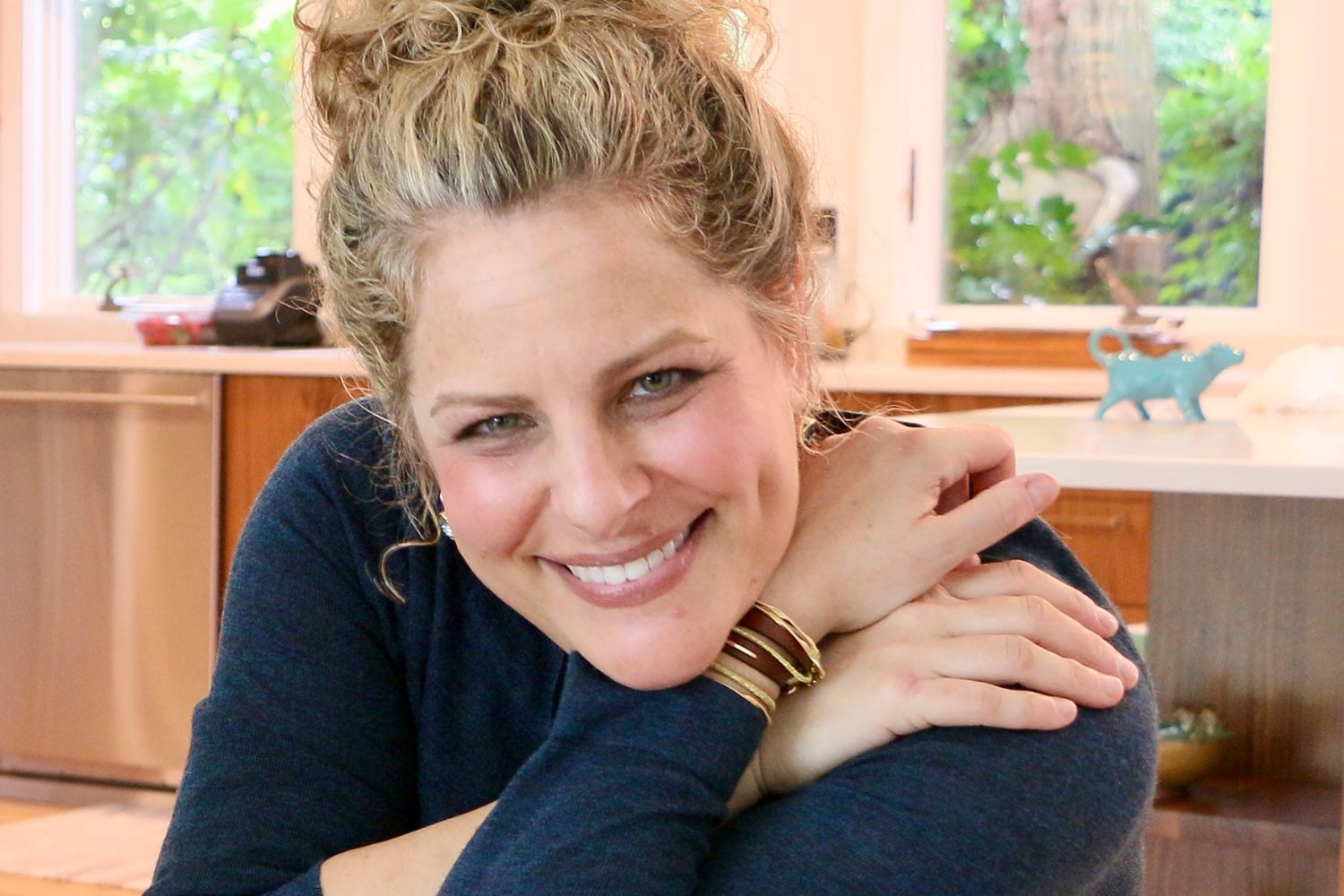
Lisa Congdon is known for her colorful graphic style and her exploration of themes of joy, liberation, and inclusion. She makes art for clients around the world, including the Library of Congress, the U.S. Postal Service, Wired Magazine, Amazon, Google, Warby Parker, Comme des Garçons, Peet’s Coffee, REI, and so many more. She’s also the author of 10 books, including Art, Inc.: The Essential Guide to Building Your Career as an Artist.
Let’s dive into the transcript of our interview from June 1, 2026. Watch the interview here on The Midst Substack.
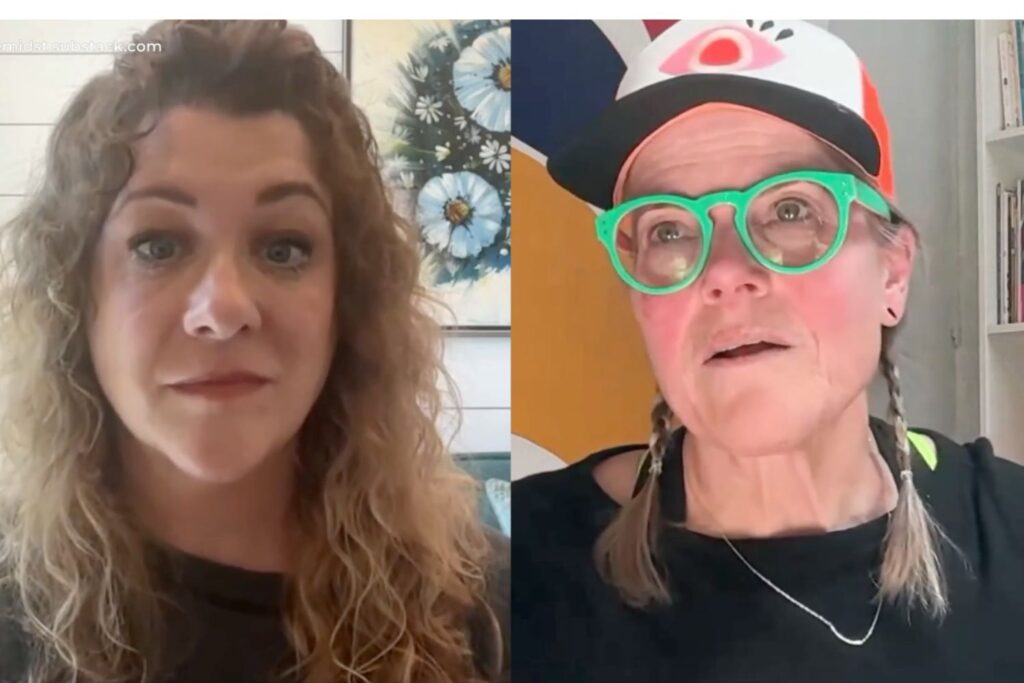
Amy Schroeder of The Midst: You have one of my favorite solopreneur stories. You came to art in your late 30s after doing nonprofit work, hit momentum at 40, and have restructured your business multiple times. Now you’re 58 and restructuring again. I read that you believe in trusting the evolution. Can you walk us through how you got here — starting with how you became a full-time artist?
Lisa Congdon: My first real job out of college — I moved to San Francisco in 1990, no internet, very different world — I went back to school to get my teaching credential. I taught elementary school in San Francisco Unified for about seven years. I loved it, but it was way harder than I expected. I was an idealistic young white woman with no idea what I was actually getting into, and I had a lot to learn.
The school got a big grant in the mid-to-late ’90s, and they needed someone to manage the money and help coordinate reform efforts, so I left the classroom. I was in my late 20s by then. After a couple of years, the nonprofit that had given us the grant hired me — they saw leadership potential — and I worked my way up there for another decade. In the meantime, teaching had started to light something up in me creatively. I started taking art classes, making things at home. I grew up in a house where that’s just what we did — we made things. I started a blog and began sharing my work online. This was the DIY movement, around 2004 or 2005.
I was still working in an office, but I had this side life as a maker. Then Etsy came along, and I thought: what would it look like if this were my whole life? I felt really called to it. By 2007, I quit my job to make art full-time. I also co-opened a store in San Francisco with a friend. That was my way out of the office — and into something completely different.
Would you say ignorance was a kind of bliss at that point?
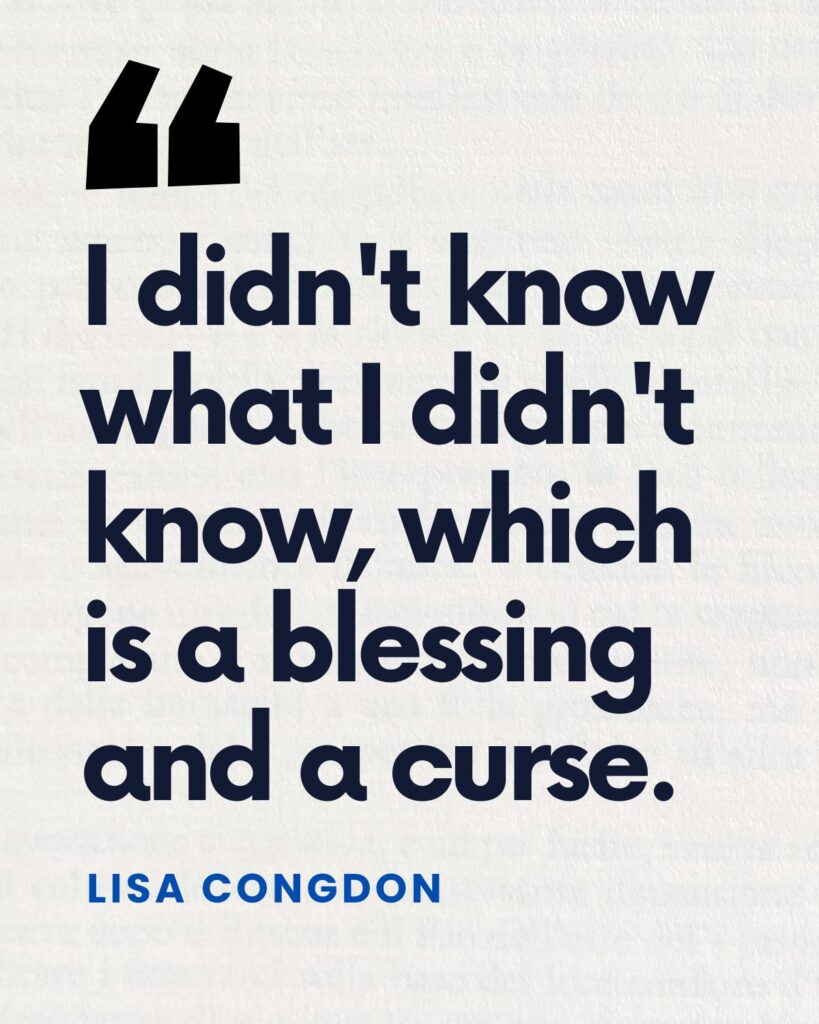
Lisa Congdon: Definitely. I didn’t know what I didn’t know, which is both a blessing and a curse. But I was old enough — early 30s — that I had real experience under my belt. I had managed a team, worked my way up as a project manager, been mentored in how to run meetings, manage my time, communicate well. These were soft skills I didn’t realize were going to serve me as a business owner, but they certainly did.
There was no playbook — I’ve since written a book about running a business as an artist and taught classes on it, and there are so many more resources now — but none of that existed then. I was making it up as I went, one week at a time, until eventually I looked up and thought: okay, I have a business. Now I want to be intentional about it.
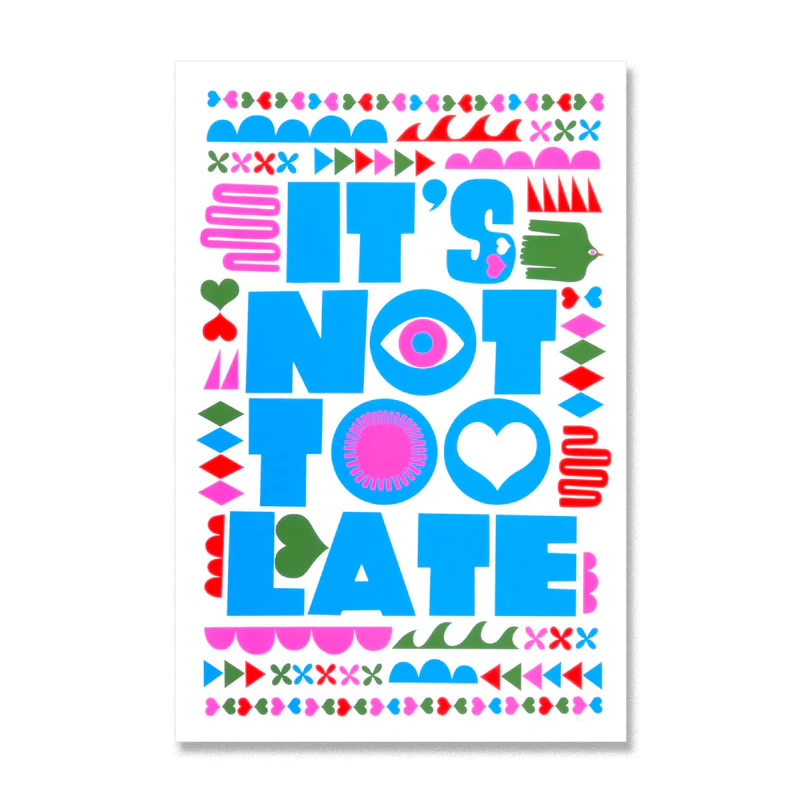
How has your career evolved from the mid-2000s to now?
Lisa Congdon: Around 2007 I opened an Etsy shop. From the start, I knew I couldn’t survive on one income stream, so I diversified: Etsy, commissions, gallery shows, and commercial illustration. In 2008, I signed with my first illustration agent — Lilla Rogers, who’s since retired — and she was instrumental in teaching me what it means to be a professional illustrator. I’d never been to school for illustration, so I didn’t even know how client work was supposed to flow: submitting concepts, sketches, revisions. She helped me understand the whole process.
I was a top seller on Etsy for a long time — it was far less saturated back then. In 2015, I hired my first employee, and from there built a team of two full-time and one part-time employee who mostly managed my retail business, freeing me to focus on commercial illustration. Over the last seven or eight years, I started landing bigger clients, sometimes making six figures on a single job. I used that to subsidize the retail side — investing in product, in employees, making all the parts work together.
Looking back at 2018 through last year, I was running a brick-and-mortar shop in Portland, an online shop, a wholesale operation, a fine art practice with museum and gallery shows, and for a while, writing and illustrating books. It was a lot. Constantly a pinch-me moment. And then a couple of years ago, I started to get genuinely exhausted. As I’ve gotten older, my bandwidth for managing that much has shrunk.
That’s a theme I hear constantly at The Midst — women with decades of experience who are running out of energy and need to figure out what the main thing actually is. You just mentioned you closed your shop in Portland, and you will stop selling quit a bit of your work in your online shop soon. Why did you make this decision?
Lisa Congdon: I had built an incredible team — two full-time employees, Amy and Erica, both in their 40s, incredibly skilled, mature, well-paid. We had it dialed. Especially at the beginning of the pandemic, I had never had so much work and so many sales. It felt rich — not literally, just like everything I had worked toward was happening.
But slowly I realized I was burning out. In 2022, I made a post on Instagram about “loud quitting” — I called it that because quiet quitting is sneaking out without explanation, and I was loud and clear about why I was stepping back. I did an inventory of my life: I quit drinking, I quit saying yes to social obligations I didn’t care about, I quit several boards of directors. I pared down everything. Looking back, that was the first step.
Then in 2024, I took three months off to have both knees replaced, seven weeks apart. I’m an avid competitive cyclist and had severe arthritis in both knees. During that recovery time, I started fantasizing about a much simpler business model — maybe no employees at all. I started talking to my business coach and my wife about what it might look like to close the retail business.
But every time I got there, I’d talk myself out of it: I’d hurt my employees, I’d built all this infrastructure, we were making money. Every time I analyzed why I wanted to keep going, it had nothing to do with me and how I felt. It was always about other people. And some important people in my life started reflecting that back to me — pointing out that all my reasons for continuing were about everyone else, not my own happiness.
The thing causing me the most stress was my retail business, even though it was going well. Once you build something big enough, you just have to keep feeding it. I was anxious all the time. Then in December, I got shingles — one of the leading causes is stress — and it was a major wake-up call. I literally woke up one day and said, I can’t do this anymore.
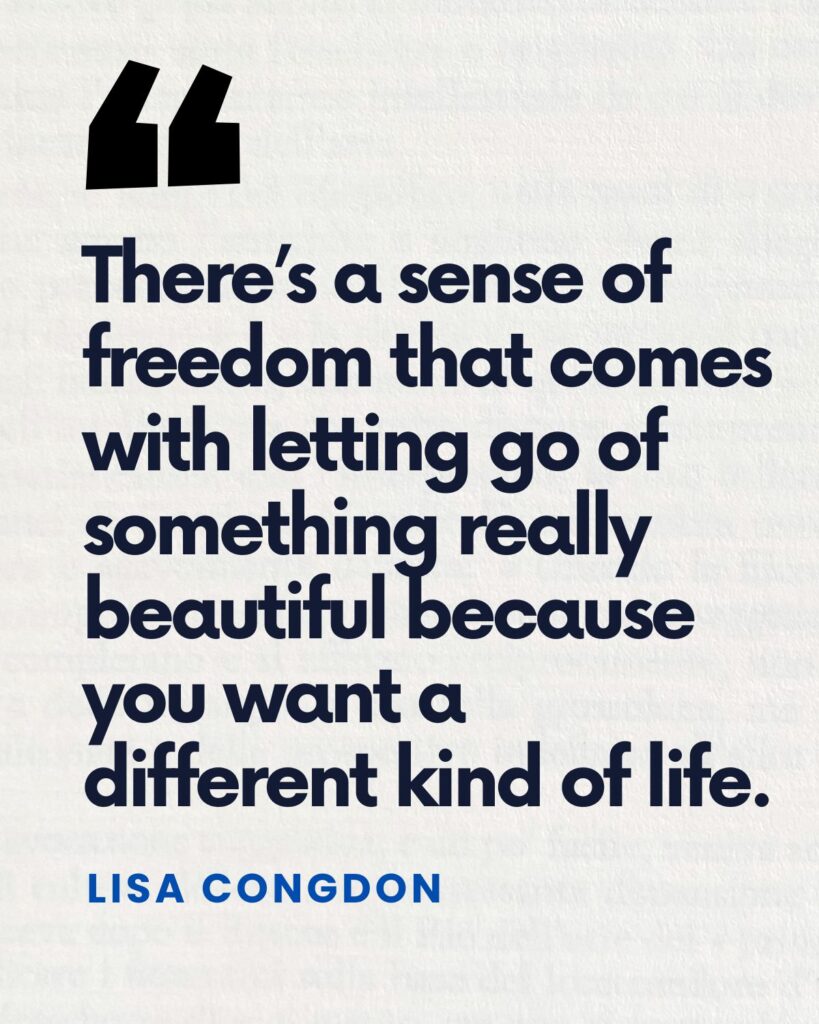
Once I said it out loud, that was it. I took a long runway — made sure it was truly what I wanted, figured out how to tell my team and partners. We’ve been working through the closure since January. And now? I feel great. Very certain. There’s a sense of freedom that comes with letting go of something really beautiful because you want a different kind of life — because you want to take better care of yourself, not wake up every day under the weight of managing everything. I feel really excited about that.
What does your career look like moving forward?
Lisa Congdon: I’ll keep a small online shop, but only selling limited-edition screen prints and higher-end work — a quarterly art drop. I want to get back to painting as a real practice: going into my studio a certain number of hours a week and making things just for the sake of making them, exploring, seeing where my creativity leads. I’ll still do illustration commissions and paid work. I’m also writing a book — I haven’t written one in years and I’m really excited to be back at it.
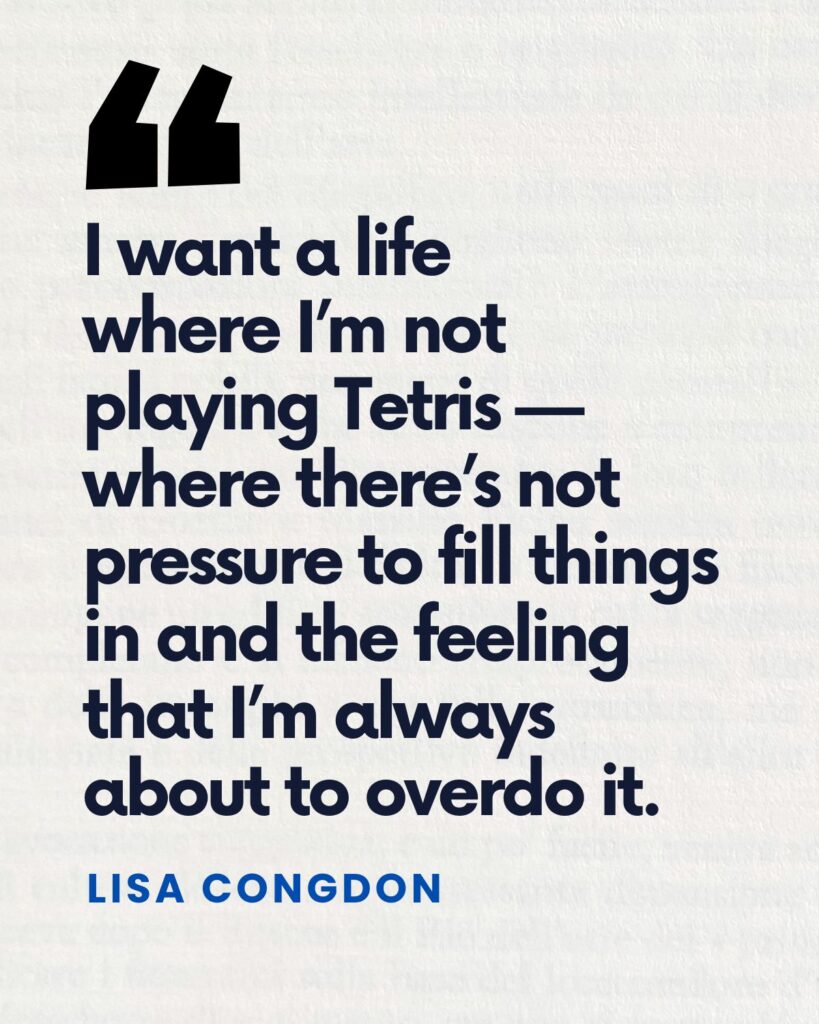
The whole idea is to not work a full-time schedule year-round. My life was like Tetris. I was filling in so many little tiles and gaps constantly, always feeling like the game was about to end because I had filled it too high. I just want a life where I’m not playing Tetris — where there’s not constant pressure to fill things in and the feeling that I’m always about to overdo it.
There were many years when I did a lot of things and it brought me joy and satisfaction — I was super ambitious and I’m glad I did all of it. And then I got to a place where I was tired and wanted something different. Getting older, I go out less, I like to stay home, my life is simpler — and I want a work life that’s conducive to that.
Do you have to go through an unlearning process to get into this next phase?
Lisa Congdon: Definitely — and this is still a work in progress. I work with a business coach named Nina Kaufman, who I’ve been with since early 2020. One of the things we’re practicing is what it feels like when I have open studio time: I pull out some art supplies and I don’t have a plan, and it’s actually uncomfortable. My whole career I’ve been efficiently executing — planning a show, drawing everything first, executing the body of work, hanging it. Constraints can lend themselves to creativity, but too many constraints mean you never follow something to see where it leads. What I miss is walking into a studio with supplies and no plan. That’s going to be uncomfortable — creativity asks us to not know what’s next, to go down the uncertain path. It’s been a long time since I’ve been able to do that. I’m working on sitting in that discomfort instead of reaching for my phone.
We published a popular essay in The Midst by Ellen Scherr called “Aging Out of Fucks” — about how the midlife brain literally loses the wiring for hypervigilant people-pleasing and starts spending executive function more selectively. There’s neuroscience proving that post-menopause, women start doing what they actually want instead of constantly pleasing others. Does this resonate with you?
Lisa Congdon: Absolutely. The loud-quitting phase was the first time in my adult life I really embraced the idea of disappointing other people in favor of my own peace. I’m an elder Gen Xer — I came up in the ‘70s and ‘80s when the message for women was: have a career and make sure everyone else is taken care of. I don’t have children, so I got to lean into career in a way many of my peers didn’t, and I’m grateful for that. But I am someone who puts enormous weight on how I impact other people.
Closing my retail business — the hardest part wasn’t the money. It was disappointing Amy and Erica, my two beloved employees. They loved their jobs, loved working together. My heart ached before I told them. They handled it really well — once I opened up about how I was feeling, they could see it needed to happen.
That’s why I was such a yes person: yes to boards, yes to free work, yes to everything. There’s a draw to being needed — it makes you feel good and useful. Meanwhile I was dying a slow death inside because I was so tired I didn’t have energy to be a good partner or a good friend. So I started practicing saying no in 2022, and it was fine. Telling the average person “thank you so much for thinking of me, I’m not able to do this right now” results in them being gracious and understanding 99% of the time.
It’s actually a selfish thought as a woman to think everybody needs you — because not everybody needs you, and people are going to be fine. I continue to learn that lesson over and over. I’ve gotten much better at saying no, and mostly what I’ve learned is that I need to put myself first, which I didn’t do for a very long time.
So many women in The Midst community are standing at the edge of a career or business they haven’t yet committed to. What’s the most useful thing you’d tell someone in that position?
Lisa Congdon: The most relatable thing about my own pivot is that I had been fantasizing about it for two years before I actually did it. I kept listing all the reasons I couldn’t: I’d upset my team, I’d invested in so much infrastructure, I’d disrupt my partners. All of those reasons were about other people. It wasn’t until I literally got physically ill from stress that I finally did what my heart really wanted.
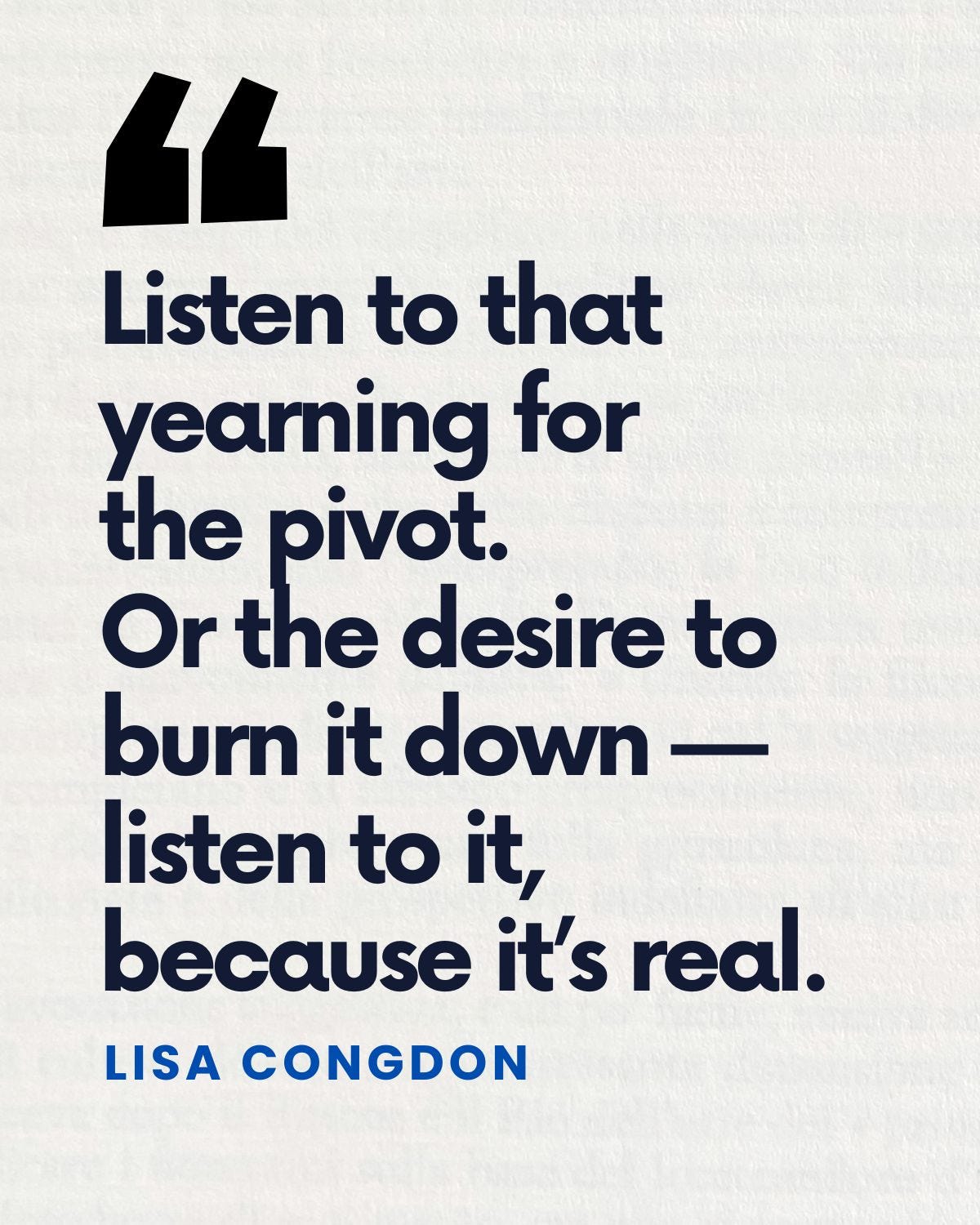
Listen to that yearning for the pivot. Or the desire to burn it down — listen to it, because it’s real. You can put it off, but you can also take it seriously. It’s probably going to be hard and other people will be affected. But ultimately, you can do it. And if it’s what you want, you should do it. We only have this one life, and it’s important to live it in a way that makes you feel good every day — and at minimum, causes no harm to yourself.
I have health stats on my Garmin. My HRV had tanked in December and January when I was most overwhelmed. I can see in real time what stress was doing to my nervous system. And now my stats are affirming that I’m actually healthier. It is so hard to let go of something that’s doing well, that people love, that has nothing wrong with it except that it’s making you stressed and tired all the time. But now I feel so much freer and so much happier — and I’m glad I did all of it, and I’m glad I ended it.
You’re a self-taught artist, a self-described late bloomer, a public political voice, a DIY pioneer — your career has never fit traditional templates. What’s the cost of that nonconformity, and what’s the gift?
Lisa Congdon: The cost is the toll on your nervous system of being a public figure — constantly showing up online, speaking truth to power, asserting opinions that aren’t always popular. Even when most of your audience shares your values, you’re still on the internet where anyone can come at you. There’s a vulnerability to being outspoken that I’ve never fully gotten used to.
When I was younger, there was probably a social cost too. I got an ADHD diagnosis in my 50s, and what I didn’t understand when I was younger is that being different, neurodivergent, or nonconformist — those things are your superpower. One of the gifts of being postmenopausal is having the perspective to see that all the things I was ashamed of or tried to hide are actually what make me who I am.
Being a late bloomer, having ADHD, being a nonconformist, being politically outspoken — those things are what’s connected me to other people. They’ve given my work an edge. They’re what’s forged my most meaningful friendships. They’ve allowed me to change hearts and minds. Not everyone can communicate their values in a way that reaches people, and I feel so grateful that I can. And it’s what people will remember. They’re not going to remember that I said yes to a job I should have turned down. They’re going to remember what I fought for, what I stood for, the example I set as an older woman.
Tell us about the book you’re working on.
Lisa Congdon: I’m co-writing it with Bridget Watson Payne, my longtime editor at Chronicle Books — we became close friends over many books together. She left Chronicle and is now a freelance writer and editor. Last year she said, “Are you ready to write another book? Let’s do something together.” We pitched several publishers, there was a bidding war — the first time that’s happened for me — and it was acquired by Tarcher, an imprint of Penguin Random House.
It’s called The Art of Finishing Things: Actually Useful Productivity Tools for Artists, Misfits, and Eccentrics. It’s geared toward people with adult ADHD or who are on the spectrum — people for whom traditional organizational hacks don’t work because of how our brains work. Bridget and I are both neurodivergent and somehow incredibly productive despite our monkey minds. The book weaves our personal stories with research and is organized around a flowchart so you can navigate to whichever section matches your pain points — time, organization, emotional regulation. What we don’t want is a book about productivity culture. This is for people who struggle to get through basic things in the day. It’ll be lightly illustrated with infographics I’m drawing. It comes out in 2028.
What else is on your radar?
Lisa Congdon: My shop closes in mid-June 2026 — go now if you want prints, notebooks, greeting cards, gifty things. After that it transitions to fine art only: limited-edition higher-end work and a quarterly art drop. I’m also co-designing a course with Emily McDowell launching in January for people with product-based businesses who want to make their brand more robust. I don’t think anything like it exists on the market. I’ll still be on social media — probably more now that I’m not constantly selling — and I have a Substack I’m getting back to once the closure is behind me. And I’ll be riding my bike.
A longer version of this interview was first published here on The Midst Substack on June 2, 2026.
Apply for The Midst Mastermind
The Midst is a community-driven platform leaning into the messy middle of life pivots, career and relationship upgrades, perimenopause, building businesses, and so much more. We help women play by their own rules to become the women they are meant to be. Subscribe to The Midst Substack (it’s free) to stay up to date about our upcoming events and opportunities.