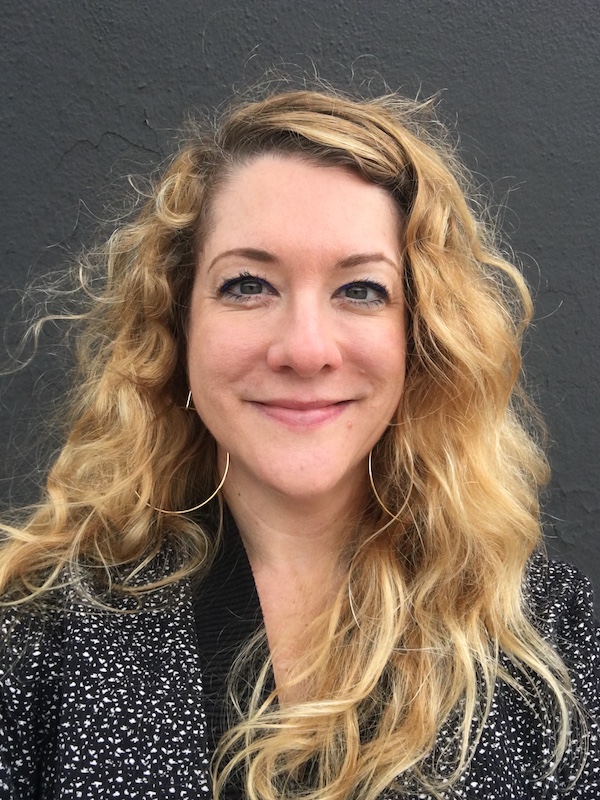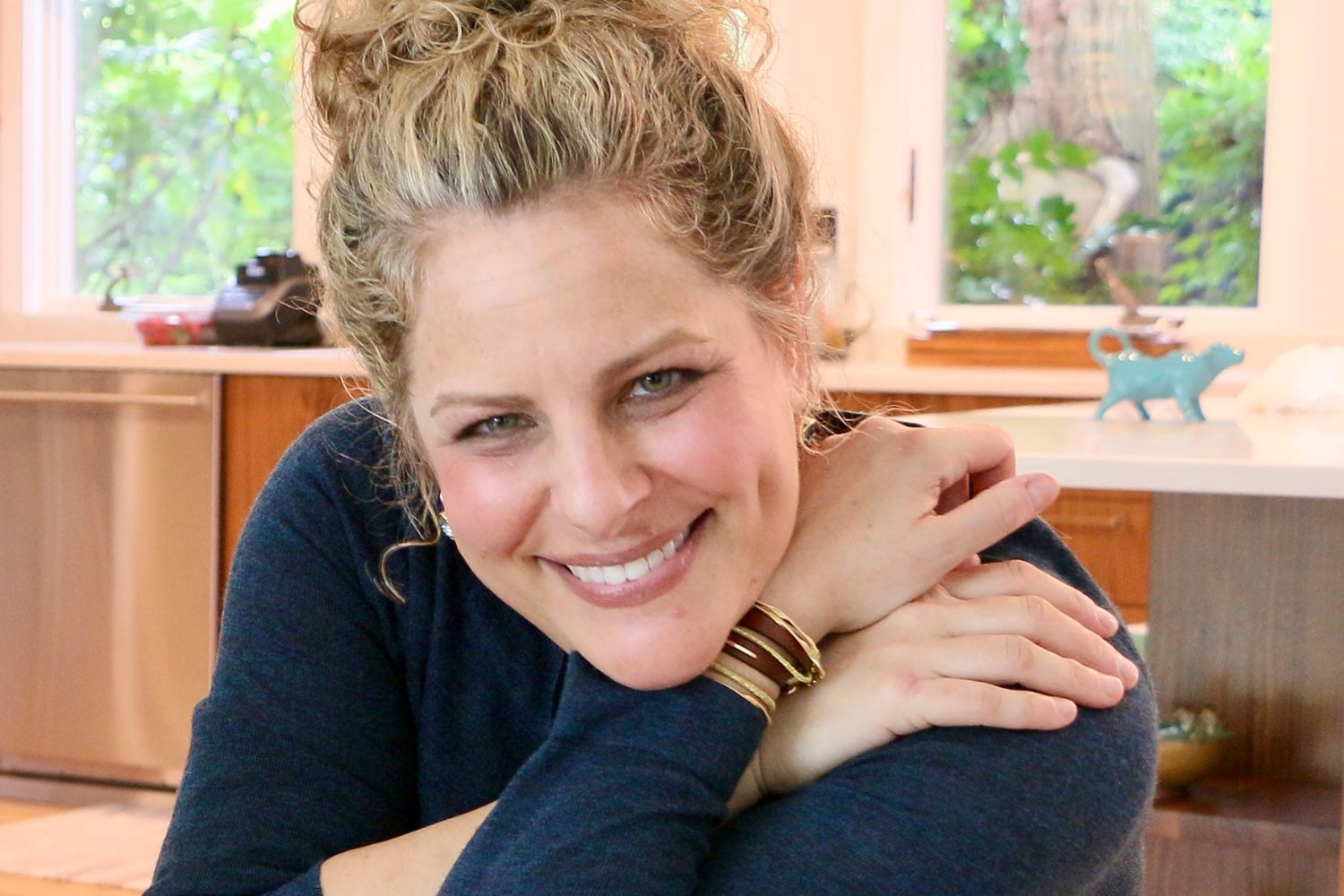

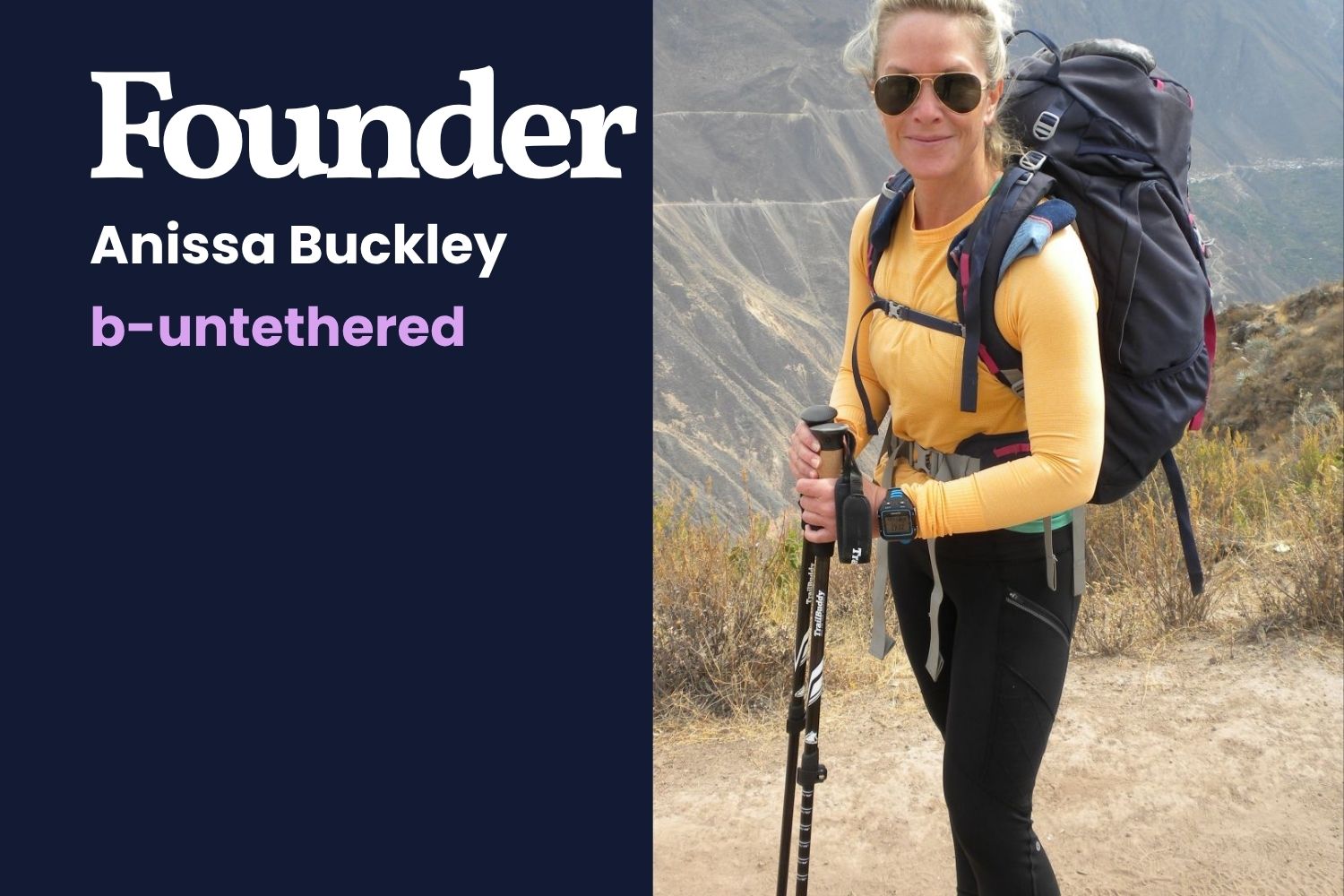
She sold everything at 47. At 59, Anissa Buckley is just getting started.
At 47, Anissa Buckley’s life came apart all at once. Both of her parents died. Her 12-year marriage ended. She exited her second company. And then she did something most of us would never think to do in the middle of so much grief.
She sold or stored nearly everything she owned, packed a backpack, and flew to South Africa.
“It was the beginning of learning about something called Hormetic Resilience,” she says now — the idea that strategic, appropriate doses of stress don’t just help us survive hardship. They make us stronger than we were before. Stronger, perhaps, than we ever imagined we could be.
What followed wasn’t just recovery. It was transformation. Buckley trained off-grid for extreme athletic events, immersed herself in menopause science, met Dr. Stacy Sims, and began to understand why she was emerging from the most turbulent years of her life feeling, as she puts it, “the best I’d ever felt.”
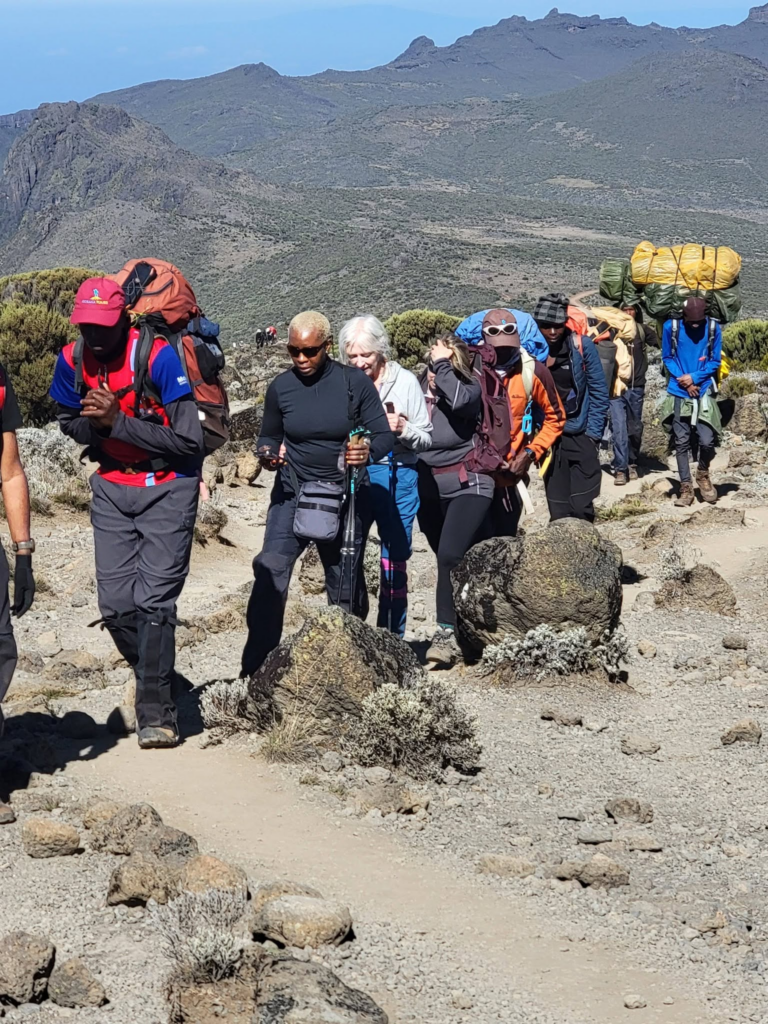
At 52, she came through menopause in the best shape of her life. She has since summited Kilimanjaro three times, completed four Ironman triathlons, solo-hiked the Himalayas, and ran an ultramarathon in South Africa.
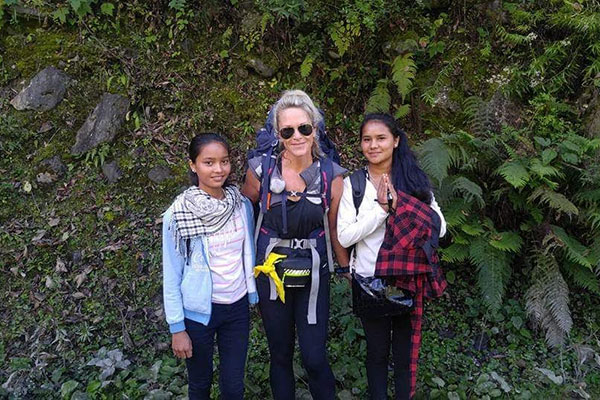
Now 59 and based in New Hampshire — one of more than a dozen places she’s called home, from San Francisco and Honolulu to South Africa, Mexico, Austin, and Tucson — Buckley is building b-untethered, a women’s longevity and resilience company built around one core belief: the second half of life is not a maintenance phase. It’s an expansion.
“When women step outside their comfort zone and challenge their bodies, incredible things happen,” she says. “Confidence returns. Resilience grows. They begin to trust their bodies instead of fearing the impact of aging.” B-untethered takes women on physically demanding group adventures — summits, treks, endurance challenges — grounded in the science of hormesis and structured around the kind of community that, as Buckley puts it, doubles your endurance and halves your pain. “Community becomes the catalyst,” she says. “Courage becomes contagious.”
In this interview, Buckley talks about the science of strategic stress, what she’s witnessed on a trail that she couldn’t have predicted, and why she believes every decade can expand what’s possible.
The Midst: One of the most powerful things you say about b-untethered is this: “Community becomes the catalyst. Courage becomes contagious.” What have you witnessed in a group of women on a mountain that you couldn’t have predicted?
Anissa Buckley: What I’ve learned from the women who’ve traveled with me is that they aren’t simply looking for a relaxing vacation — they’re seeking an energizing, potentially transformational experience. They want to feel strong again, reconnect, and feel alive.
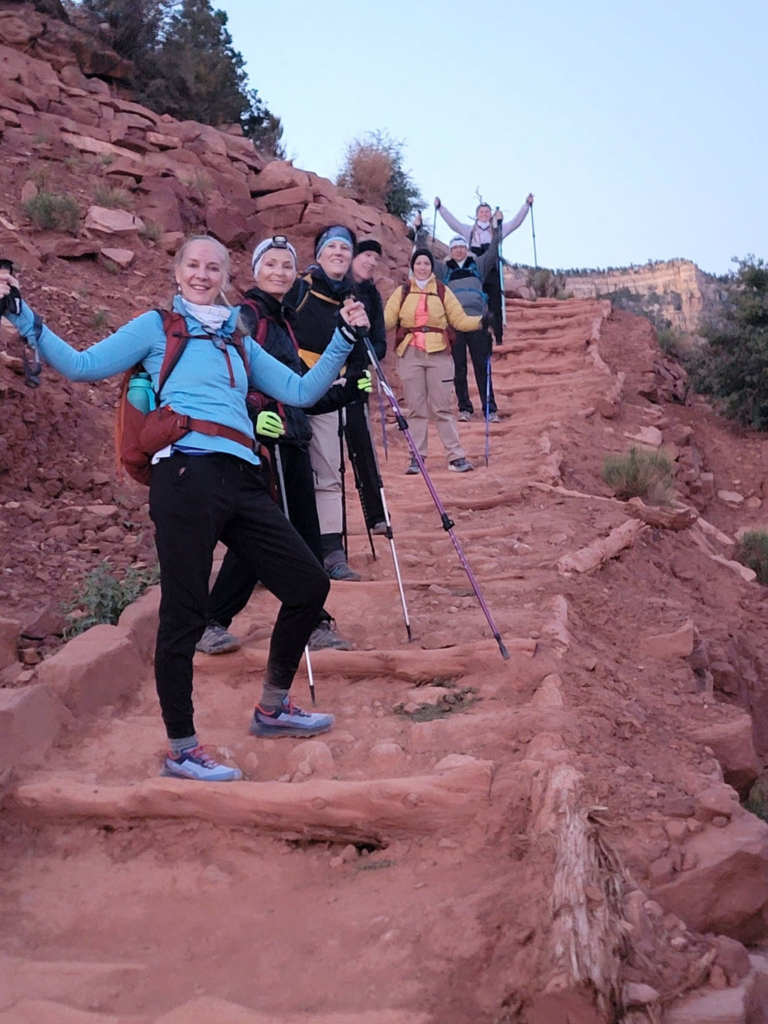
I have witnessed the collective power of women. When one experiences doubt, the rest of the group inevitably boost her up. There is research to suggest that community support doubles our endurance and halves our pain. This is a truth I have seen and lived. I’ve had a woman summit Kilimanjaro with a fractured ankle. Another hike the W Trek after just learning her spouse was leaving. There are so many more amazing stories of resilience and strength.
When women step outside their comfort zone and challenge their bodies, incredible things happen. Confidence returns. Resilience grows. They begin to trust their bodies instead of fearing the impact of aging. The mountains, trails, and conversations become the vehicle, but the real transformation is internal — they leave believing they are capable of far more than they imagined.
At 47, you lost both parents, your 12-year marriage ended, and you exited your second company — all at once. Where did you find yourself in that moment, and what was the very first step toward building something new?
I had been working so hard for so many years, and all of a sudden I had this “opening” in life. My identity as a daughter, wife, stepmother, and businesswoman had all shifted. I found myself saddened by much of the change, but also unsure of who I was and what I wanted. I think that level of grief and transition affects people differently. My response was action.
I put a few things in a backpack and took off for South Africa in a 180-degree shift to a minimalist, very physical life, where I trained off-grid for extreme events.
It was the beginning of learning about something called Hormetic Resilience — the process of inserting “appropriate doses of stressors” to build yourself into something stronger. Without fully understanding what was happening, I began experiencing what I now call the Five Pillars of Hormetic Resilience: Physical, Metabolic, Cognitive and Emotional, Environmental, and Restorative. Not all at once, and mostly without understanding it at the time, but it helped me evolve into a much stronger woman now than I was in my 30s and 40s.
B-untethered is built on a concept most people have never heard of: hormetic resilience — the biological truth that strategic stress makes us stronger. When did you first encounter this science, and how did it change the way you understood your own transformation?
In 2019, at 52 — after five years of global adventure and minimalist living — I was entertaining the question of what was next. I was hearing the same story from friends and other women: “I don’t understand what’s happening to my body!” Ironically, I felt the best I’d ever felt, so I became obsessed with understanding why.
Meeting Dr. Stacy Sims was a turning point. Her research reinforced that lifestyle factors — strength training, nutrition, and supplementation — could dramatically change the trajectory of midlife health, and were likely the difference in my own experience. I had also put myself through a dramatic lifestyle shift, moving from structured business life to nomadic living in cultures that were completely unfamiliar to me. This challenged me cognitively, as I was forced to learn truly new skills every single day. The environmental shifts — high altitudes, extreme heat and cold — also forced my body to learn to regulate itself.
Once I understood how all of these stressors had actually helped me stabilize internally during a period when my body might have been in hormonal chaos, I became more curious about the science of hormesis.
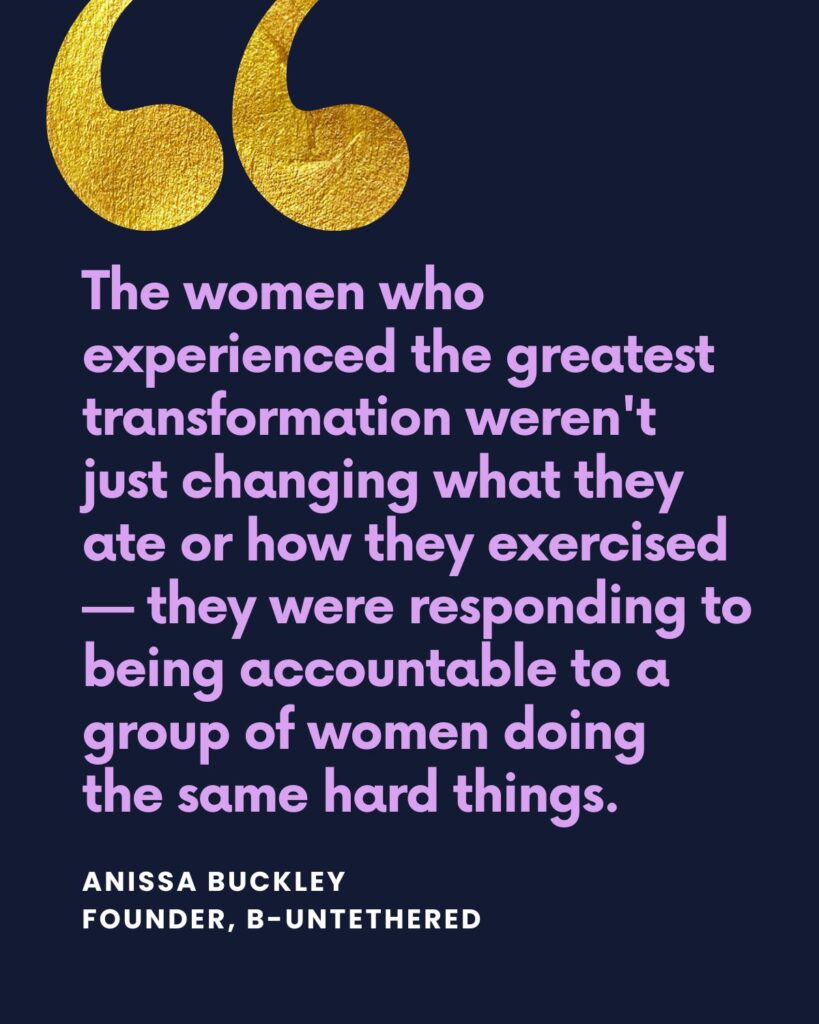
As I built my menopause program and began coaching women, the results were remarkable. But I noticed something else. The women who experienced the greatest transformation weren’t just changing what they ate or how they exercised — they were responding to being accountable to a group of women doing the same hard things. This led me to the research on connection.
That’s when the framework truly clicked for me. It wasn’t just one thing — one pill, injection, or social connection — that was building health. It was the combination of physical, mental, and emotional building blocks that formed the basis for aging with strength.
Today, that insight is the foundation of b-untethered and my upcoming book. Everything we do is built around one idea: when women intentionally challenge themselves — in the right way — they don’t just age better. They become stronger, more confident, and more capable than they imagined.
You’ve built four companies and sold two of them — including one that landed you an invitation to the White House to consult on Michelle Obama’s Let’s Move initiative. Can you tell us about your previous companies, and what have you learned from building and exiting businesses that has made you a smarter, more intentional founder with b-untethered?
I’ve always been drawn to business concepts that don’t just make money — they change lives for the better.
My first company, healthyAisles, launched in 2005 and built one of the first nutrition claims databases used by grocery retailers to communicate health benefits at the shelf — everything from “gluten-free” to “good source of fiber.” It was acquired by Vestcom International, and the platform continues to support retailers today.
My second company, launched in 2012, shifted from information to behavior. We combined healthy prepared meals, fitness, coaching, and community to help people create lasting lifestyle change. We began bringing people together to train for obstacle races like Spartan, and I saw firsthand how teamwork, accountability, and shared challenge stimulated confidence and commitment in ways that nutrition advice alone never could.
The key learning was that successful companies aren’t built solely around products — they’re built around purpose. To paraphrase Maya Angelou: it’s how you make someone feel. Humans are emotional beings, and by creating connection and sharing experiences, we improve not just physical health, but emotional health as well. Our business goals fall in line when we pay attention to how our customers and our employees feel.
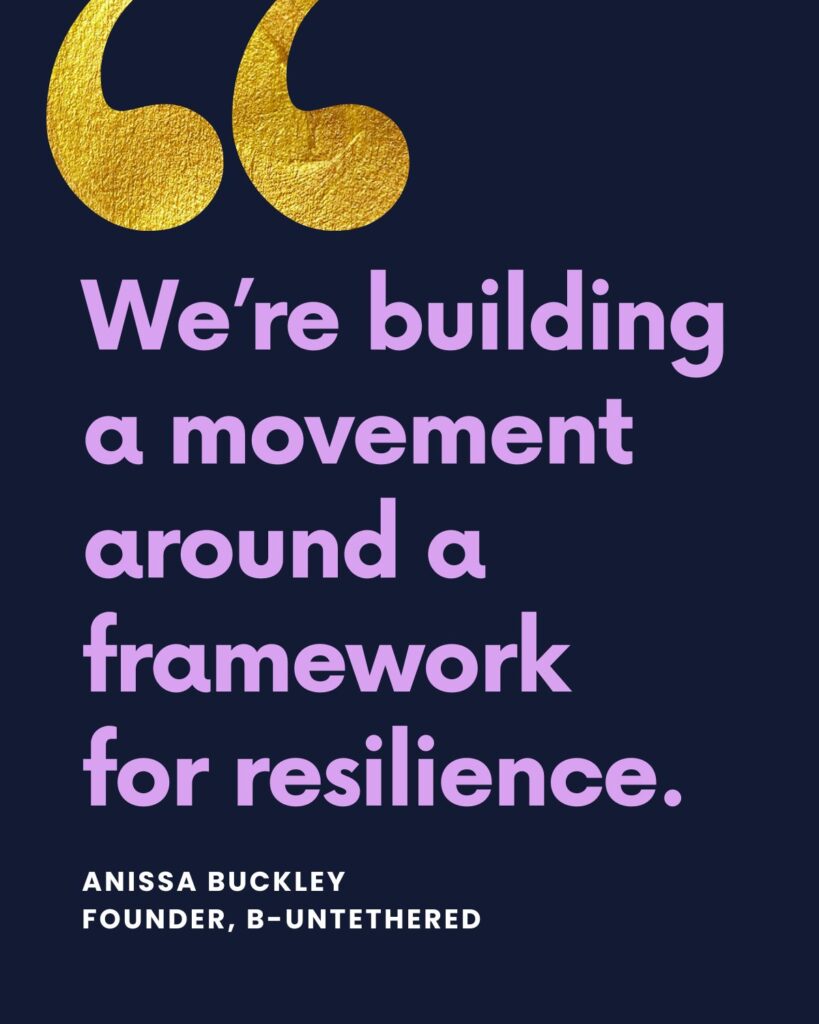
That’s how I think about b-untethered today. We’re not simply selling products or coaching — we’re building a movement around a framework for resilience. Every company I’ve built has taught me that people don’t stay because of features. They stay because you’ve changed how they see and feel about themselves. That’s the business we’re intentionally building today.
You’ve summited Kilimanjaro three times, completed four Ironman triathlons, solo-hiked the Himalayas, and ran an ultramarathon in South Africa. Most women would feel they’d really lived after accomplishing just one of those things. What are you chasing — or is “chasing” even the right word?
I think of it as exploration more than chasing.
I’ve always been fascinated by human potential — not just physical potential, but our capacity to adapt, recover, and become stronger through challenge. One of my training partners during my first Ironman used to say “we can do hard things” at our hardest training moments. It still comes to mind when I’m in that place, and it helps me move forward.
Every mountain, race, or expedition has been less about achieving the goal and more about discovering what I’m capable of along the way. I’ve seen this so many times with the women — and men, as we do some co-ed trips as well — who train for and achieve their goals.
What’s surprised me most is that each challenge has made me more curious, not more satisfied. I leave every adventure realizing I’m capable of more, and already pondering what’s next.
That’s the lesson I want all women to take away. Somewhere along the way, many of us were taught that aging means becoming smaller, safer, and more cautious. My experience has been the opposite. Every decade has expanded what’s possible for me. The finish line or summit is wonderful, but it’s never been the point. The transformation happens in the process of overcoming the hard things to get there.
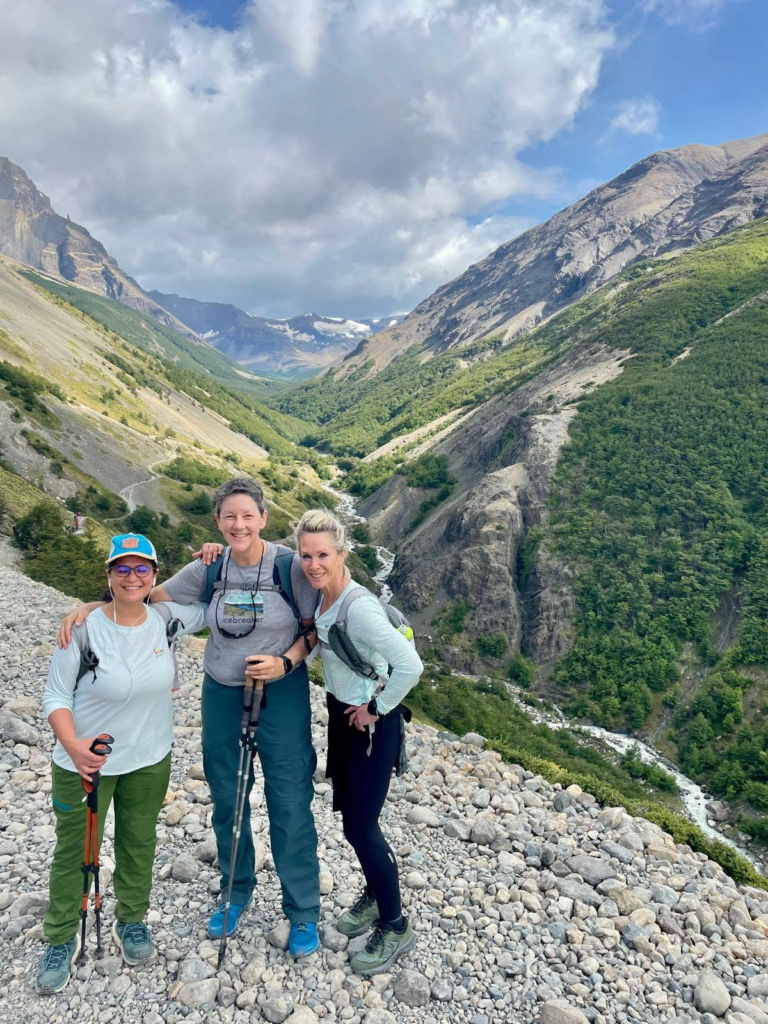
You emerged from menopause at 52 in the best shape of your life — almost exactly the opposite of what most women expect to hear. What did you do differently, and what do you wish someone had told you at 47, when everything was falling apart at once?
The biggest lesson: consistency wins the race. Not perfection. Not brutal workouts. Not starvation diets. I’ve tried all of that. At the end of the day, it’s the boring but essential routine that builds our strength.
I also pay close attention to emerging research and have been an early adopter of evidence-based therapies when the data is compelling.
My essentials:
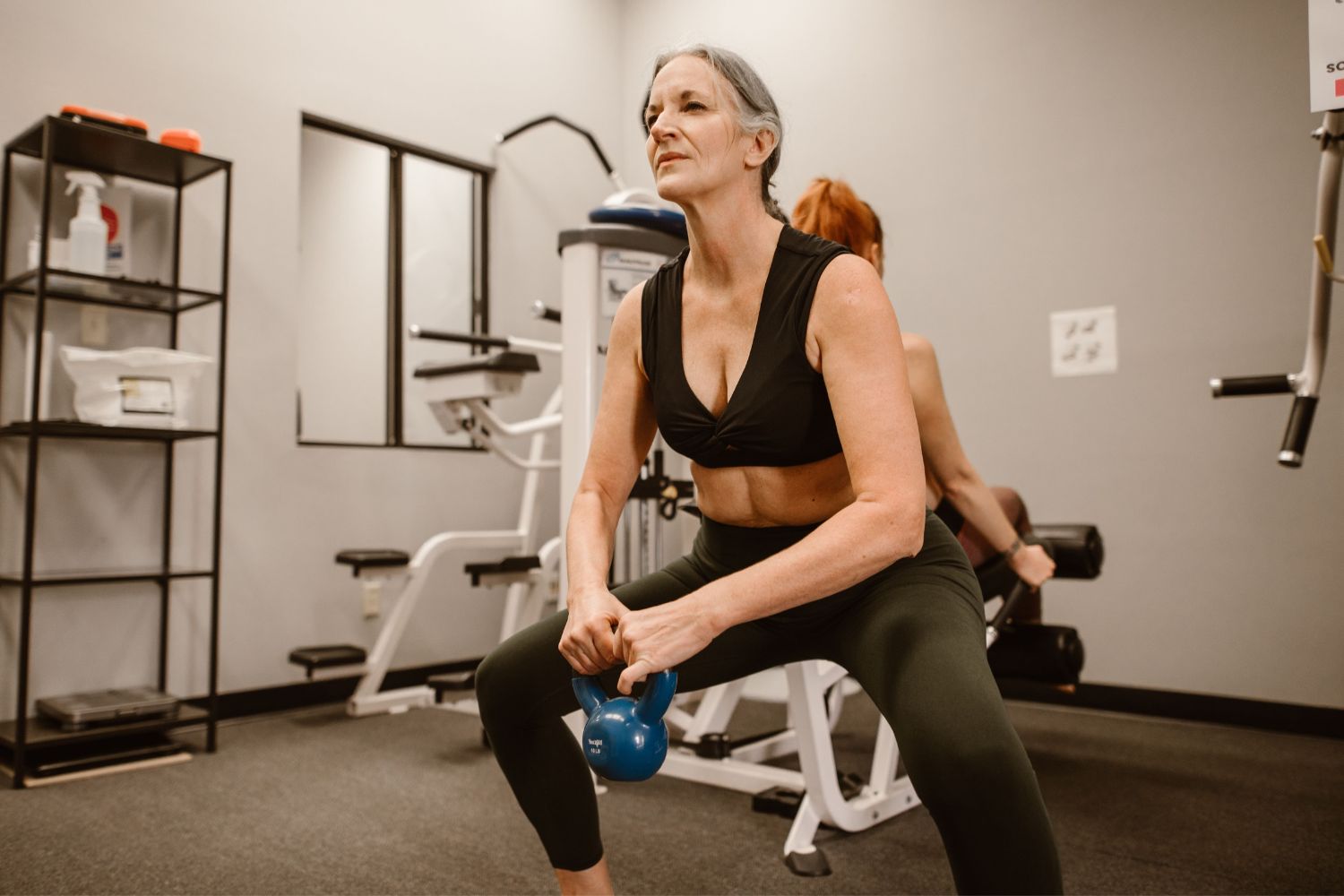
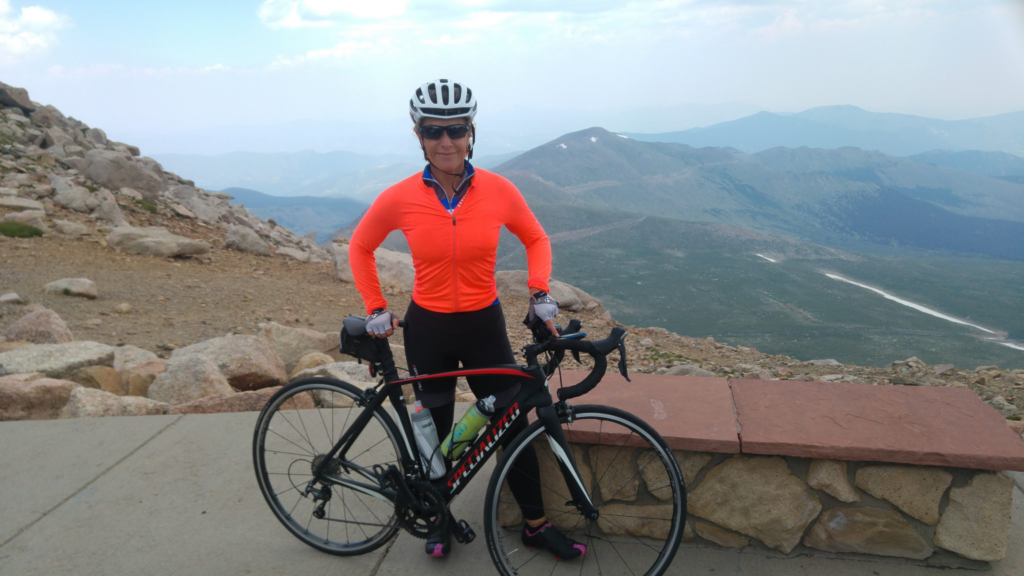
- I’ve strength-trained consistently since I was 18, and I still lift heavy three times a week — because preserving muscle is one of the most important things we can do. I had a collision with a car on my bike a few years back and walked away from the accident. I believe — I know — this is because I’ve maintained the muscle in my legs to protect my joints.
- I emphasize protein at every meal. It is critical not only for maintaining muscle, but also for metabolism.
- Every week, I intentionally challenge my body with one longer endurance effort — a hike, bike ride, swim, or another adventure that pushes me beyond my comfort zone.
- I use science strategically. My routine includes targeted supplementation like creatine, nicotinamide riboside, and omega-3s, along with menopause hormone therapy and key peptides when appropriate.
None of these habits is magic on its own. But together, they form a protocol that has kept me strong and in good health.
Your book, Through the Wilderness, is coming, and you describe it as “part memoir, part science-backed playbook” — a direct rejection of the cultural story that midlife is a maintenance phase. Who is the woman you’re writing it for, and what do you most want her to feel when she finishes the last page?
This is written for any woman over the age of 30 who is pondering how to live her best life. I use 30 as a starting point because research is beginning to suggest that may be the earliest point at which hormones start to shift. My general belief is that it’s never too early to envision your future and map backwards to ensure you’re doing today what is needed to enable it.
My goal is to provide a framework — and a bit of inspiration — for a woman wondering what she can do in her next five, 10, or 30 years. I want her to finish the book with a vision and the knowledge to craft a plan to get there. Mostly, I want her energized to go do it.
Your website has a section called “Can I do this?” — clearly written for the woman who is terrified to say yes. Who is she, and what do you want to say to her?
I’ve trained and coached many women — whether in changing their lifestyle, exploring peptide therapy, or undertaking a seven-day endurance trek. Most express caution, anxiety, or fear at the beginning. But every week is a step forward.
By achieving small goals each week, we start to gain the belief — the confidence — that we actually can do that big thing we’ve been afraid of.
Of course, it helps to have a supportive community behind us, to encourage us when we’re feeling weak and celebrate us when we’re strong. Hopefully, this idea of training together and taking small steps forward creates that glimmer of hope inside her today: that yes, it is possible.
Follow Anissa Buckley
LinkedIn | b-untethered.com | Facebook | Instagram @buntethered
Anissa Buckley is a member of The Midst Founder Network of entrepreneurial women. Learn more about how to join here. Thinking about starting a business or seeking a community of supportive women to grow? You might like The Midst Mastermind.